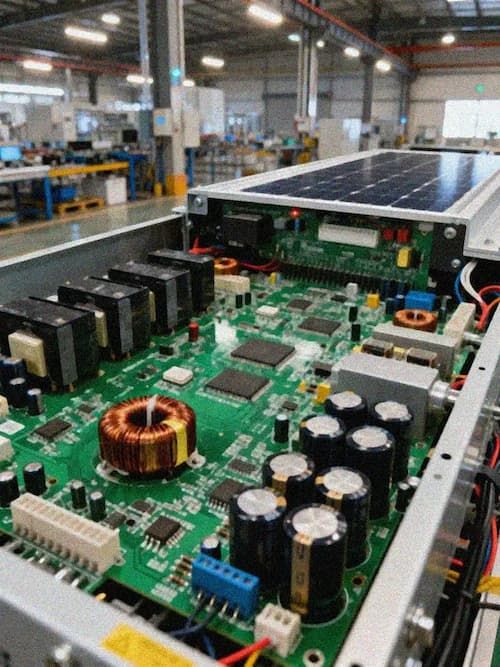
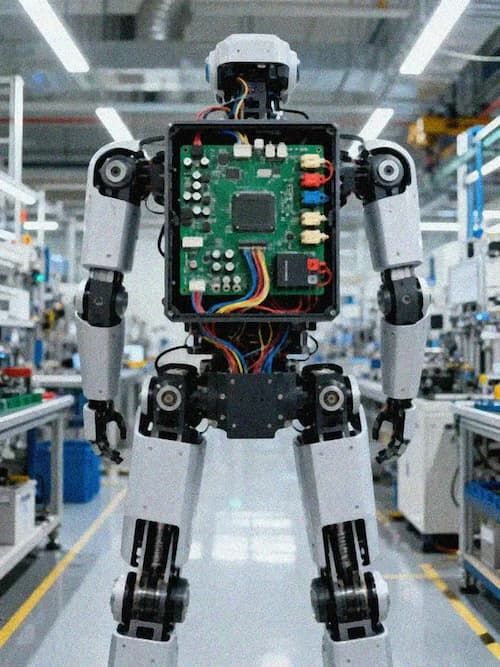
Introduction: From March 10-12, Embedded World 2026, the world's leading annual event for the embedded systems industry, will be held in Nuremberg, Germany. Our analysis of the key highlights and technological trends of this year's exhibition reveals that edge AI is profoundly reshaping the underlying landscape of smart hardware, bringing new growth opportunities to the PCB industry. This article will combine a preview of the exhibition with industry practice to interpret the core opportunities in smart hardware manufacturing in 2026, and the breakthrough growth path for PCB manufacturers.
Why Should We Pay Attention to Embedded World 2026?
Each March, Nuremberg, Germany gathers key players from the global embedded systems industry. As the world’s largest and most influential professional expo for embedded systems, Embedded World serves as a definitive bellwether for industry technology and market trends. The 23rd edition will take place March 10–12, 2026 under the theme "Embedded. Intelligent. Sustainable.", focusing on the intelligent upgrading and sustainable development of embedded technology, and showcasing full industrial chain innovations spanning chips, hardware, and integrated solutions.
Official preliminary data from the expo forecasts an exhibition area of 30,000–40,000 square meters, with 1,100–1,200 exhibitors from over 40 countries, more than 80 professional technical sessions, and an estimated 30,000–35,000 professional visitors. Most notably, the event delivers high-caliber decision-making attendees: historical data shows 83% of visitors directly participate in corporate procurement decisions, and 42% are core decision-makers including CTOs, R&D managers, and product managers. This makes the expo far more than a technology showcase — it is a core hub for demand matching and business collaboration.
For PCB manufacturers, the technological trends presented at this exhibition will directly determine the demand trend of the high-end PCB market over the next 1-3 years. Each year, the new generation of chips, embedded hardware, and solutions released at the exhibition place new demands on PCB design, processes, and manufacturing standards. Understanding these trends in advance is crucial for manufacturers to capture incremental market opportunities.
Three Major Technology Trends Reshaping the PCB Industry Demand Landscape
Based on the technology release plans and industry implementation status of exhibitors at this year's exhibition, we have identified three core technology trends that are fundamentally reshaping the PCB industry's demand structure, bringing new growth opportunities to manufacturers with technological reserves.
Trend 1: Edge AI from "Optional Configuration" to "Standard Product Feature"
In just two years, the logic of edge AI's industry implementation has fundamentally changed. In 2024, most hardware manufacturers were still evaluating the necessity of edge-side NPUs; by 2026, product NPU computing power specifications have become a core competitive indicator for embedded hardware, and edge-side AI inference capability has officially changed from a "bonus" to a "basic requirement," igniting a full-scale arms race in edge-side computing power.
At this year's exhibition, both domestic and international chip manufacturers will showcase their next-generation edge AI computing power products. Among domestic manufacturers, Rockchip's RK3588 has become the mainstream choice for edge AI scenarios. This flagship 8nm FinFET chip features an 8-core 64-bit CPU architecture and a dedicated NPU with 6 TOPS INT8 computing power, stably supporting parallel inference of multimodal AI models on the edge. HiSilicon's Hi3781V730, with its 4 TOPS NPU computing power, has already been deployed on a large scale in industrial vision and smart terminals. On the international front, AMD will release the Ryzen AI Embedded P100 and X100 series, targeting high-computing-power edge AI scenarios and driving continuous upgrades in edge computing power specifications.
The continuous upgrade of edge AI computing power directly poses three new requirements for PCB design and manufacturing: First, the demand for high-speed signal design has increased significantly. The stronger the NPU computing power, the higher the data transmission rate requirement. PCIe 4.0/5.0 has become standard for high-end edge AI hardware, placing stringent requirements on PCB impedance control accuracy, signal integrity, and inter-layer alignment accuracy. Second, the importance of thermal management has significantly increased. A 6-TOPS NPU can consume 10-15W under full load, and the total power consumption of the board can easily exceed 30W after adding a CPU and GPU. Designs such as metal core PCBs, embedded heat sinks, and thermal via arrays have gone from being exclusive to high-end products to becoming standard configurations for edge AI hardware. Third, the number of board layers continues to increase. To meet the requirements of high-density wiring and signal shielding, the application of 12-20 layer multilayer boards in edge AI hardware is rapidly increasing.
Trend Two: Automotive Electronics Becomes the Biggest Growth Engine in the PCB Market
If edge AI is the core driving force for PCB technology upgrades, then automotive electronics is the most certain growth engine for the PCB market. At this exhibition, automotive embedded systems will be a core showcase segment: Infineon will demonstrate its TRAVEO™ series MCUs, focusing on the regionalized architecture needs of software-defined vehicles; Renesas Electronics will bring its industry-leading X5H automotive SoC, and jointly demonstrate automotive vision solutions with Korean manufacturer StradVision.
The underlying industry logic is clear: the electrification and intelligent upgrading of new energy vehicles are continuously driving the explosive growth in demand for automotive PCBs. Traditional gasoline vehicles use only 0.6-1 square meters of PCB per vehicle, while new energy vehicles can use 5-8 square meters. The three core segments—intelligent cockpit, ADAS, and BMS—are driving the simultaneous increase in both the volume and price of automotive PCBs. Among them, BMS systems have specific requirements for high-density PCB design, high current carrying capacity, and thermal management capabilities; ADAS systems require PCBs with high-frequency, high-speed transmission capabilities, high reliability, and complete automotive-grade certifications; and in-vehicle infotainment systems have stringent standards for HDI boards, signal integrity, and EMI/EMC performance. The automotive-grade PCB market has high entry barriers. IATF 16949 certification is merely the entry ticket; manufacturers must also complete a series of systematic certifications such as PPAP, APQP, and FMEA, while meeting product lifecycle and supply guarantee requirements of over 10 years. These high barriers also correspond to greater order stability and profit margins. One of our new energy vehicle BMS clients, after mass production in 2025, has seen its monthly PCB demand increase from 500 square meters to 3000 square meters, with demand continuing to grow steadily.
Trend Three: Domestic Substitution Enters the Stage of Full-Scenario Large-Scale Implementation
This is one of the most attention-grabbing industry trends at this exhibition and represents the most certain growth opportunity for domestic PCB manufacturers in the next 3-5 years. After years of technological iteration, domestically produced embedded chips have moved from "usable" to "easy to use," and full-scenario large-scale substitution is accelerating.
At this exhibition, domestic chip manufacturers will showcase their latest technological achievements: Loongson Technology will present its 3A6000 series processor module with its independently developed LoongArch instruction set, boasting a 2.5GHz clock speed and having been running stably in industrial control and embedded devices for over 24 months; Rockchip's RK3588 solution has achieved 18 months of trouble-free stable operation on industrial intelligent quality inspection production lines, and its market share in industrial robots and machine vision continues to increase; HiSilicon's Hi3781V730 solution can achieve real-time 4K video encoding and transmission latency of less than 100ms, and has already achieved large-scale replacement in commercial displays and smart terminals.
As one industrial control customer stated, "Previously, we chose imported chips due to concerns about the stability of domestic solutions; now, we prioritize domestic chips because we fear the risk of supply chain disruptions." The accelerated implementation of domestic substitution has brought new development opportunities to domestic PCB manufacturers, while also raising three core requirements: First, collaborating with domestic chip manufacturers to complete reference designs and core board development, creating mature PCB solutions around mainstream domestic chips such as RK3588 and Loongson 3A6000, lowering the development threshold for downstream customers; second, building a secure and controllable supply chain system, with domestic alternatives for key materials and components to ensure delivery stability; and third, providing long-cycle supply guarantees. The product lifecycles of customers in the industrial and automotive sectors generally exceed 10 years, making stable supply a core selection criterion.
Four Core Growth Opportunities for PCB Manufacturers in 2026
Technological trends define the core direction of the market, but true growth opportunities ultimately lie in specific niche markets. Based on the core track layout of this exhibition and the market forecasts of authoritative institutions, we have identified four core growth markets that PCB manufacturers should focus on in 2026.
Opportunity 1: Edge AI Device PCBs
According to joint estimates by IDC and Prismark, the global edge AI device PCB market will reach $12 billion in 2026, with a CAGR of 22%, making it one of the fastest-growing segments in the PCB industry. Core application scenarios include industrial machine vision equipment, edge AI smart cameras, and industrial smart gateways: Industrial machine vision equipment requires at least 6 TOPS of NPU computing power to simultaneously connect to multiple industrial cameras and achieve real-time AI inference within 10ms; edge AI cameras have built-in 2-4 TOPS NPUs, capable of real-time 4K video encoding and edge-side inference; smart gateways need to simultaneously support multiple protocols such as 5G, WiFi 6, and LoRa, balancing edge AI inference and data transmission capabilities.
The core technical requirements for PCBs in these products focus on three aspects: First, high-speed signal processing capabilities, requiring stable support for high-speed interfaces such as PCIe 3.0/4.0 and 10GbE LAN, with impedance control accuracy within ±10%; second, thermal management capabilities, requiring solutions to the heat dissipation challenges of high-performance chips through designs such as metal core PCBs and thermal via arrays; and third, miniaturization design capabilities, with HDI boards and blind/buried via processes becoming standard configurations to meet the miniaturized deployment needs of edge devices. We have completed the development and mass production of a 16-layer HDI board for a machine vision customer. This product has a linewidth and line spacing of 3/3 mil, blind vias of 0.1mm, and buried vias of 0.15mm. After three months of process optimization, the mass production yield steadily increased from 65% initially to 92%.
Opportunity Two: Automotive Electronics PCBs
Automotive electronics is the largest growth segment in the global PCB market. Prismark data shows that the global automotive electronics PCB market size will exceed $60 billion in 2026, with a compound annual growth rate of 12%. The demand for PCBs related to new energy vehicles and intelligent driving is growing much faster than the industry average. Core application scenarios include three major sectors: BMS, ADAS, and in-vehicle infotainment systems, covering the core electronic and electrical architecture of new energy vehicles.
The technical barriers to automotive-grade PCBs lie not only in manufacturing processes but also in end-to-end quality control and system certification. Manufacturers must pass IATF 16949 and ISO 26262 certifications, ensure products have a lifespan of over 10 years, and establish a full-process traceability system to ensure that the production data of each board is fully traceable. We once completed the mass production of a 20-layer HDI board for an automotive radar customer. The customer required board warpage of less than 0.5% and interlayer alignment accuracy controlled within ±25μm. Ultimately, by optimizing the stack-up design and lamination process, we stably met the customer's stringent requirements.
Opportunity Three: Industrial Control PCBs
Industrial control is the foundation of the PCB market and also the most stable segment in terms of demand. According to industry estimates, the global industrial control PCB market is projected to reach approximately $15 billion in 2026, with a compound annual growth rate of 8%. Core applications include PLCs, industrial HMIs, and industrial robot control boards, making them a core hardware platform for Industry 4.0 and smart manufacturing.
The core requirements for industrial control PCBs lie in high reliability and long lifecycle assurance during long-term operation. Products must support a wide operating temperature range of -40℃ to 85℃, possess vibration and electromagnetic interference resistance, meet functional safety standards such as IEC 61508 and ISO 13849, and provide a supply cycle commitment of over 10 years. Industrial customers have extremely strong supply chain loyalty; once product verification and supplier onboarding are completed, they rarely change partners easily. We have an industrial control customer who has been cooperating with us for 11 years since 2015, with a stable monthly order volume of around 2000 square meters.
Opportunity Four: Medical Electronics PCBs
Medical electronics is a high-value segment of the high-end PCB market. Industry data shows that the global medical electronics PCB market size will reach approximately US$30 billion in 2026, with a compound annual growth rate (CAGR) of 8%. Its core application scenarios cover wearable health monitoring devices, medical imaging equipment, telemedicine systems, etc. The products are directly related to people's health and medical safety, so they have extremely high market entry barriers and medical-grade quality control requirements.
The core requirements for medical electronics PCBs are stringent quality control and medical compliance certification. Manufacturers must be ISO 13485 medical device quality management system certified, able to support FDA registration documentation and process requirements, and their products must meet medical-grade requirements such as biocompatibility and disinfection tolerance. Furthermore, there are stringent standards for ion contamination and cleanliness. One of our ECG monitoring patch customers required PCB ion contamination to be less than 1 μg NaCl/cm². To address this, we deployed a professional ion contamination tester to achieve full inspection of each batch of products, consistently meeting medical-grade quality requirements.
KINGBROTHER: End-to-End Capabilities, Helping Manufacturers Seize Industry Opportunities
Faced with the transformative wave of edge AI and embedded systems, only PCB manufacturers possessing end-to-end technical capabilities and stable manufacturing capabilities can truly capitalize on this industry boom. Founded in 1997, Kingboard currently has approximately 1,800 employees and has served over 20,000 clients. The company successfully listed on the Shenzhen Stock Exchange's ChiNext board in 2021 and is committed to becoming a leading enterprise in the field of electronic innovation design and manufacturing. In terms of manufacturing capabilities, we own two PCB factories and five EMS factories, supporting the production of PCBs up to 72 layers. In Huizhou, we have built our own 68-acre intelligent integrated industrial park, realizing a complete closed loop between design and manufacturing, helping clients quickly realize their innovative ideas and achieve efficient mass production. Its products cover a full range, including high-speed multilayer boards, metal-based thick copper boards, and rigid-flex boards, widely used in core fields such as communications, automotive, industrial control, AI, and medical equipment. KINGBROTHER possesses end-to-end service capabilities from product design and prototyping to mass production.
In response to the industry trends presented at this exhibition, we can provide full-scenario PCB solutions to comprehensively help customers seize industry growth opportunities.
End-to-End PCB Solution for Edge AI Devices
We offer design and manufacturing services for core boards of computing platforms based on mainstream domestic chips such as RK3588 and Loongson 3A6000. We possess high-speed signal design and simulation capabilities for PCIe 4.0/5.0 and 10GbE LAN, with impedance control accuracy up to ±10%. We provide a full range of thermal management design solutions, including metal core PCBs, embedded heatsinks, and thermal via arrays. Multilayer board prototypes can be delivered in as little as 24 hours, with mass production capabilities up to 72 layers, comprehensively covering the PCB needs of all types of edge AI devices.
Automotive-Grade PCB Mass Production Services
We have an independent automotive-grade PCB production line, certified to IATF 16949, meeting the highest level of functional safety product manufacturing requirements of ISO 26262 ASIL-D. We have established a complete product traceability system, enabling full-process tracking of production data for each board and providing complete PPAP documentation packages. Our automotive-grade line has a monthly capacity of 50,000 square meters, ensuring stable delivery to automotive electronics customers' large-scale needs. Products meet automotive-grade requirements for a lifespan of over 10 years.
Industrial Control PCB Customization Services
We have over 20 years of experience in industrial control PCB services, capable of product design and testing in a wide temperature range of -40℃ to 85℃. We provide full-process EMC testing technical support, and our products meet industrial anti-interference standards such as EN 61000-6-2/6-4. We offer a long-term supply commitment of over 10 years and have established a complete raw material alternative system to ensure long-term supply chain stability for industrial control customers. For customer engineering and technical issues, we can provide rapid response within 24 hours, fully guaranteeing product implementation and mass production.
Medical Electronic PCB Medical-Grade Manufacturing Services
Our production base is ISO 13485 certified and can provide full-process documentation support for FDA registration. We have a Class 10,000 cleanroom production workshop that can control PCB ion contamination to within 1μg NaCl/cm², meeting the cleanliness requirements of medical-grade products. We also have mass production capabilities for flexible PCBs and rigid-flex PCBs, meeting the miniaturization and portability design needs of medical devices. with delivery as fast as 5 days.
Embedded World 2026 Visitor Guide
If you plan to attend this year's exhibition, we recommend focusing on the following booths and key areas to plan your visit in advance:
Infineon (Hall 4A, Booth 138): Focus on the software-defined automotive regional architecture demonstration of the TRAVEO™ series MCUs to grasp the latest technological roadmap for automotive electronic and electrical architecture and the future demand trends for automotive electronic PCBs;
Rockchip (Hall 5, Booths 5-129 & 5-130): Focus on the RK3588 and RK3568 series core boards and edge AI solutions to understand the latest ecosystem development and application scenarios of domestic chips;
Cincoze (Hall 1, Booth 1-407): Focus on GPU embedded industrial control computers and edge computing hardware products to understand the evolution of edge AI device form factors and hardware design requirements;
Loongson Technology: Focus on the Loongson 3A6000 series processor modules and industrial embedded solutions to understand the latest developments in the construction of an independent instruction set architecture ecosystem and domestic substitution.
During the exhibition, we suggest keeping three core questions in mind: What NPU computing power will your next-generation product require? What industry certifications and technical standards must the corresponding PCB products meet? Has your product supply chain established a complete domestic substitution and alternative solutions? The answers to these questions are the core competitiveness of your company for the next 1-3 years.
Conclusion: Trends belong to the industry, opportunities belong to you.
Exhibitions are held annually, and trends are released annually, but those who truly seize the benefits are always the companies that plan ahead and build up their technological reserves.
Edge AI is experiencing explosive growth; have you prepared high-speed PCB design and manufacturing capabilities? With the increasing growth of automotive electronics, have you obtained automotive-grade certification to enter the market? With the historic opportunity of domestic substitution, have you developed mature solutions compatible with domestic chips?
Opportunities are always reserved for those who are prepared. The 2026 Embedded World exhibition is not only a global platform for showcasing embedded technologies, but also the starting point for a new round of growth in the PCB industry. KINGBROTHER will continue to deepen its expertise in high-end PCB manufacturing, leveraging 29 years of industry experience and end-to-end technological capabilities to work with global customers to seize the industry dividends of the edge intelligence era.
References
- Official information released by Embedded World 2026
- Prismark 2025-2026 Global PCB Market Report
- IDC Global Edge Computing Market Spending Guide
- Official product announcements from Rockchip, Loongson Technology, Infineon, and Renesas Electronics
- Public reports and market research data from industry media
Disclaimer: This article is based on publicly available information and is for industry reference only. It does not constitute any investment advice. The market is risky; companies should make prudent judgments based on their own circumstances.