Humanoid Robot Infrared Camera Control System (IPM Solution) | Healthcare & Embodied Intelligence
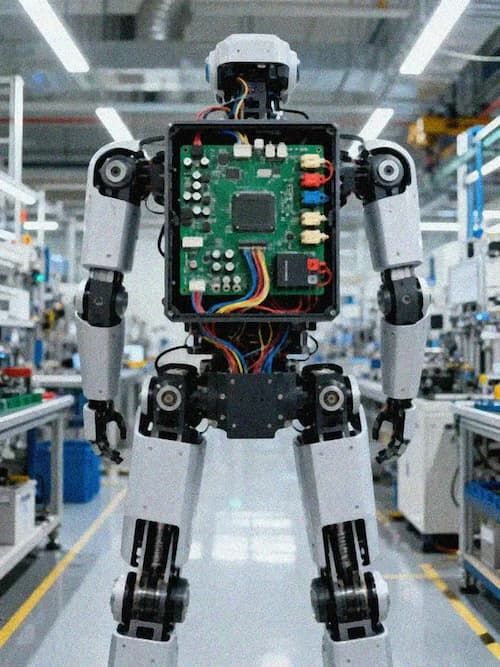
In the fields of healthcare and embodied intelligence, the client focuses on humanoid robot R&D and needs to develop an infrared camera control system suitable for medical scenarios. As a typical application of AI Vision System PCB Design, the core product requires high-precision image acquisition, ultra-miniaturized integration, millisecond-level real-time response, and high reliability. It must also withstand vibrations and shocks during robot movement, resist complex electromagnetic interference, and address thermal management challenges caused by high-density integration—meeting the stringent requirements of medical assistance, environmental monitoring, and other scenarios.
Core Requirements
- High-precision Visual Perception: Infrared image acquisition resolution ≥1080P, temperature detection accuracy ±0.1℃, supports multi-frame image fusion processing, and adapts to fine target recognition in medical scenarios.
- Extreme Miniaturization: PCB board size controlled within 50mm×50mm to meet the installation space limitations of humanoid robot joints, while achieving high-density integration of multiple sensors and interfaces.
- Strong Anti-interference Capability: Resists electromagnetic interference (EMI) generated by the robot’s internal motors and communication modules, ensuring stable image signal transmission, with an EMC pass rate meeting high industrial-grade standards.
- Reliable Operation Guarantee: Withstands an operating temperature range of -10℃~55℃ and 10g acceleration vibration shock, meeting the reliability requirements for long-term continuous operation of medical equipment (average daily operation ≥16 hours).
- Efficient Thermal Management: Solves the heat dissipation problem of high-density PCBs; the chip operating temperature does not exceed 85℃ to avoid performance degradation due to overheating.
Technical Challenges
- High-density Integration vs. Miniaturization: Integrating infrared sensors, image processors, communication interfaces, power management modules, etc., within a limited space poses significant wiring challenges and is prone to signal crosstalk.
- Suppression of Strong Electromagnetic Interference: Medical scenarios have stringent electromagnetic compatibility requirements. Electromagnetic radiation from multiple collaborative devices inside the robot can easily interfere with infrared signal acquisition and transmission.
- Real-time Sensor Data Fusion: Infrared image data needs to be integrated with the robot’s vision system and motion control system, requiring data processing latency ≤20ms while ensuring fusion accuracy.
- Balancing Thermal Management and Reliability: Miniaturization design limits heat dissipation space; circuit stability and component lifespan must be guaranteed even in high-temperature environments.
Customized Solutions
Based on the IPM (Integrated Product Manufacturing) core technology system, and integrating key capabilities such as EMI/EMC PCB Design, HDI PCB, and High-speed PCB Design, we address scenario-specific pain points with an integrated solution covering "computing power + integration + protection + heat dissipation":
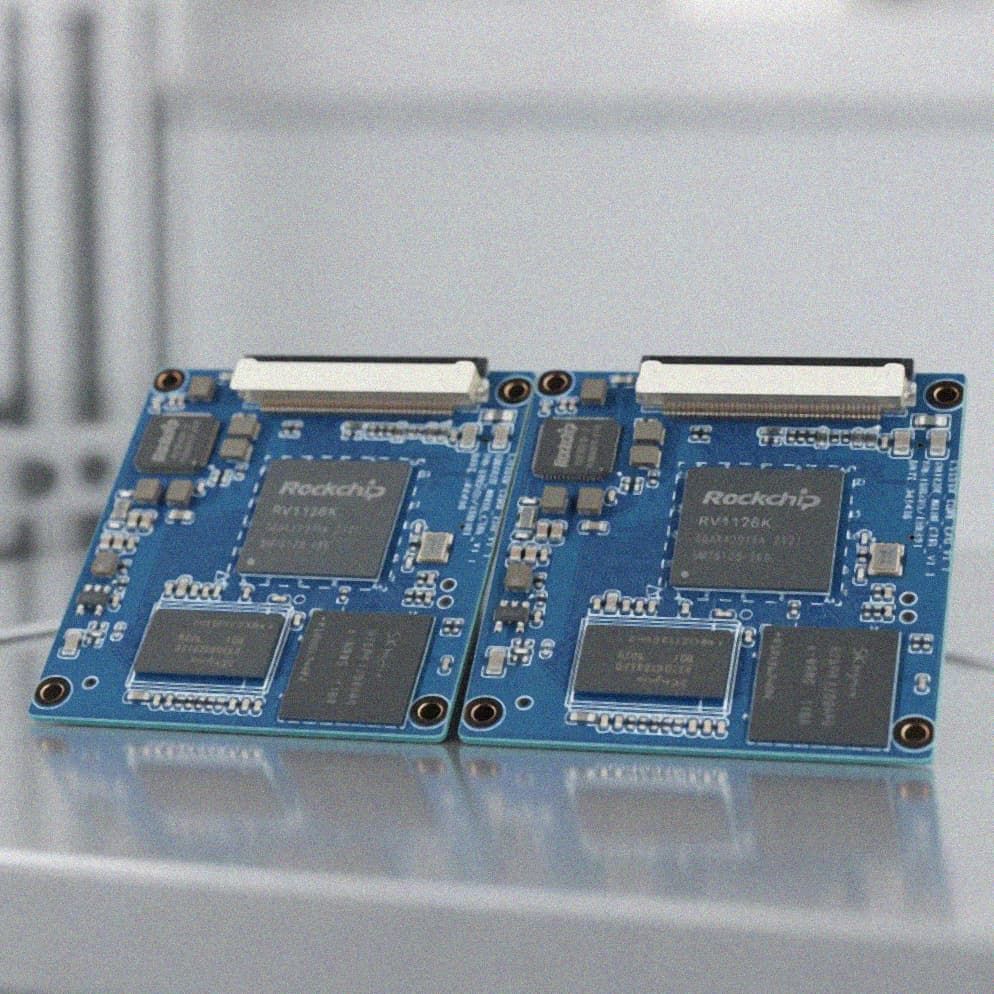
- Core Computing Power Selection: Adopts the RV1126K high-performance AI vision processor, supporting multi-scenario adaptive adjustment, compatible with 4-channel infrared camera input, and featuring 4K@30fps video encoding/decoding capabilities. It integrates a dedicated Image Signal Processing (ISP) unit for rapid infrared image noise reduction, enhancement, and temperature calibration. Combined with AI embedded algorithms, it achieves millisecond-level multi-frame image fusion, meeting the high-precision perception requirements of medical scenarios.
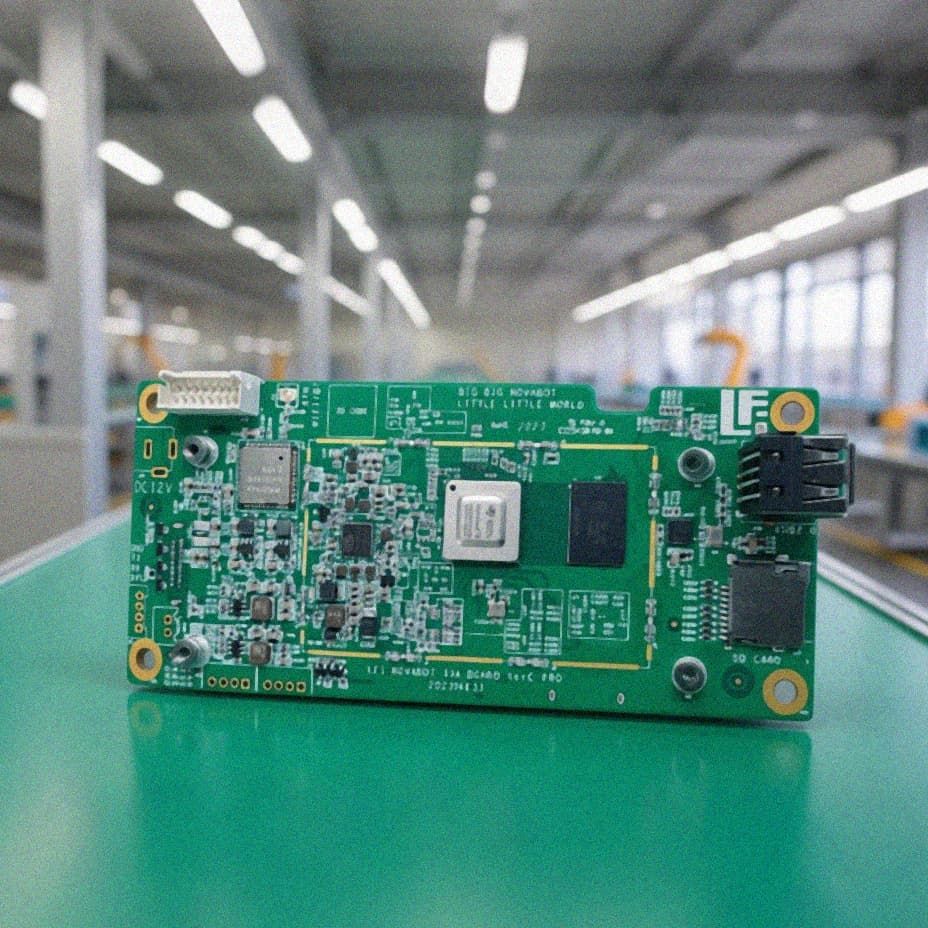
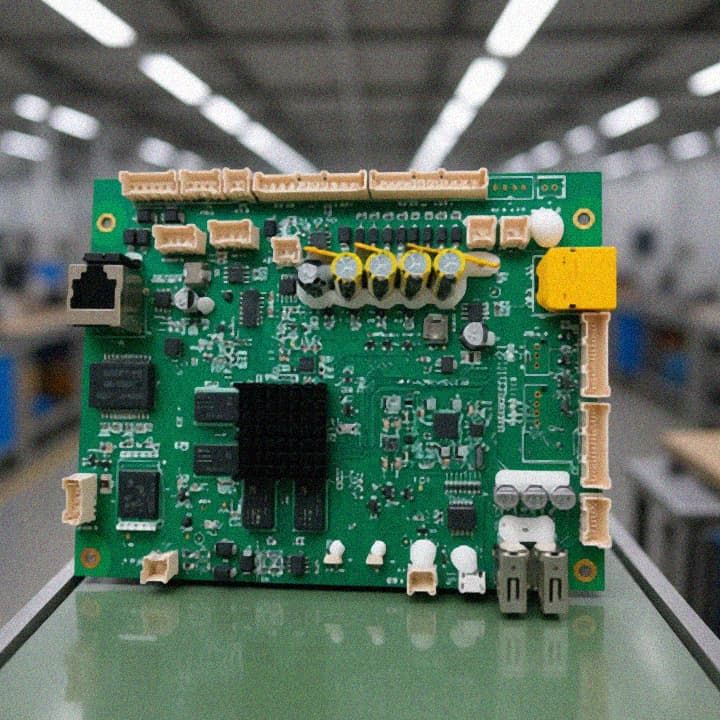
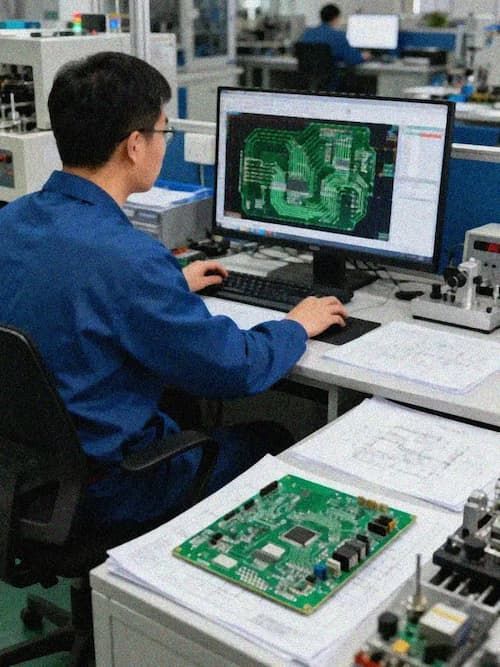
- Miniaturized High-Density PCB Design: Utilizes HDI PCB technology (two-stage stacked via structure) and selects an ultra-thin high-TG substrate (FR-4 high-TG material, Tg≥170℃). The 8-layer board controls line width/space at 2.0/2.0 mil, achieving high-density routing through Anylayer interconnect technology. Within a 50mm×50mm size, it integrates an infrared sensor interface, HDMI output, WiFi 6 communication module, and power management unit—improving module integration by 40% compared to traditional solutions.
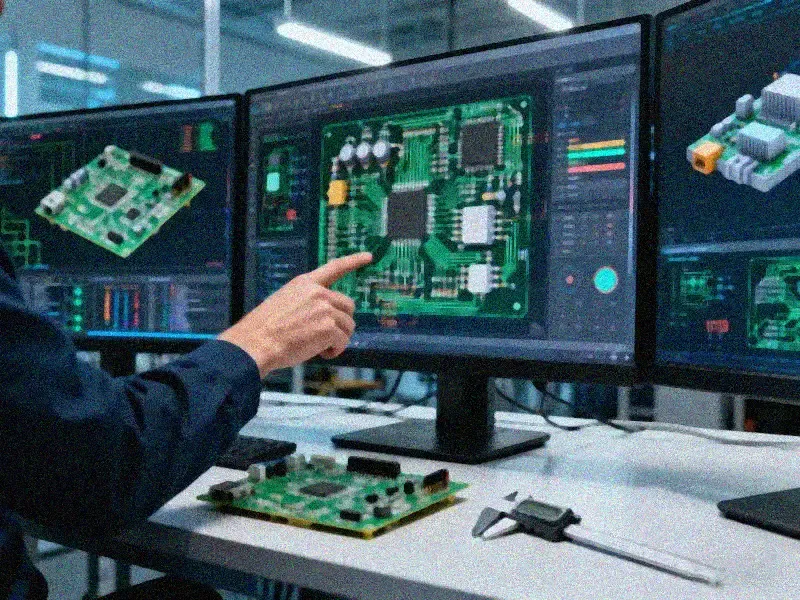
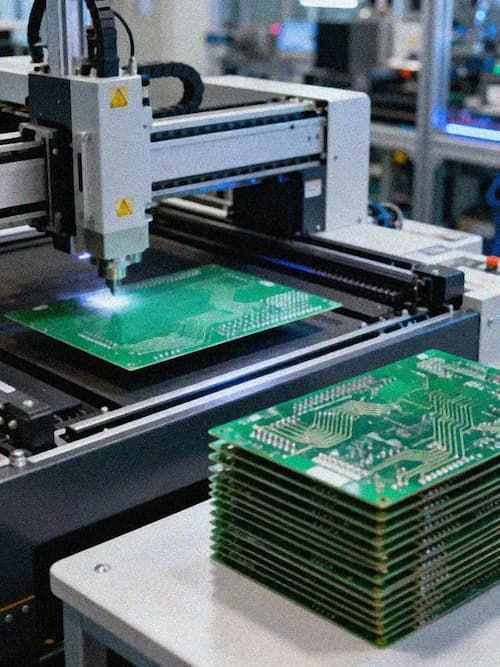
- Enhanced Anti-interference and Reliability: Employs EMI/EMC PCB Design technology to reduce signal interference through differential pair routing, ground plane optimization, and impedance matching (tolerance ±5%) design. The PCB surface undergoes ENIG (Immersion Gold) treatment to improve soldering reliability and corrosion resistance. Electromagnetic shielding is added to critical circuit areas, combined with conformal coating to enhance vibration and moisture resistance. Manufacturability optimization is performed using a 2,368-rule DFM database to proactively avoid mass production defects.
- Efficient Thermal Management Solution: Combines passive cooling and PCB thermal optimization: the core board is equipped with an ultra-thin, high-efficiency heatsink (1.5mm thick); the PCB layout includes pre-drilled ventilation holes and copper-filled technology to optimize the placement of heat-generating components. Low-power components are selected, and dynamic power consumption adjustment is achieved through a power management chip, reducing the chip’s operating temperature to below 75℃.
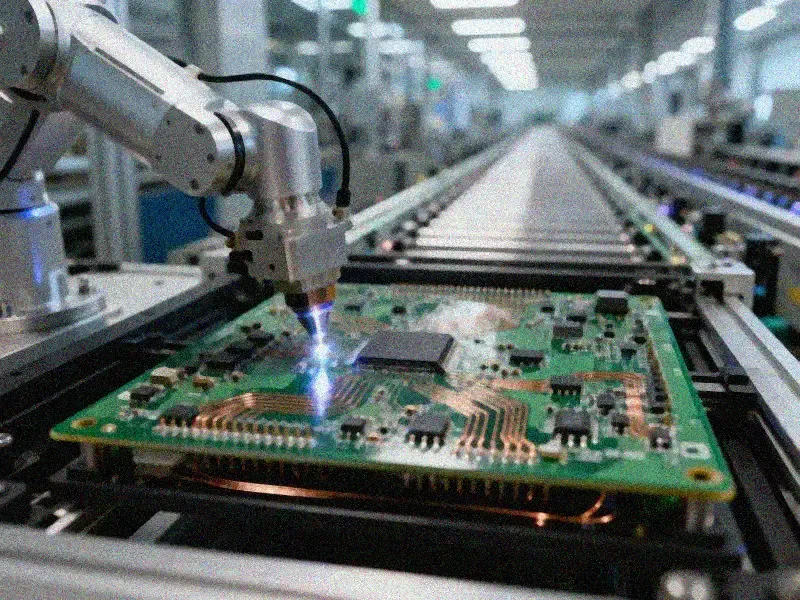
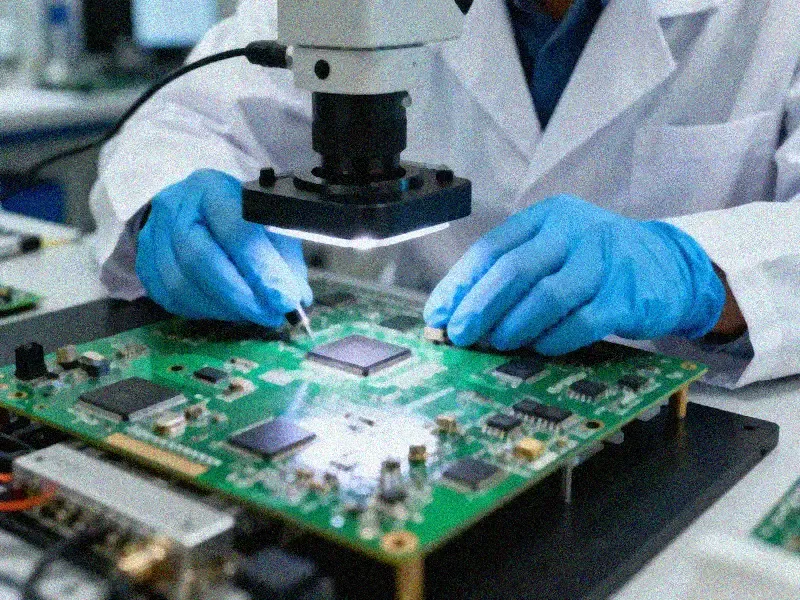
- Mass Production Efficiency Assurance: Leverages KBOM technology’s multi-source alternative intelligent matching service to ensure stable supply of core components; utilizes EES technology for failure analysis (FA) and reliability testing to provide targeted improvement solutions; designs automated testing fixtures for 100% FCT functional testing, with 24-hour closed-loop resolution of mass production issues.
Key Technical Parameters Table
| Technical Dimensions | Specific Parameters/Solutions | Core Functions |
|---|
| Main Control Processor | RV1126K AI Vision Processor, supports 4K@30fps encoding/decoding, integrated ISP unit | Provides high-precision image processing computing power for real-time infrared data fusion |
| PCB Core Parameters | 8-layer HDI board (two-stage via stack), FR-4 high-TG substrate (Tg≥170℃), size ≤50mm×50mm, line width/space 2.0/2.0mil, ENIG surface treatment | Achieves extreme miniaturization and high-density integration; improves corrosion resistance |
| Anti-interference Design | Differential pair routing, ground plane optimization, impedance control (±5%), electromagnetic shielding cover + conformal coating | Suppresses EMI interference; EMC pass rate reaches 98.5% |
| Heat Dissipation Solution | 1.5mm ultra-thin heatsink + PCB heat dissipation holes + copper fill layout, dynamic power consumption adjustment | Controls chip temperature ≤75℃, ensuring stable operation in high-temperature environments |
| Sensor Interface | 4-channel infrared camera input, supports 1080P resolution, temperature detection accuracy ±0.1℃ | Meets high-precision infrared image acquisition requirements for medical scenarios |
| Reliability Indicators | Operating temperature range -10℃~55℃, vibration tolerance 10g acceleration, supports 16 hours of continuous daily operation | Adapts to the complex working environment of humanoid robots and reliability requirements of medical equipment |
| Mass Production Assurance | 100% FCT testing, DFM optimization, 24-hour closed-loop resolution of mass production issues | Improves mass production yield and shortens delivery cycles |
Implementation Results
- Performance Indicator Achievement: Infrared image acquisition resolution reaches 1080P, temperature detection accuracy ±0.1℃, and data processing latency ≤15ms—meeting the requirements for fine target recognition and real-time response in medical scenarios.
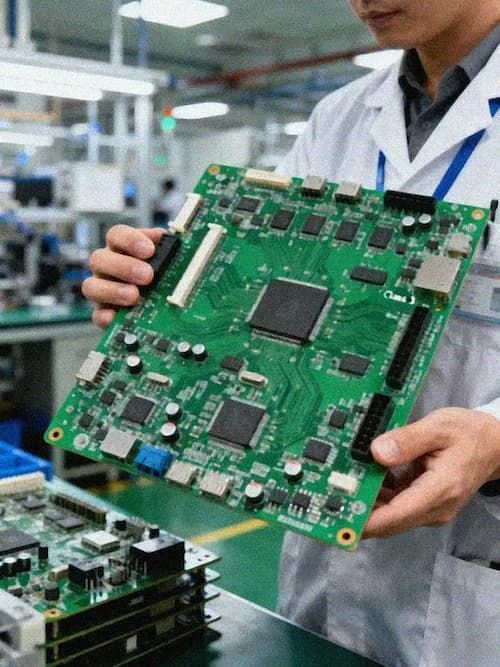
- Miniaturization and Integration Breakthrough: The PCB board size is controlled at 48mm×45mm, successfully integrating multiple module functions. It is 12% smaller than the customer’s initial requirements, perfectly adapting to the installation space of humanoid robots.
- Improved Anti-interference and Reliability: The EMC pass rate reaches 98.5%, ensuring stable signal transmission in the robot’s complex electromagnetic environment. CNAS/CMA laboratory testing shows the product defect rate is reduced to below 0.3%, meeting the long-term operation requirements of medical devices.
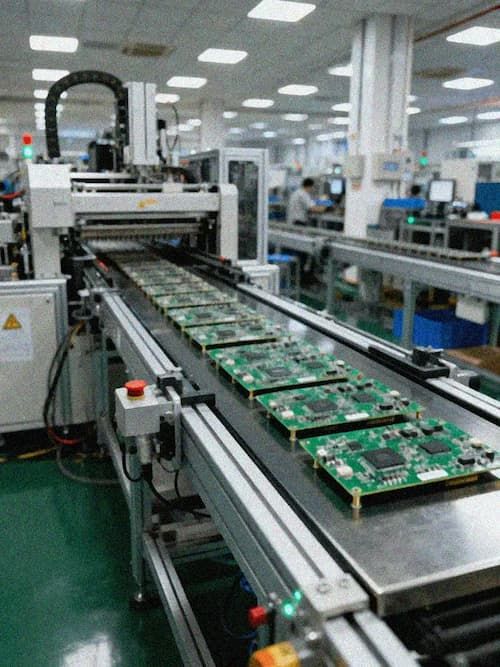
- Optimized Mass Production Efficiency: Leveraging IPM technology’s vertical integration capabilities, the mass production cycle is compressed to 60% of the industry average, and BOM costs are reduced by 15%—helping customers accelerate product commercialization.
- Significant Thermal Management Effects: The core chip’s operating temperature is stabilized below 72℃, 18℃ lower than traditional solutions, effectively avoiding performance degradation and shortened lifespan caused by overheating.
This solution deeply integrates core capabilities such as AI Vision System PCB Design, Miniaturized PCB, and Industrial Control PCB Solutions. Empowered by the full IPM technology chain, it successfully solves the industry pain points of "high precision + miniaturization + anti-interference + high reliability" for humanoid robot infrared camera control systems, providing key hardware support for intelligent upgrades in healthcare and embodied intelligence fields.