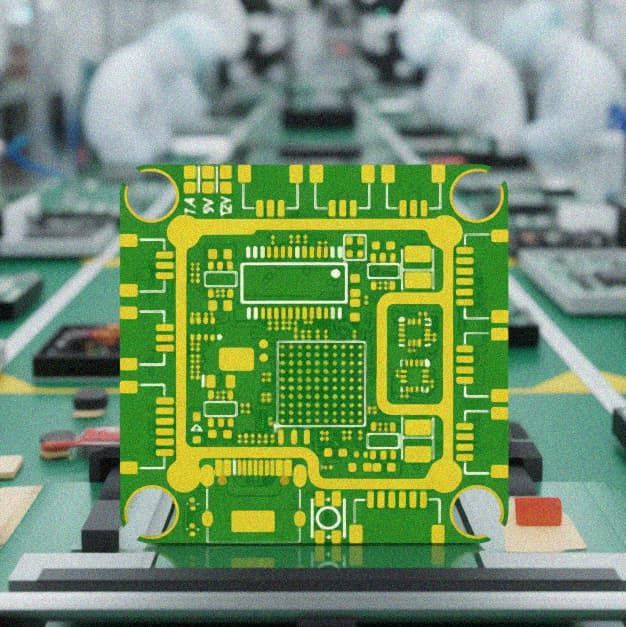
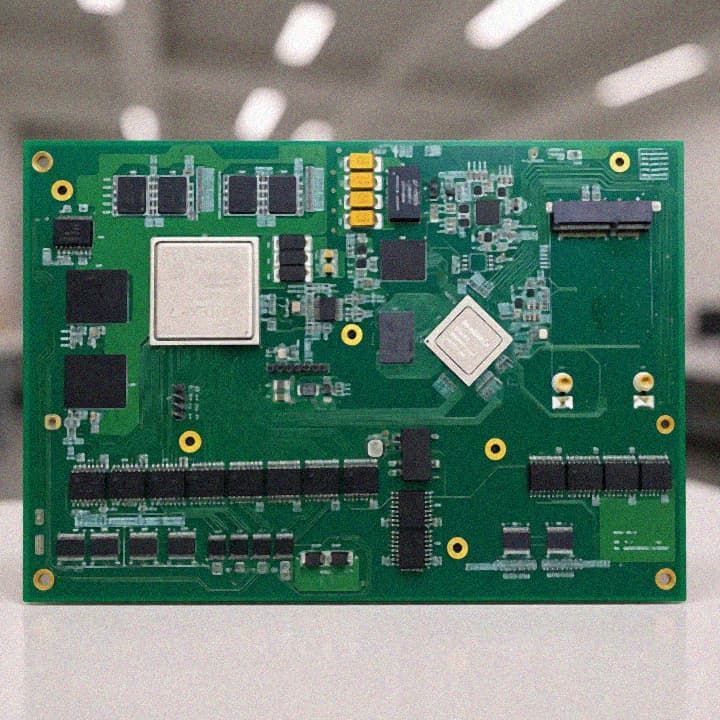
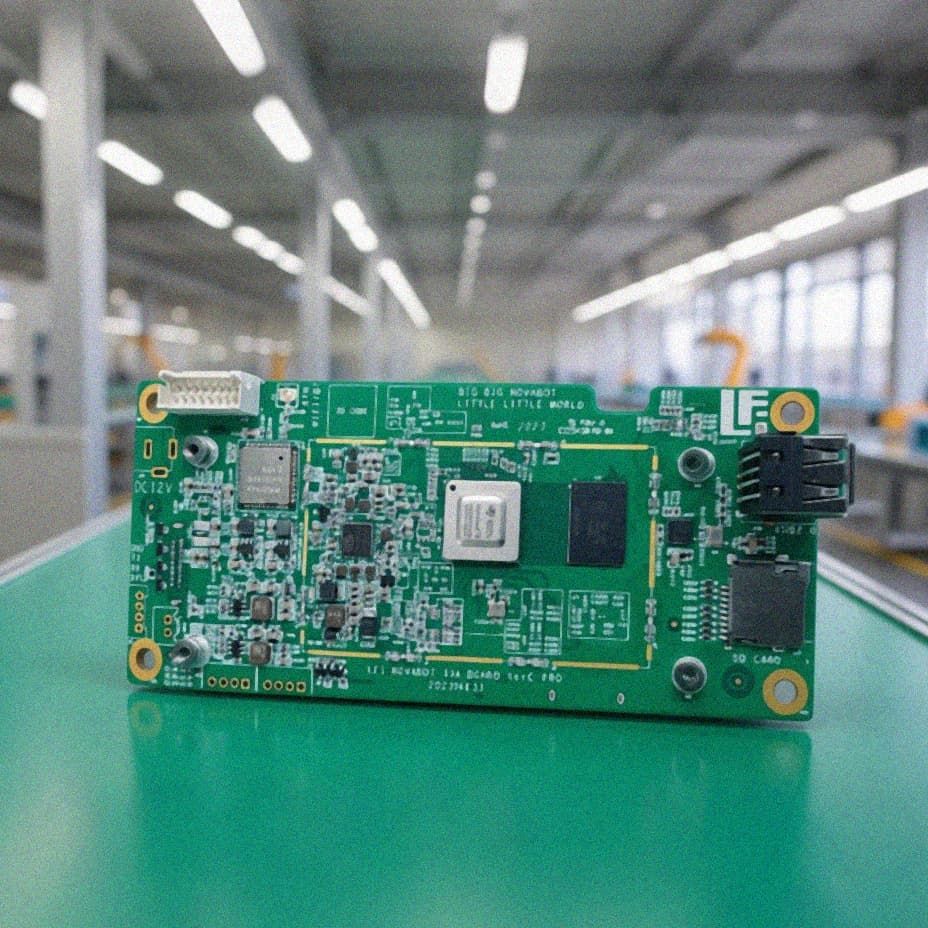
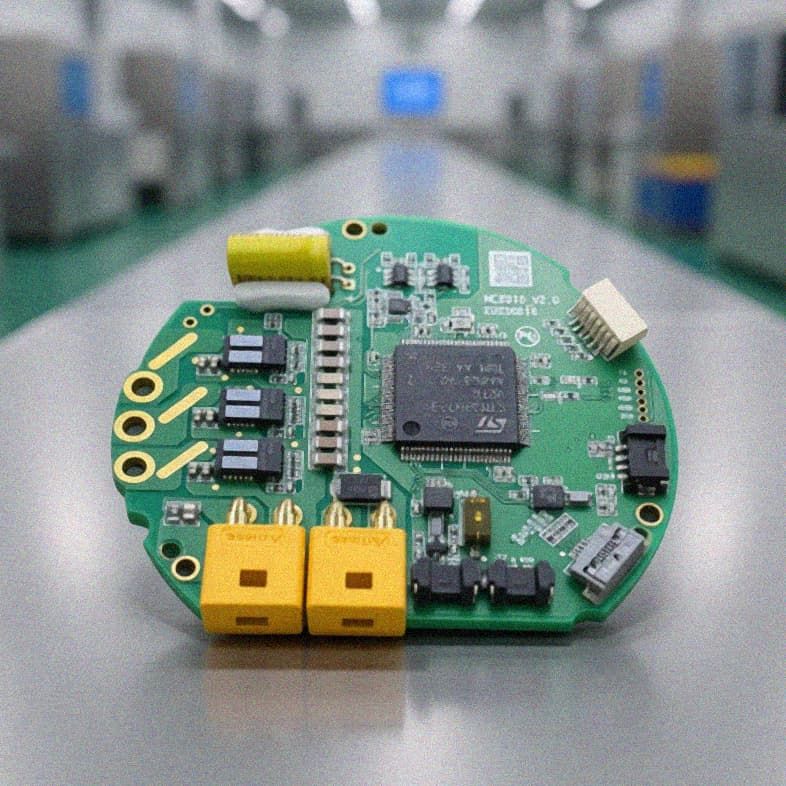
AI Main Control System (PCB Solution) | Security Patrol Humanoid Robot
Project Background and Core Requirements
The client focuses on developing humanoid robots for security patrol scenarios. Their core requirement is to create a highly integrated, highly reliable PCB main control system to support core functions such as autonomous robot patrolling, environmental monitoring, and anomaly warning. As a typical application in the AIoT & Robot Components Manufacturing field, the product needs to meet the following key requirements:
High-density interconnection: Integrating complex circuits such as multiple sensors, communication modules, and computing units to achieve highly condensed functionality;
Strong anti-interference capability: Resisting electromagnetic signals and radio frequency interference in security scenarios to ensure accurate data transmission and control commands;
Stable operation guarantee: Adapting to complex outdoor environments such as high and low temperatures and humidity to meet the reliability requirements of long-term continuous patrols;
High-efficiency signal transmission: Low latency and low loss to ensure real-time feedback of data such as visual recognition and positioning navigation.
Key Project Challenges:
High-density component integration leads to complex wiring and a high risk of signal crosstalk;
The complex electromagnetic environment of security scenarios, with issues such as radio frequency interference and electrostatic discharge affecting system stability;
High-power computing units and high-density layout create heat dissipation pressure, potentially leading to performance degradation.
Core PCB Solution
Leveraging core technologies such as High-speed PCB Design and EMI/EMC PCB Design, combined with PCB optimization experience documented in the documentation, this solution specifically addresses the project's pain points, creating a dedicated main control PCB solution for the security patrol humanoid robot.
Substrate and Core Material Selection
Shengyi S1000H is selected as the substrate material. This material possesses excellent electrical properties, mechanical strength, and heat resistance, with a Tg≥170℃, and can withstand outdoor ambient temperature fluctuations from -20℃ to 65℃.
Immersion gold surface treatment enhances welding reliability and corrosion resistance, making it suitable for outdoor, humid, and dusty security environments.
Auxiliary materials include environmentally resistant components such as anti-sulfur resistors and tantalum capacitors to reduce the risk of failure under harsh conditions.
Structure and Process Design
The board thickness is set at 1.6mm, employing a 6-layer structure design with a copper thickness of 10oz (approximately 35μm) to meet the requirements of high-density current carrying and signal transmission;
The trace width and spacing are both set at 6mil (0.15mm) to ensure sufficient electrical isolation and avoid signal crosstalk under high-density layout;
Utilizing HDI PCB technology (Anylayer Interconnect), high-density component layout is achieved, reducing PCB size and adapting to the lightweight design requirements of humanoid robots;
Heat dissipation optimization: Through copper filling, heat dissipation hole array layout, and zoned planning of heat-generating components, combined with localized buried copper technology, heat dissipation efficiency is improved, keeping the operating temperature of the computing unit below 85℃.
Interference Reduction and Signal Integrity Optimization
Signal Integrity Control: Differential pair routing and impedance matching (tolerance ±5%) design reduce signal reflection and interference, improving AI signal integrity PCB design levels;
Electromagnetic Compatibility Enhancement: Optimized ground plane, filter capacitor layout, and shielding layer design reduce electromagnetic radiation and sensitivity, achieving an EMC pass rate of 98.5%;
Electrostatic Discharge Protection: ESD protection devices are added to key interfaces, meeting the IEC 61000-4-2 electrostatic discharge immunity test standard, resisting electrostatic interference in security scenarios.
Manufacturing Process Assurance
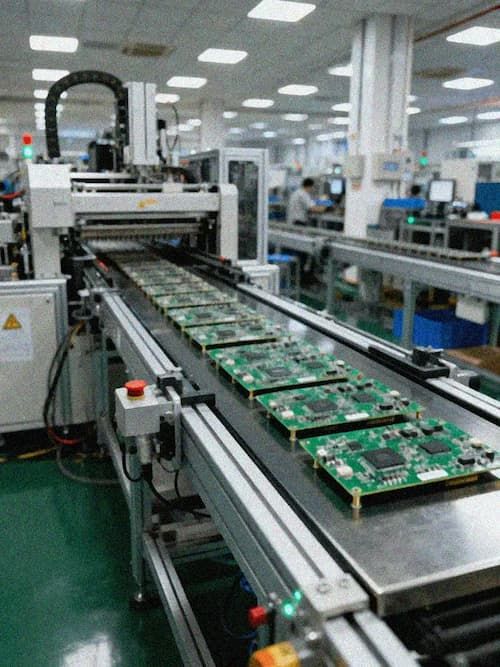
Complying with IPC-A-610G Ⅲ standards, a highly reliable nitrogen reflow soldering process is used to ensure solder joint quality;
Implementing 100% FCT functional testing and flying probe testing to identify potential circuit faults and improve factory yield;
Conformal Coating: The PCB surface is coated with a conformal coating, providing moisture resistance, salt spray resistance, and corrosion resistance, suitable for complex outdoor environments. ## Core Parameter Table
| Item | Technical Parameters |
|---------------------|--------------------------------------------------------------------------|
| Substrate Material | Shengyi S1000H (Tg≥170℃, with excellent electrical performance and heat resistance) |
| PCB Structure | 6-layer design, board thickness 1.6mm, copper thickness 10oz (35μm) |
| Trace Width/Spacing | 6mil/6mil (0.15mm/0.15mm) |
| Technology and Process | HDI arbitrary layer interconnection, immersion gold surface treatment, nitrogen reflow soldering, conformal coating |
| Signal Transmission Stability | 35% improvement over conventional designs (achieved through differential routing and impedance matching) |
| Electromagnetic Compatibility (EMC) | 98.5% pass rate, meets IEC 61000-4 series immunity standards |
| Operating Temperature Range | -20℃~65℃ (suitable for outdoor security patrol environments) |
| Heat Dissipation Capacity | Operating temperature of the computing unit ≤85℃ (copper fill + heat dissipation holes + optimized partitioned layout) |
| Surface treatment | Immersion gold process (gold thickness ≥3u"), corrosion resistance, high soldering reliability |
| Testing standards | 100% FCT functional test, flying probe test, compliant with IPC-A-610G Ⅲ standard |
Implementation results
Performance meets standards: AI signal integrity PCB design optimization improves signal transmission stability by 35%, visual recognition data latency ≤10ms, meeting real-time patrol requirements;
Enhanced anti-interference capability: EMC pass rate reaches 98.5%, stable operation in complex electromagnetic environments, zero failures caused by electrostatic discharge, radio frequency interference, etc.;
Improved environmental adaptability: Immersion gold process and three-proof coating treatment enable the product to work continuously for 720 hours without abnormalities in outdoor humid and high/low temperature environments, reducing the failure rate by 60%;
Integration meets requirements: HDI technology achieves high-density layout, PCB volume is reduced by 25% compared to conventional designs, adapting to the lightweight and miniaturized requirements of humanoid robots;
High Mass Production Feasibility: Leveraging a library of 3.27 million certified materials and 2,368 DFM rules, pre-production simulation and manufacturing optimization ensure a mass production defect rate below 0.3%.
Technological Advantages and Core Value
Targeted solutions address pain points in security patrol scenarios, balancing high-density integration, anti-interference, and environmental adaptability—three core requirements;
Integrates Industrial Control PCB Solutions and High-performance AI PCB design technologies, resulting in a highly mature solution;
Utilizes Kingboard's CNAS/CMA accredited laboratory, undergoing comprehensive environmental and electrical reliability testing to guarantee product quality;
Supports modular expansion, allowing for the addition of navigation modules, infrared detection modules, and other interfaces to meet customized needs in various security scenarios.