



















Thyristor Valve Signal Control and Monitoring (IPD Solution) | Power Industry
Core Customer Needs
- High-precision signal acquisition: Signal acquisition errors must be controlled within an extremely low range to meet the stringent accuracy requirements of power equipment and support subsequent fault analysis and decision-making.
- Multi-protocol communication compatibility: Adaptation to multiple communication protocols such as VME64x bus and Gigabit Ethernet is required to achieve seamless integration with existing power system equipment (such as monitoring terminals and data servers).
- Real-time fault analysis and location: Rapid response to equipment anomalies is required, achieving second-level fault location and reducing power system downtime losses.
- Strong electromagnetic interference (EMC) resistance: The electromagnetic environment in power scenarios is complex, requiring high-level EMC protection capabilities to ensure signal transmission stability.
- Low power consumption and scalability: Adaptable to the long-term uninterrupted operation requirements of power equipment, supporting flexible expansion of functional modules and OTA remote upgrades.
- Harsh environment adaptability: Able to withstand harsh conditions such as high temperature, high humidity, and dust in power scenarios to ensure long-term stable operation of equipment.
Core Industry Challenges
- Prominent Electromagnetic Interference (EMI): Strong electromagnetic radiation from power systems damages signal integrity, severely impacting acquisition accuracy and communication stability.
- Low Fault Location Efficiency: Traditional solutions lack real-time data analysis capabilities, relying on manual on-site inspections for troubleshooting, which is time-consuming and difficult.
- Insufficient System Stability: Environmental factors such as high and low temperature cycles and humidity fluctuations can easily trigger equipment failures, affecting the continuous operation of the power system.
- High Maintenance Costs: On-site maintenance processes are complex, with high labor and time costs, and the procurement cycle for some older components is long and the supply is unstable.
- Poor System Integration Compatibility: Technical barriers exist for integration with existing power industry ERP and MES systems, resulting in long integration and modification cycles and high costs.
IPD One-Stop Solution
Leveraging KINGBROTHER IPDM's full-chain technology integration capabilities, focusing on Industrial Control PCB Solutions and PCB Design Service, we create customized IPD solutions tailored to the characteristics of the power industry, covering the entire process from hardware design, driver development, system porting, PCB design, and BOM optimization, incorporating core technologies such as EMI/EMC PCB Design, High-speed PCB Design, and DFX Review.
Core Technologies and Hardware Configuration
- Signal Acquisition and Processing: Employs multi-channel optical isolation acquisition technology, coupled with a cloud-based real-time data analysis platform, to achieve second-level fault location; integrates SI/PI simulation technology to optimize signal integrity and reduce electromagnetic interference.
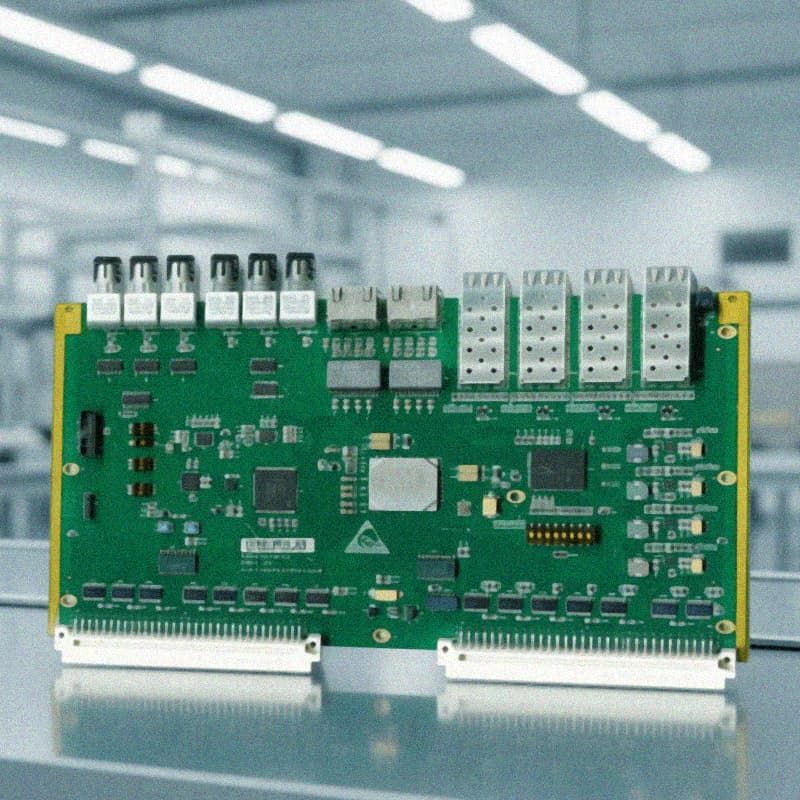
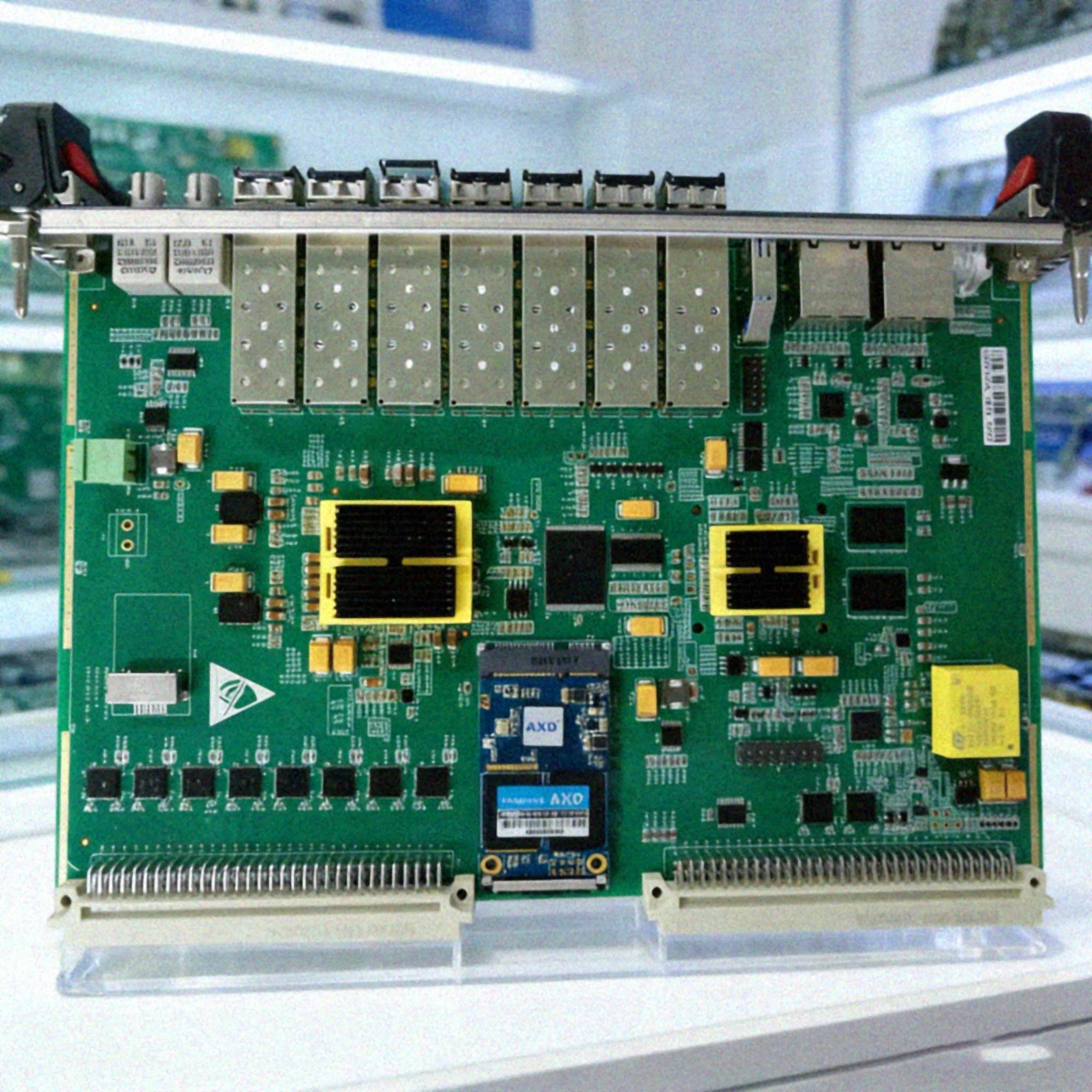
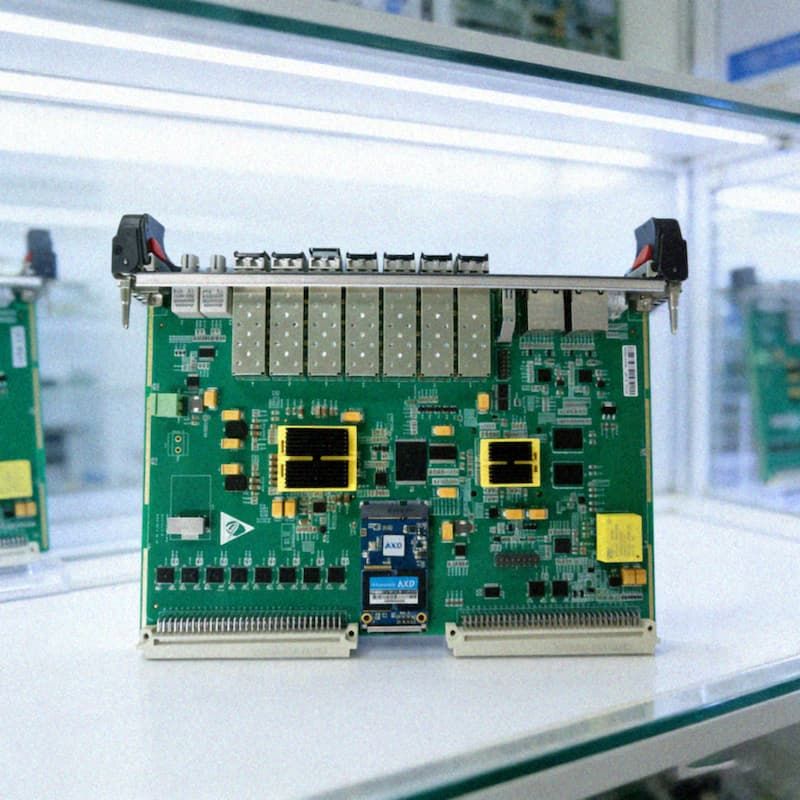
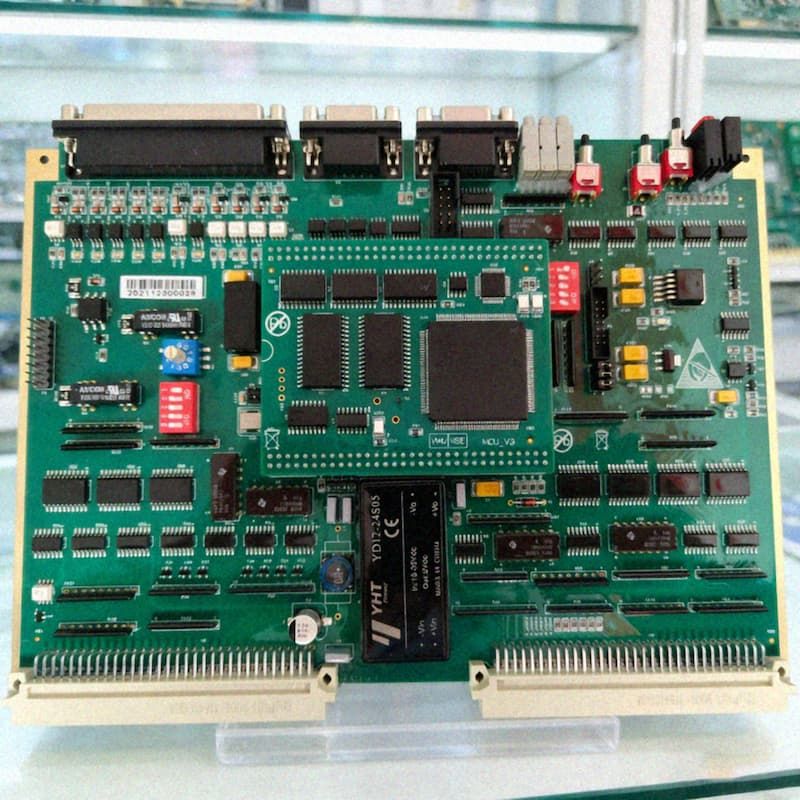
- Core Chip Selection: Based on an FPGA platform (Xilinx), the XC6VLX75T-1FFG484C is selected as the main control chip, adapted to the VME64x bus interface, ensuring high-speed data processing capabilities; paired with the VSC8574XKS-04 Gigabit Ethernet chip, supporting 2 electrical ports + 4 optical ports for communication, meeting multi-protocol compatibility requirements.
- System Optimization Design: Incorporates DFX manufacturability review, design review, and reliability design principles to proactively avoid potential design defects; provides domestic component alternatives through BOM Purchase for PCB Assembly service, shortening the procurement cycle and reducing costs.
- Remote Upgrade Capability: Supports OTA remote upgrades, enabling system firmware updates and function iterations without on-site operation, improving maintenance efficiency.
PCB Key Parameter Design
| PCB Parameters | Specific Configuration | Technical Advantages |
|---|
| Board Structure | 4 Layers (Signal Layer/Power Layer/Ground Layer/Shielding Layer) | Layered isolation design reduces signal crosstalk and electromagnetic interference |
| Substrate Selection | FR-4 high TG material (Tg≥170℃) | Meets stability requirements in high-temperature environments |
| Copper Thickness | Outer layer 35μm / Inner layer 70μm | Ensures current carrying capacity and heat dissipation performance |
| Minimum Line Width/Spacing | 3.0mil/3.0mil | Meets industrial control PCB electrical isolation standards |
| Surface Treatment | Immersion Gold Process | Improves soldering reliability and corrosion resistance, extends lifespan |
| Impedance Control Tolerance | ±10% | Ensures high-speed signal transmission stability |
| Minimum Mechanical Hole Diameter | 0.2mm | Adapts to high-density component layout requirements |
| Anti-interference Design | Differential Pair Routing + Grounding Shielding | Strengthening EMI/EMC Protection, Adapting to Strong Electromagnetic Environments |
Implementation Results
- Significantly Improved Signal Accuracy: Signal acquisition error reduced to <0.05%, far exceeding the industry average, meeting the high-precision data requirements of power equipment.
- Leap in Fault Handling Efficiency: Fault location time reduced from hours to seconds, efficiency improved by 90%, significantly reducing downtime losses.
- Significantly Reduced Maintenance Costs: Through domestic substitution and remote maintenance solutions, maintenance costs decreased by 50%, and the procurement cycle for older components was shortened by 30%.
- Enhanced System Stability: EMC pass rate reached 98.5%, with continuous operation without abnormalities in a high-temperature range of -40℃ to 85℃ and a high-humidity environment of 85%RH, improving product reliability by 2 times.
- Optimized Integration and Compatibility: Achieved seamless integration with existing power system equipment, adapted to multiple communication protocols, and reduced integration and modification cycle by 20%.
- Mass Production and Delivery Advantages: Relying on a library of 3.27 million certified materials and a DFM rule library of 2368 rules, the success rate of the solution increased by 35%, and the mass production cycle was reduced to 60% of the industry average, facilitating rapid product deployment.