



















Thyristor Trigger Board (IPDM Solution) | Power Industry
Customer Needs and Core Challenges
Core Industry Needs: Focusing on UHV DC transmission scenarios, customers require a thyristor trigger board adapted to UHV DC systems. Key requirements include stable signal transmission (distortion-free optical pulse signals), ultra-long service life (≥100,000 hours), high-voltage isolation protection (withstanding ±800kV voltage), and compliance with Power electronics PCB design's high reliability standards and EMI/EMC PCB design's anti-interference requirements.
Key Technical Challenges:
- Signal Transmission: Optical pulse signals are susceptible to electromagnetic interference, resulting in transmission delays and distortion, affecting triggering accuracy.
- Durability: Under UHV environments, high temperature, high humidity, and strong electric fields combine, making it difficult for conventional PCB materials and processes to meet long-term stable operation requirements.
- System Compatibility: Seamless integration with existing control modules in the power transmission system is required, along with high synchronization of multi-channel signal outputs.
One-Stop IPDM Solution
Based on the Integrated Product Design & Manufacturing (IPDM) system, we integrate three core businesses: IPD, IPM, and PCB, to create customized solutions:
IPD (Integrated Product Design) Technology Empowerment:
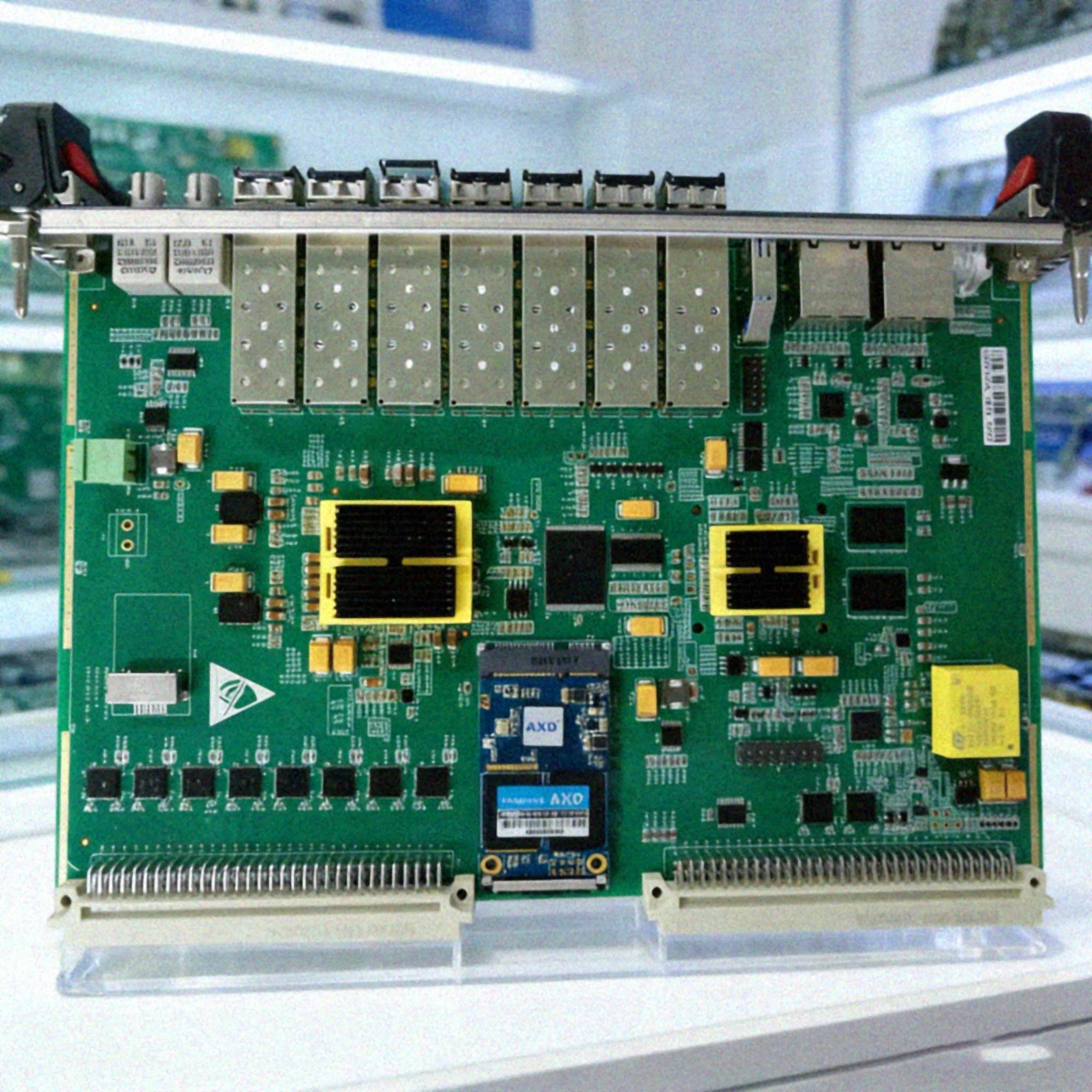
- Core Platform Selection: Utilizing an FPGA platform (Xilinx XC7K325T), we construct a dual-system parallel design architecture to ensure seamless system switching in the event of a single point of failure;
- Signal Integrity Optimization: Employing SI/PI simulation technology, we reduce signal interference and reflection through differential pair routing and impedance matching design (impedance control tolerance ±5%);
- Multi-Channel Synchronous Control: Supports 28 independent signal output channels with a channel synchronization error ≤1μs, adapting to the requirements of polythyristor collaborative triggering in UHV transmission.
IPM (Integrated Product Manufacturing) Process Assurance:
- Precise KBOM Material Selection: Leveraging a database of 3.27 million certified materials, we select high-voltage and high-temperature resistant components, providing domestic alternatives and reducing supply chain risks.
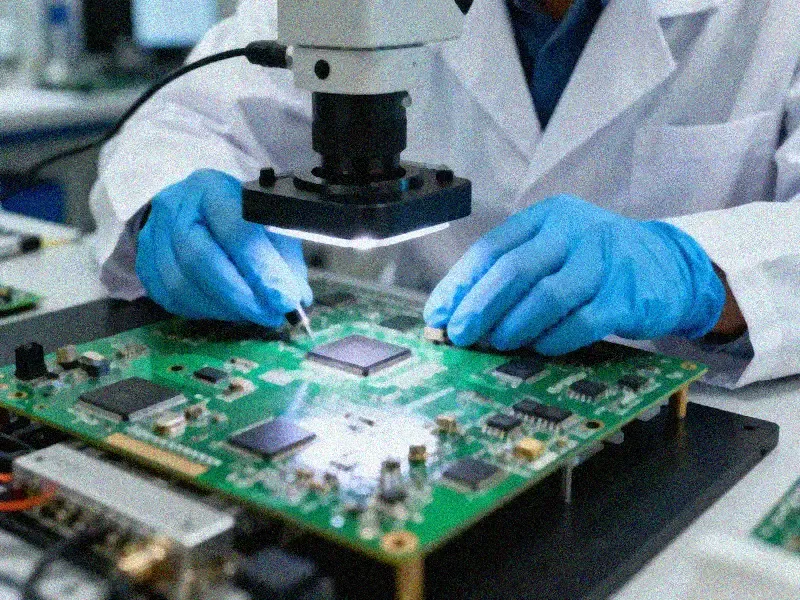
- PCBA Process Enhancement: Utilizing high-density SMT technology with conformal coating (a mixture of red epoxy and solder paste), coupled with highly reliable nitrogen reflow soldering, meeting the IPC-A-610G Ⅲ standard.
- EES Full-Process Verification: Conducting DFM manufacturability analysis to proactively avoid production defects and resolving mass production issues within a 24-hour closed-loop process.
PCB (Printed Circuit Board) Specific Optimization:
- Substrate Selection: Selecting high-TG FR-4 material (Tg≥170℃) to enhance mechanical strength and electrical stability under high-temperature environments.
- Surface Treatment Process: Employing immersion gold plating to improve soldering reliability and corrosion resistance, adapting to harsh outdoor environments with ultra-high voltage.
- Heat Dissipation and Protection Design: Increasing heat dissipation holes and copper-filled layout, optimizing the arrangement of heat-generating components; ensuring an EMC pass rate of 98.5% through EMC protection design.
Core Technical Parameter Table
| Technical Modules | Core Parameters | Implementation Standards/Basis |
|---|
| Core Control Platform | FPGA Model: Xilinx XC7K325T, Dual System Parallel | Complies with IPDFPGA Platform Technical Specifications |
| Signal Transmission | Signal Output Channels: 28 channels, Synchronization Error ≤1μs, Optical Pulse Signal Distortion Rate ≤0.5% | SI/PI Simulation Optimization, Differential Pair Routing Design |
| PCB Characteristics | Material: High TG FR-4 (Tg≥170℃), Surface Treatment: Immersion Gold Process, Number of Layers: 16 | Reference PCB Core Optimization Directions and Material Standards |
| Process Standards | PCBA Process: High-Density SMT + Conformal Coating, Soldering Standard: IPC-A-610G Ⅲ | IPM Process Reliability Specifications |
| Environmental Adaptability | Operating temperature: -40℃~85℃, Withstand voltage: ±800kV, Service life: ≥100,000 hours | CNAS/CMA laboratory reliability testing and certification |
| Electromagnetic compatibility | EMC pass rate: 98.5%, Electromagnetic interference immunity level: IEC 61000-4-3 Level 3 | IPDM overall EMC protection system |
Implementation results and project application