Automotive Electronics
 Solution Overview
Introduction to Automotive Electronics Solutions
In the era of rapid evolution of smart vehicles, electronic systems are becoming the core driving force for vehicle performance and user experience. We offer comprehensive solutions covering motor drive, power management, intelligent cockpits and advanced autonomous driving in the automotive electronics field, taking into account high performance, high reliability and efficient mass production capabilities. The following four typical applications demonstrate our profound accumulation in automotive electronic engineering.
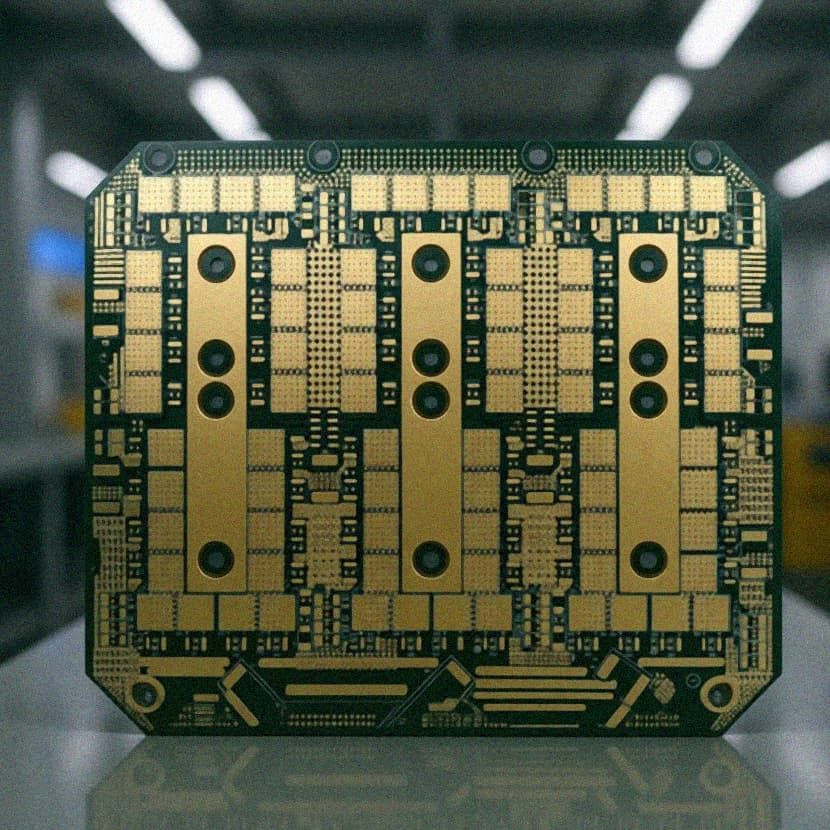
Automotive Motor Drive Device (PCB Solution) : Automotive Electronics
In the field of automotive motor control, customers require PCBS to withstand high heat dissipation, support peak currents up to 100A, and keep the power loop impedance below 1mΩ to reduce conduction losses. High power density layout and large current design bring challenges such as significant overheating, ablation and local temperature rise of copper foil.
We adopt a 6oz thick copper PCB to enhance the current-carrying capacity and reduce Joule heat. We select high Tg materials (Tg ≥ 170℃) to improve high-temperature resistance and introduce high thermal conductivity PP laminates to improve interlayer heat conduction.
This solution successfully met the thermal management requirements of the system, ensured the smooth assembly of components, and effectively reduced processing costs and assembly cycles.
| Key parameters | Specifications |
|---|---|
| Peak current | 100A |
| The power circuit impedance | <1mΩ |
| Copper thickness | 6oz |
| Base material Tg | ≥170℃ |
| Thermal management measures | High thermal conductivity PP laminate |
| Achievements | Meeting thermal management requirements and reducing processing and assembly costs |
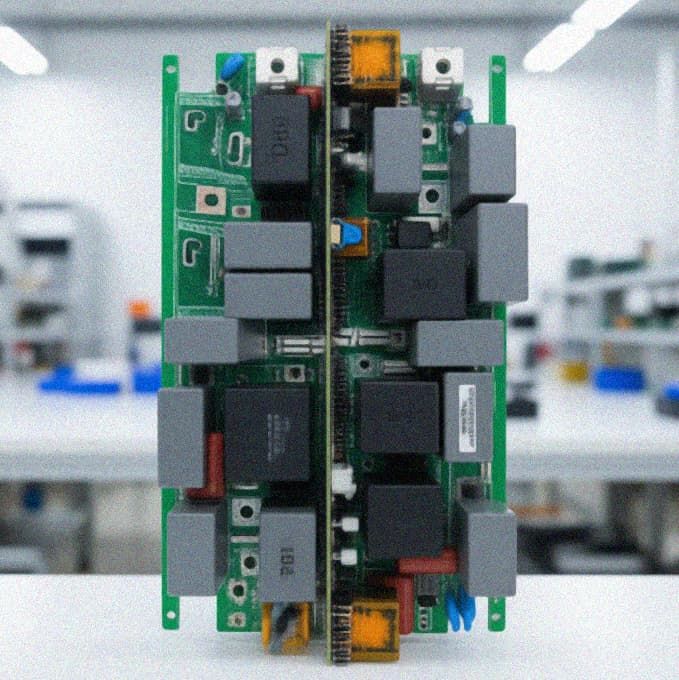
Automotive Power Module (EMS Solution)/Automotive Electronics
In the field of automotive battery management systems (BMS), customers require a DC-DC module PCB that is optimized for circuit functions. The product includes an AC-DC hybrid circuit. The power devices generate a lot of heat, and the full system testing is complex, requiring customized testing strategies.
We adopt a dual-board separation design: The power module and the control module are placed on two separate PCBS, with the power board using thick copper to enhance heat dissipation. Meanwhile, special fixtures are designed to fix the components, facilitating the assembly of DIP inserts. Carry out the "single-board functional test" and set up a complete test environment. In addition, provide failure analysis (FA) and DFM improvement recommendation reports for products and devices.
Ultimately, the PCBA single board iteration was successfully completed. While reducing product costs, early defects were effectively suppressed through customized testing, achieving overall cost control.
| Key Points of Implementation | Explanation |
|---|---|
| Circuit architecture | AC-DC hybrid, power/control dual-board separation |
| Power board design | Thick copper structure, enhanced heat dissipation |
| Assembly optimization | Custom fixtures support DIP process |
| Test Strategy | Single-board functional testing + Complete Test environment |
| Quality Assurance | FA Analysis + DFM Improvement Report |
| Achievements | Cost reduction, early defect control, and total cost optimization |
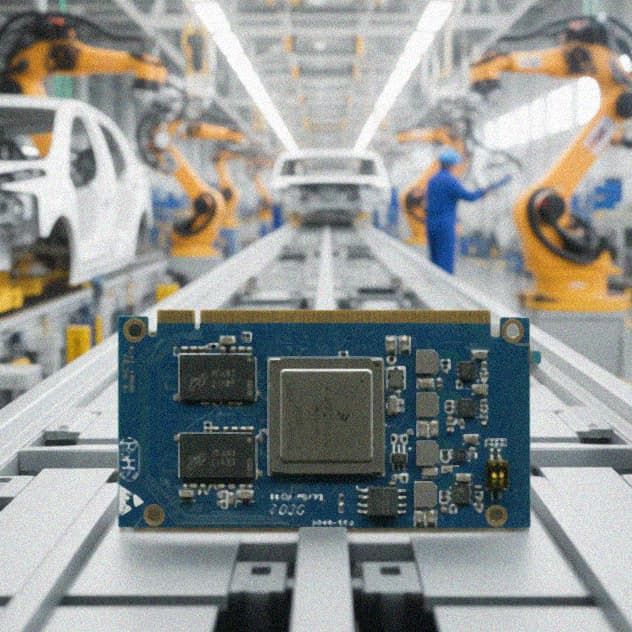
Automotive Intelligent Cockpit Control Panel (IPD Solution) : Intelligent Driving
The customer plans to develop a central control and management device for intelligent driving, which has strict requirements for battery life and system thermal management. At the same time, it needs to efficiently process a large amount of multimedia data, and has extremely high requirements for video and image processing capabilities.
We adopt advanced low-power design technology and support multiple power management modes. The system is equipped with multi-screen output, dual-camera input, high-speed USB, storage expansion, Gigabit Ethernet and common serial interfaces. The core is equipped with a high-performance multimedia processing unit, integrating multi-level cache, dedicated media coprocessor, hardware video codec and dual image processor, to achieve efficient multimedia data processing.
This solution significantly shortens the development cycle, ensures high-speed and stable data transmission, and fully meets the performance requirements of customers for the intelligent driving central control system.
| System Capability | Configuration |
|---|---|
| Power Management | Multi-mode low-power design |
| Interface support | Multi-screen output, dual cameras, USB, Gigabit Ethernet, serial interface |
| Processing unit | Multi-level cache + media coprocessor + hardware codec + dual image processor |
| Achievements | Shortening the development cycle and achieving high-speed and stable data transmission |
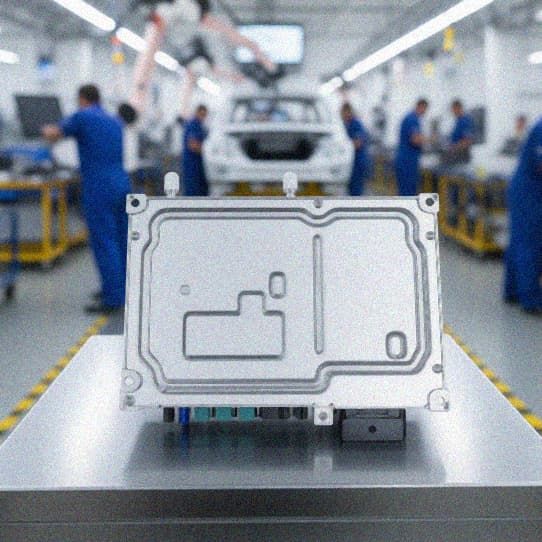
Autonomous Driving Domain Controller (IPDM Solution) : Intelligent Driving
In the field of advanced autonomous driving, customers need to develop a high-performance domain controller, which requires a computing power exceeding 500 TOPS, a heat dissipation capacity of up to 250W, and stable operation in extreme environments ranging from -40℃ to 125℃. The solution must simultaneously meet strict standards such as high computing power, efficient heat dissipation, automotive-grade reliability and module adaptability.
Our designed structure complies with the IP5K2 protection level, ensuring reliable operation in harsh automotive environments. Adopt a water-cooling heat dissipation solution to accelerate heat conduction and dissipation. The main processor selects NVIDIA DRIVE Orin™ SoC, providing up to 508 TOPS computing power, and is paired with 64GB DDR5 memory, supporting advanced autonomous driving algorithms.
This solution not only passed the customer's design review for the first time, but also significantly shortened the R&D cycle and mass production delivery time, and successfully solved the compatibility problem of multi-functional board cards.
| Core Indicators | Specifications |
|---|---|
| Computing power | 508 TOPS (NVIDIA DRIVE Orin™) |
| Heat dissipation capacity | 250W |
| Operating temperature range | -40℃ to 125℃ |
| Protection grade | IP5K2 |
| Memory | 64GB DDR5 |
| Heat dissipation solution | Water cooling system |
| Achievements | Passed the design review for the first time, shortened the R&D and mass production cycle, and solved compatibility issues |
The above four major Automotive Electronics solutions, from the bottom-level PCB design to system-level integration, comprehensively cover the key demands under the trends of electrification, intelligence and connectivity, helping customers build safe, efficient and reliable next-generation intelligent automotive electronic systems.
Share To:
Solutions
Solution Applications
Provide automotive-grade electronic system solutions such as motor drive, intelligent cockpit, and autonomous driving domain control.