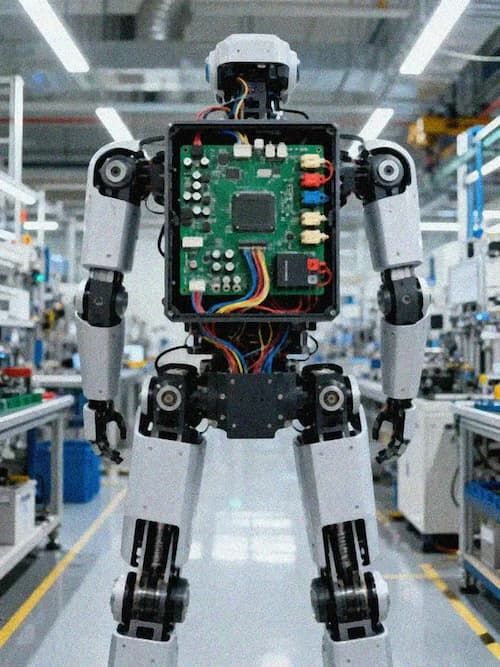
Humanoid Robot Project Template (IPDM Solution) | Industrial Embodied Intelligence
Project Background and Customer Needs
The customer focuses on developing humanoid robots in the field of industrial embodied intelligence. Their core requirements revolve around high reliability and high performance for industrial scenarios, specifically including: high real-time response capability, heterogeneous computing power fusion, micron-level positioning accuracy, low-power operation (suitable for battery-powered scenarios), low-latency data transmission, modular design (supporting functional expansion), miniaturization and lightweight integration, adaptability to extreme environments (high and low temperatures, humidity and corrosion), efficient thermal management, strong anti-interference capability (electromagnetic compatibility), and multi-modal sensor fusion control.
Key challenges faced by the project:
- High latency in inter-module collaboration, affecting motion synchronization accuracy;
- High-density integration leads to heat dissipation bottlenecks, and high chip temperatures easily cause performance degradation;
- Insufficient adaptability to complex industrial environments (temperature and humidity fluctuations, electromagnetic interference);
- High-precision sensor and actuator interface compatibility and data transmission stability requirements;
- Long R&D cycle, difficulty in mass production conversion, and significant cost control pressure.
Core Solution (IPDM Full-Chain Empowerment)
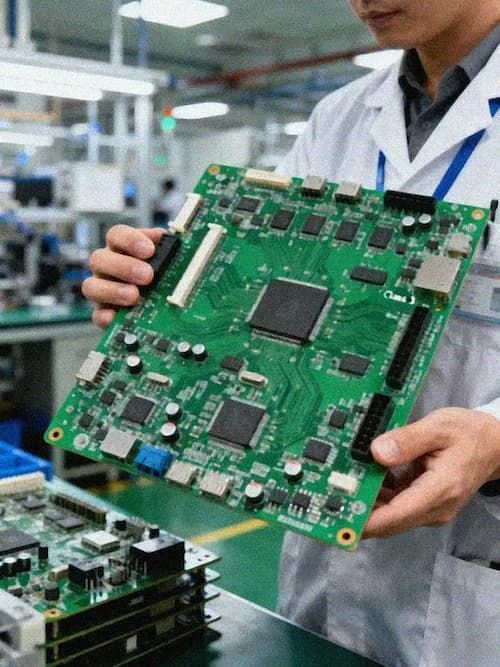
Leveraging the Integrated Product Design & Manufacturing (IPDM) one-stop integrated design and manufacturing system, and using the STM32H7 as the core processor, this solution integrates three core businesses: IPD (Integrated Product Design), IPM (Integrated Product Manufacturing), and PCB (Printed Circuit Board). It specifically addresses the aforementioned pain points and incorporates AIoT & Robot Components Manufacturing technology concepts to create a dedicated industrial-grade humanoid robot solution.
Core Hardware and Architecture Design
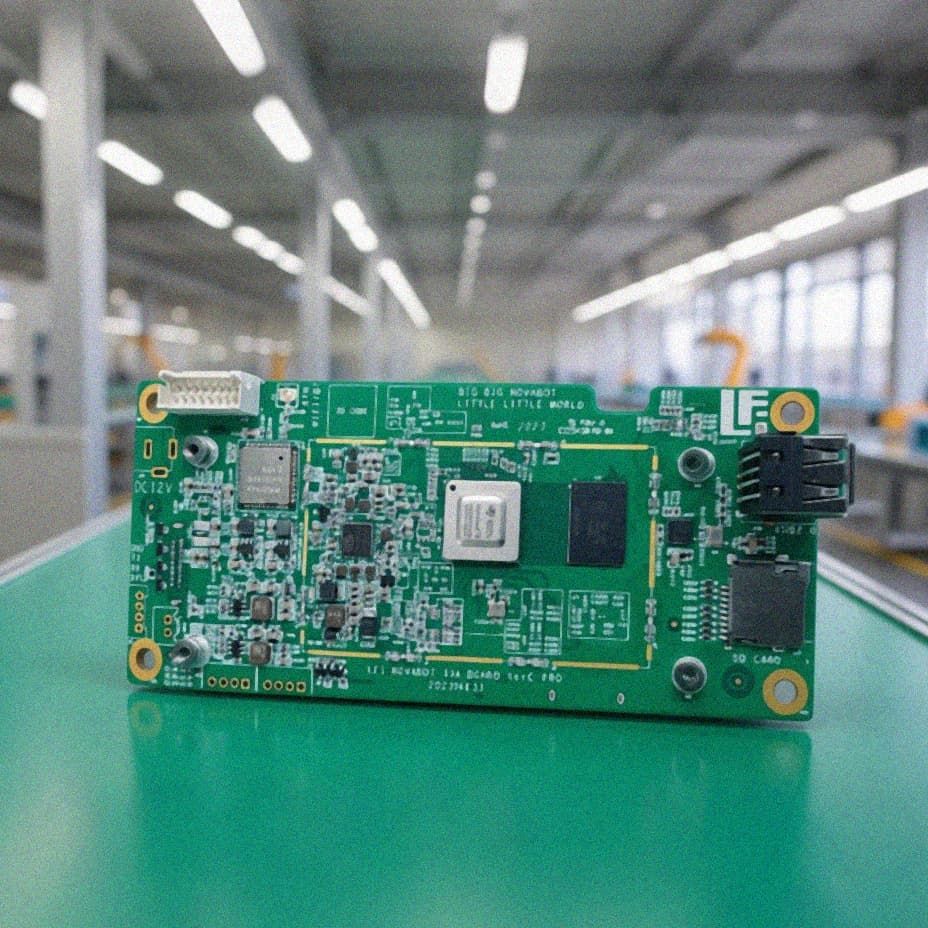
- Processor Selection: Utilizing the STM32H7 series core processor (ARM Cortex-A7/M7 heterogeneous architecture), supporting FPU and NEON acceleration, with a typical operating frequency of 1.2GHz, and complemented by 16TOPs heterogeneous computing power expansion (compatible with GPU/FPGA auxiliary computing modules), it meets the multi-task parallel processing requirements of industrial scenarios.
- Flexible Low-Power Solution: Innovatively adopts a three-power domain architecture (main processing domain, low-power domain, peripheral domain), which dynamically adjusts power consumption according to the robot's working status, balancing performance and battery life.
- Modular Design: Based on IPD core technology, it achieves a module reuse rate of 68% (exceeding the industry average of 35%), supporting 4-32 axis multi-axis synchronous control, adapting to different load and motion requirements.
Full-Chain Technology Implementation (IPD+IPM+PCB Collaboration)
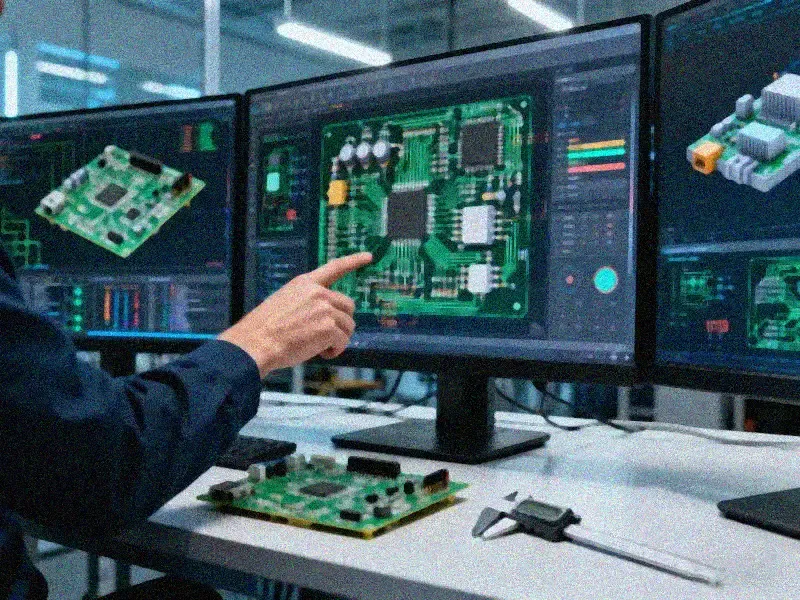
IPD Integrated Product Design: Precisely Matching Scenario Needs
- Core Technology Support: Multi-sensor collaboration (fusion of vision, force control, and position sensors), high-speed wireless communication, and high-speed image transmission technology, solving the pain points of multi-modal fusion control;
- Customized Development: Providing embedded system design solutions, covering hardware schematic design, driver development, and system porting, reducing the difficulty of customer hardware design;
- Interface Compatibility: Reserving multi-modal interfaces such as HDMI, Gigabit Ethernet, 5G full network compatibility, and WiFi 6, supporting the access of various high-precision sensors.
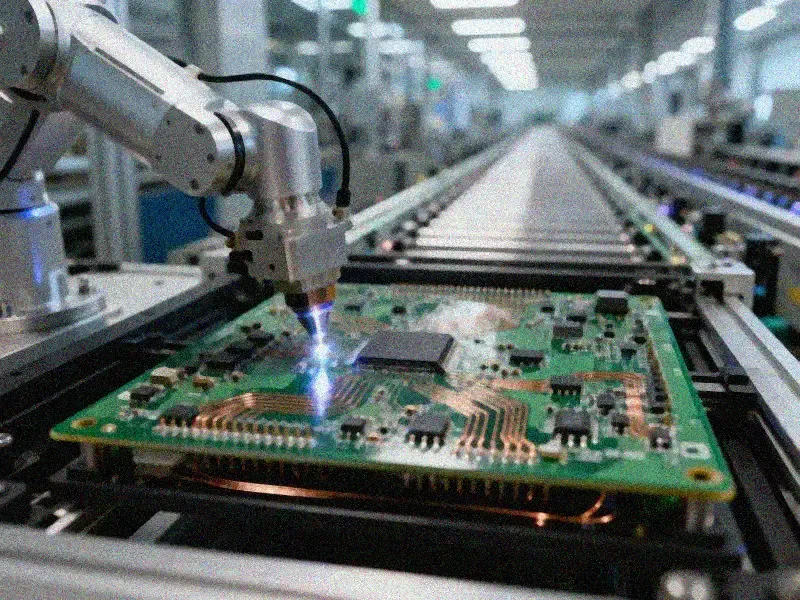
IPM Integrated Product Manufacturing: Ensuring Mass Production Reliability
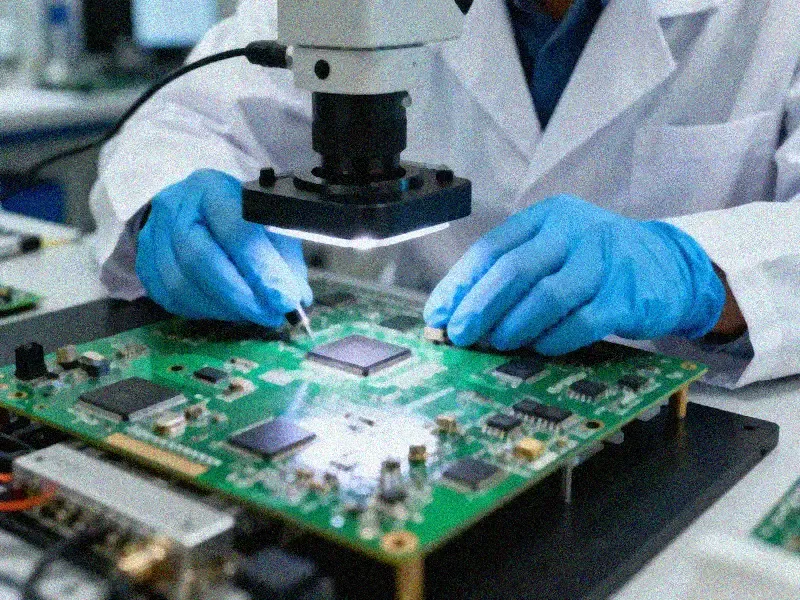
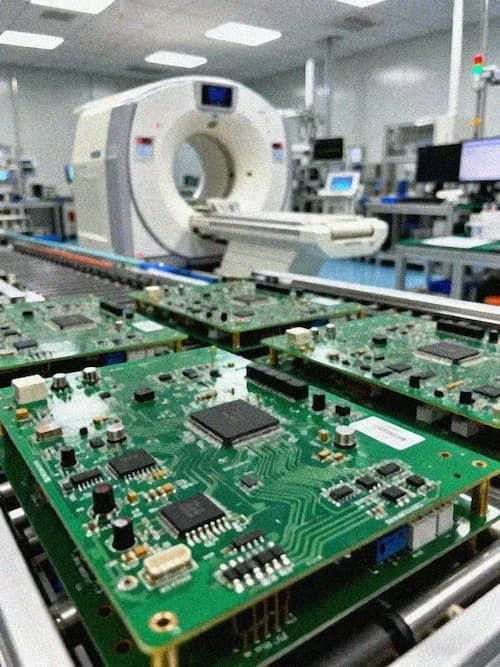
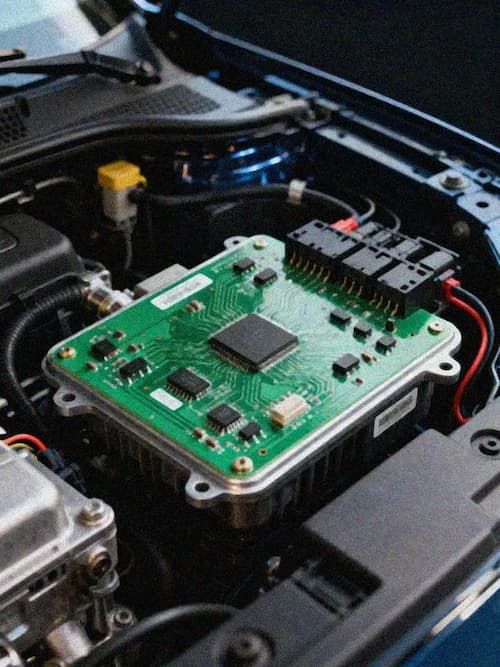
- Automotive-Grade Process Standards: The core board adopts automotive-grade design specifications, driven by DFX/failure analysis/process control to proactively avoid design defects;
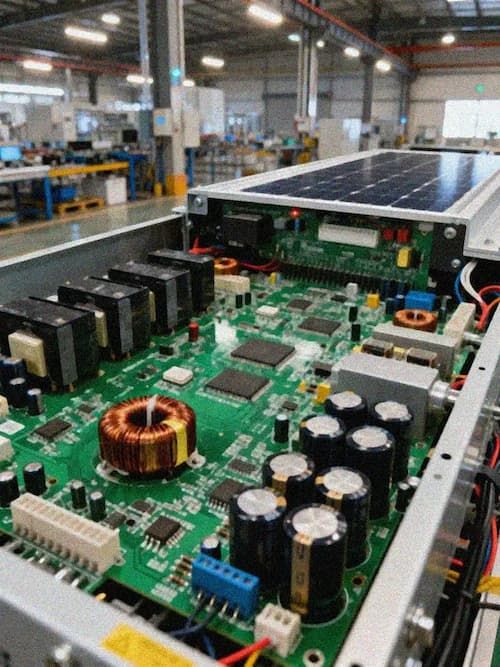
- Enhanced Environmental Adaptability: Utilizing a three-proof coating process (moisture-proof, salt spray-proof, corrosion-proof), coupled with SCH strong and weak current isolation design, enhances adaptability to harsh industrial environments;
- Cost Reduction and Efficiency Improvement Solutions: Through intelligent BOM optimization (multi-source alternative material matching) and the output of domestic alternative solutions, procurement costs are reduced by 15%-20%, and procurement delivery time is shortened.
PCB Core Technology Optimization: Breaking Through Performance Bottlenecks
- Technology Selection: Adopting HDI PCB and high-speed PCB design technology, supporting Anylayer interconnection to meet the needs of high-density component integration;
- Thermal Management Solution: Applying Thermal management PCB solutions, through copper filling, heat dissipation hole layout, reasonable partitioning of heat-generating components, and high-efficiency heat sinks, effectively reducing chip operating temperature by 15-20℃;
- Anti-interference Design: Based on the EMI/EMC PCB Design standard, using differential pair routing, impedance matching (tolerance ±5%), etc., to reduce signal interference and reflection, achieving an EMC pass rate of 98.5%;
- Substrate and Process: Selecting FR-4 high TG (Tg≥170℃) substrate and immersion gold surface treatment process to enhance high temperature resistance and corrosion resistance, meeting the IPC-A-610G Ⅲ standard.
Core Parameter Table
| Project | Technical Parameters |
|---|
| Core Processor | STM32H7 (ARM Cortex-A7/M7 heterogeneous architecture, 1.2GHz clock speed, supports FPU/NEON acceleration) |
| Computing Power Configuration | Main processor + heterogeneous computing power expansion (maximum support 16TOPs) |
| Power Architecture | Three power domains (main processing domain, low power domain, peripheral domain) |
| PCB Technical Specifications | HDI board (up to 26 layers/4-level stacked vias), minimum line width/spacing 2.5/2.5mil, impedance tolerance ±5% |
| Heat Dissipation Solution | Copper fill + heat dissipation hole layout + high-efficiency heat sink, chip operating temperature ≤85℃ |
| Positioning Accuracy | Micrometer level (suitable for industrial robot operation requirements) |
| Sensor Interface | Supports multi-modal sensor access such as vision, force control, and position (compatible with HDMI, Gigabit Ethernet, WiFi 6) |
| Transmission Latency | End-to-end low latency ≤10ms (meets real-time control requirements) |
| EMC Pass Rate | 98.5% (compliant with industrial electromagnetic compatibility standards) |
| Modular Reusability Rate | 68% (33 percentage points higher than the industry average) |
| Mass Production Cycle | Reduced to 60% of the industry average (doubles the product launch speed) |
| Quality Standards | Meets IPC-A-610G Ⅲ standard, supports national cryptographic SM2/3/4 encryption/decryption, and features a TrustZone security environment |
Implementation Results
- Performance Achieved: Through Thermal Management PCB Solutions and efficient heat dissipation design, the chip operating temperature is significantly reduced, solving the heat dissipation bottleneck of high-density integration; low latency design (≤10ms) and multi-axis synchronous control technology meet the precise collaborative motion requirements of humanoid robots.
- Enhanced Reliability: Automotive-grade processes and conformal coating reduce product defect rates by 50% and overall maintenance and rework costs by 40%, enabling it to withstand harsh industrial environments such as high and low temperatures and humidity.
- Accelerated Mass Production: Leveraging the integrated capabilities of the entire IPDM chain, modular design and DFX manufacturability optimization shorten the R&D cycle and enable rapid mass production conversion. Furthermore, significant cost reduction and efficiency improvements are achieved through domestic substitution and BOM optimization.
- Compatibility and Scalability: Standardized interface design and modular architecture support sensor upgrades and functional expansion, adapting to customized needs in different industrial scenarios (such as smart manufacturing and industrial inspection).
This solution deeply integrates the technological advantages of Industrial Control PCB Solutions and High-speed PCB Design, empowering the R&D of industrial humanoid robots through the entire IPDM chain. It successfully addresses core pain points such as real-time performance, heat dissipation, and reliability, providing customers with a one-stop solution from design to mass production.