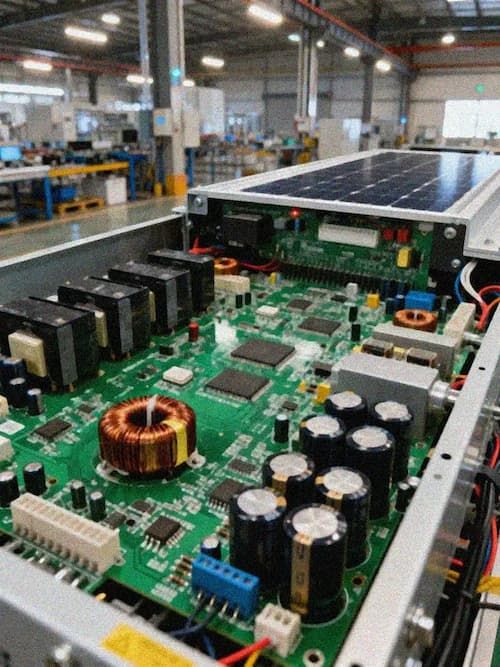
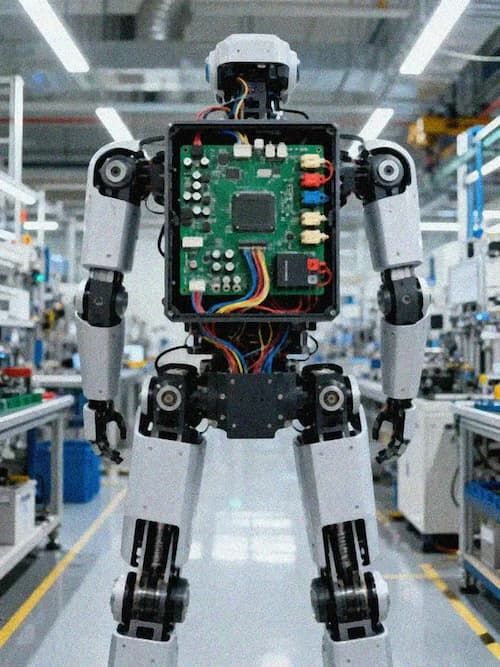
Behind the equipment displayed at Automate 2026, there is a PCB purchase list that will not be written publicly
In the exhibition hall of Automate 2026, leading manufacturers such as Siemens, Fanuc, and Schneider Electric demonstrated the latest generation of industrial controllers, servo drives and edge computing equipment. For ordinary visitors, the appearance and functional parameters of these devices are clear at a glance-faster computing speed, higher integration, and richer communication interfaces. For PCB suppliers, what deserves more attention is the interior of the equipment-that is the real technical threshold.
In the review of PCB suppliers, industrial equipment manufacturers have a set of "hidden standards" that will not be written in public procurement documents: high TG plates to avoid delamination failure at high temperatures, design life expectancy of more than 30 years, and complete production process traceability system. These requirements will not appear on product promotion pages and are key screening criteria for suppliers to enter the North American industrial customer supply list. In front of the Automate 2026 booth, experienced PCB suppliers will not just look at the appearance parameters of the equipment, but will directly ask the customer procurement team a question-"What are your internal standards for the number of layers and reliability of PCB materials? "
This paper takes Automate 2026 exhibition as an entry point to extract the "three hidden landmarks" of the North American industrial automation market for PCB from the new generation of industrial equipment on display-high TG plates, long-term reliability verification, and full-process traceability, and discuss China PCB suppliers 'response paths under these new standards.
Rising operating temperatures drive material upgrades, and high-TG plates change from optional to mandatory
The working environment of industrial automation equipment is changing. The new generation of servo drivers and AI controllers integrate higher computing density, and the internal temperature rise of the device is significantly increased compared with the previous generation. The TG value (glass transition temperature) of traditional FR-4 plates is usually 130-150°C, which is still competent in previous generation industrial equipment. However, under high temperature conditions of new generation equipment, interlayer delamination and through hole cracking The risk has increased significantly.
High-TG sheets, or PCB substrates with glass transition temperatures above 170°C, are becoming the default material selection requirement for PCBs in North America for industrial automation equipment. The high TG plate can still maintain size stability at high temperatures-its Z-axis thermal expansion coefficient is much lower than that of ordinary FR-4, and the thermal stress generated on the interface between the copper wall of the via hole and the substrate is smaller, which significantly reduces the failure probability of via cracking and interlayer delamination. At the same time, industrial equipment often requires PCBs to maintain electrical stability over a wide temperature range (service temperatures of-40 ° C to +125 ° C), which further strengthens the reliance on high-TG materials.
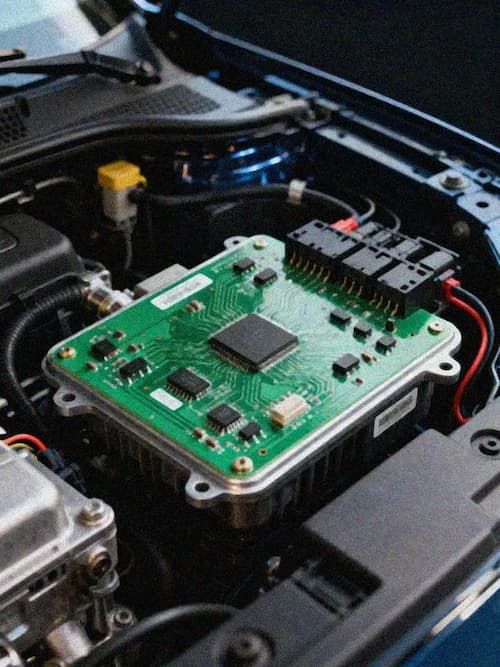
At present, the mainstream high-TG solutions in the field of industrial automation include two levels: TG170 -180 medium TG materials, which are cost-controllable and suitable for most industrial control scenarios; TG200 + ultra-high TG materials, which are mainly used in high-temperature environments or high-reliability scenarios, such as engine control modules and enclosed power electronics. In addition, industrial equipment also has clear requirements for low water absorption-the water absorption of high-TG materials is usually controlled below 0.1-0.3% to ensure insulation reliability in humid industrial environments. For every 0.1% increase in water absorption of a PCB, its insulation resistance may drop by an order of magnitude, which is unacceptable for control boards that have been used in high-temperature and high-humidity industrial environments for a long time.
The popularity of high-TG sheets has put forward new requirements for PCB manufacturers 'supply chain management and process control. The laminating temperature of high-TG materials is 10-20°C higher than that of ordinary FR-4, and the process window is narrower, which requires higher temperature uniformity and pressure accuracy of the laminating machine. The difficulty of drilling and hole metallization has also increased correspondingly-high-TG materials have higher hardness, drill bit wear is accelerated, and the process parameters for removing glue residue and chemically depositing copper need to be optimized in a targeted manner. The engineering experience accumulated in these links will not be established in a few days. It requires a large amount of batch verification and failure analysis to precipitate it.
Kingbrother has accumulated application experience in high-TG plates (TG170 +), which can support the material needs of industrial automation industrial PCBs. At the same time, the mass production capacity of the 32-layer FR4 can meet the manufacturing requirements of high-level multi-layer industrial motherboards.
30 years of uninterrupted operation: North American PCB life verification standards for industrial automation equipment
In addition to material upgrades, the verification standards for PCB life in the North American industrial automation market are also systematically improving.
The design life of industrial automation equipment in North America is typically 20-30 years and requires uninterrupted operation 24 hours a day. This figure is fundamentally different from consumer electronics (2-5 years) and communications equipment (7-10 years). A PLC controller installed on a factory production line 30 years ago may still be operating today-a reality that determines that long-term reliability of PCBs is a top concern for equipment manufacturers. During its 20-30-year service period, a PCB needs to withstand thousands of temperature cycles (equipment switching and seasonal changes), continuous vibration shocks (motors and conveyor belts running), and increasingly harsh electromagnetic environments.
Thermal cycle testing is the core means to verify the long-term life of a PCB. Industrial customers in North America typically require more than 500- 1,000 temperature cycling tests, with temperatures ranging from-40 ° C to +125 ° C, with each cycle lasting approximately 1-2 hours. After the test, it is necessary to check the resistance change of the through hole (more than 10% is considered a failure), whether there is delamination between layers, and whether the solder joint has fatigue cracks, etc. The results of the thermal cycle test are a comprehensive reflection of the PCB supplier's material selection, stack design and process control quality. There are no shortcuts to bypass-a well-designed PCB and a defective PCB after 500 thermal cycles. The difference in performance is obvious.
Vibration and mechanical shock testing is another key verification. The service environment of industrial equipment is often accompanied by continuous mechanical vibration-motors, conveyor belts, and compressors on factory production lines are the main sources of vibration. The PCB needs to withstand vibration scanning testing in the frequency range of 10-2000Hz, as well as a certain scale of mechanical impact testing, and the specific parameters depend on the installation location of the equipment. Test standards generally refer to IEC 60068-2-6 (vibration) and IEC 60068-2-27 (impact).
Insulation and CAF testing are performed under high temperature and humidity conditions. Insulation resistance testing usually requires more than 100MΩ at 500V DC. The CAF (Anode-Resistant Conductive Wire) test evaluates whether a conductive wire will form between the glass fiber and resin interface inside the insulating material under bias voltage conditions of 85°C/85%RH/1000 hours or more. Completing all of the above verification tests usually takes a cycle of 3-6 months and a considerable test cost. For PCB suppliers wishing to enter the North American industrial market, completing these verifications in advance is one of the necessary preparations.
From material batches to factory inspections, what are North American customers 'traceability requirements?
In addition to technical verification, North American industrial customers have very specific requirements for PCB suppliers 'traceability systems.
At the Automate 2026 exhibition, the procurement team of head industrial equipment manufacturers will pay special attention to the integrity of the traceability system when communicating with PCB suppliers. For these customers,"traceability" is a set of specific technical management requirements covering three levels: material batch traceability, process parameter recording, and test data archiving.
In terms of material batch traceability, the supplier, batch number, and production date of copper clad laminate, prepreg, solder resist ink and other main materials used in each batch of PCB need to be fully recorded. When quality problems occur, the specific material batch can be traced back within 2-4 hours, quickly locating the root cause of the problem and narrowing the scope of the recall. For a product with a design life of 20-30 years, the ability to trace material batches points to the efficiency of risk management-once a problem is discovered, the affected product range can be accurately identified, avoiding financial losses and brand damage from large-scale recalls.
In terms of process parameter recording, key process parameters such as lamination temperature curve, etching line width data, drilling parameters, and plating thickness need to be managed by SPC (Statistical Process Control) and a complete historical record is maintained. When reviewing North American customers, being able to provide at least 12-24 months of traceability records of process data is a basic prerequisite for cooperation. Long-term trend analysis of SPC control charts can help customers assess suppliers 'process stability-only PCBs manufactured under continuously stable process conditions can meet the expected service life of 20-30 years.
In terms of inspection data archiving, inspection data such as AOI (Automatic Optical Inspection) inspection, flying probe test, and impedance test not only need to record the "pass/fail" results, but also need to save specific inspection data and location information. Some customers also require Coupon test reports (on-board test strips) as quantifiable evidence of batch quality. The integrity and traceability of test data are the direct test of customers on the maturity of the supplier's quality management system.
Three preparations, one direction-PCB capacity building path in the North American industrial market
In response to the above three needs upgrades-high TG plates, long-term reliability verification, and full-process traceability, China PCB suppliers need to make systematic preparations in three directions.
The first is preparation at the certification level. The starting point for entering the supply chain of industrial customers in North America is to complete the necessary system certifications: ISO 9001 (Quality Management System) is the basic threshold, and ISO 14001 (Environmental Management System) and UL certification (U.S. Market Safety Certification) are bonus points for differentiated competition. Some large industrial equipment manufacturers also have their own supplier audit standards, covering dimensions such as corporate social responsibility (CSR) and environmental health and safety (EHS). Without these certifications, discussions on technology and price cannot begin.
The second is the direction of technology accumulation. Combined with the demand trends revealed by Automate 2026, the technology accumulation can be summarized into three dimensions: "high TG+ high multi-layer + high reliability." Specifically, it includes: Optimization of process parameters for high-TG plates (TG170 +)-fine control of lamination temperature curve, targeted adjustment of drilling parameters, and adaptation of hole metallization process; manufacturing capacity building of 16-24-layer industrial control motherboards--Fine line processing, high thickness-to-diameter ratio drilling, stable interlayer alignment accuracy; establishment of long-term reliability verification system-investment in thermal cycle test equipment, vibration test bench, CAF test system and standardization of test processes. Kingbrother has accumulated engineering experience in 32-layer FR4 mass production capabilities and 2.0/2.0mil fine line processing, which can cover the above technical requirements.
The third is the upgrade of the service model. Kingbrother's IPDM integrated service model has unique advantages in the context of the needs of industrial customers in North America-it starts to intervene in customers 'ODM projects from the PCB design stage, simultaneously considers manufacturability and reliability verification requirements in the design stage, shortening "design verification" to "mass production release" cycle. This deep intervention model can better meet the requirements of North American industrial customers for engineering collaboration capabilities than simply "manufacturing according to drawings."
In the era of Industry 4.0, the differentiation of PCB suppliers is accelerating
Judging from the observations of Automate 2026, the upgrade of PCB demand in the North American industrial automation market is accelerating the differentiation of the industry. PCB suppliers who can meet new standards such as accumulated experience in high-TG sheet application, establishment of long-term reliability verification systems, and full-process traceability management will gain access to the "industrial-grade"PCB market and premium space. Suppliers that cannot follow up will be locked in the low-end market with a higher degree of standardization and face increasingly fierce price competition. Differentiation will accelerate in the next 2-3 years, and the length of the window period depends on the investment speed and execution intensity of each supplier.
For Kingbrother, the continuous accumulation of high-TG sheet applications, high-multilayer sheet manufacturing (32-layer mass production), and IPDM solutions in the industrial control industry has established a preliminary capability base for serving North American industrial customers. At the same time, 29 years of industry experience and service experience with more than 18,000 customers provide a relatively rich database of engineering cases as support. At the current stage, Kingbrother's positioning in the North American industrial market is "a China PCB supplier capable of simultaneously meeting the three standards of high TG plate, long-term reliability verification and full-process traceability." This differentiated positioning is gradually being established.
Automate 2026 sends a signal that the requirements for PCBs in the North American industrial automation market are systematically increasing. The technical standards of the entire industry are moving upwards as a whole, and are not special requirements for a certain type of equipment or a certain customer. For suppliers with proactive investment capabilities, this is not so much pressure as a clear differentiated competitive opportunity-when industry thresholds rise, the threshold itself is part of competitive advantage.