On June 22, North America's largest automation exhibition opened in Chicago
On June 22, Automate 2026 officially opened at the McCormick Place in Chicago. The 450,000 square feet (approximately 41,800 square meters) exhibition area is filled by more than 1,000 exhibitors, and the four-day exhibition is expected to attract more than 50,000 professional visitors. More than 140 meetings were arranged during the exhibition, and more than 200 industry experts gave speeches on the stage. The organizer A3 (American Association for the Advancement of Automation) has more than 1,450 member companies, and Automate 2026 is the association's most important industry gathering every year.
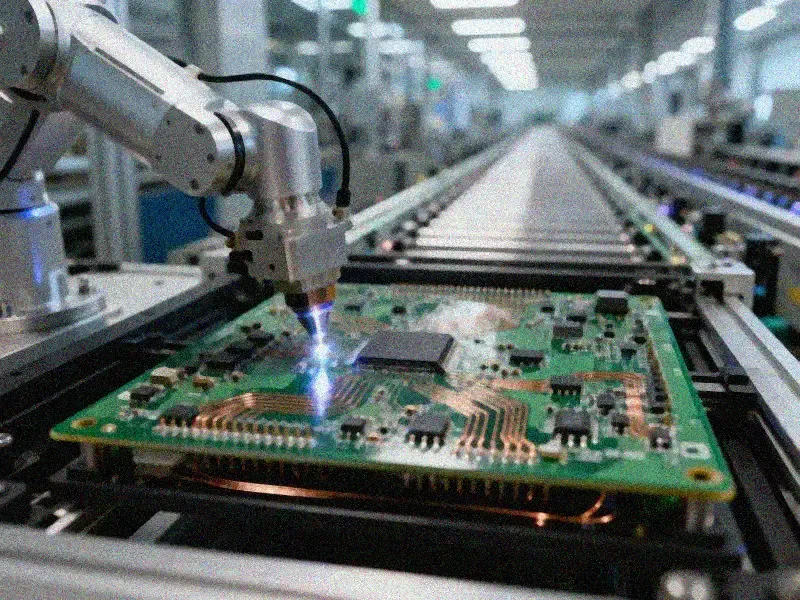
Unlike CompuTEX and CES, which focus on consumer electronics, Automate focuses on industrial scenarios-industrial robots, collaborative robots (Cobot), control systems, machine vision, and AI applications in manufacturing. Walking into the exhibition hall, the first thing you feel is not the fashion sense of consumer electronics, but the pragmatism of the factory floor: six-axis robotic arms are running at high speed in the protective fence, collaborative robots interact closely with the audience on the open booth, and Edge AI computing devices are installed in a simulated production line to demonstrate real-time reasoning. A key change in 2026 is that for the first time, the exhibition has set up an exclusive exhibition area for humanoid robots sponsored by NVIDIA. Physical AI has changed from laboratory drawings to something you can see with your own eyes in the exhibition hall.
This article starts from on-site observations of Automate 2026, sorts out the four major technology trends revealed by the exhibition, and analyzes the specific impact of each trend on the PCB supply chain one by one-which PCB categories will be the first to increase volume, and what will be proposed to suppliers 'technical capabilities? What new requirements and how China PCB companies should prepare.
Performance of Physical AI at Automate Pavilion
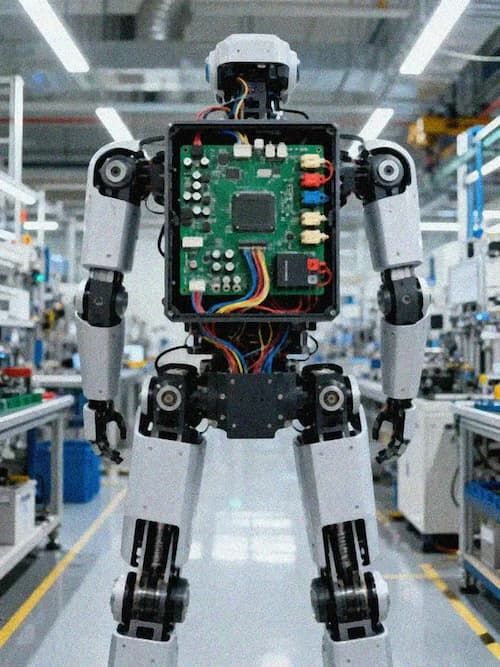
The most eye-catching new change in Automate 2026 is the first exclusive exhibition area for NVIDIA sponsored humanoid robots. On June 24, Evan Beard, co-founder and CEO of Standard Bots, will take the stage to deliver a keynote speech with a straightforward title-"99% of tasks still cannot be automated: How physical AI can change this." Standard Bots demonstrated physical AI technology based on the NVIDIA Isaac platform live. AI-native robots learn operating tasks by observing human demonstrations, replacing the traditional line-by-line programming method. At the exhibition area, a number of robot companies displayed humanoid robot prototypes equipped with NVIDIA Jetson computing modules. These robots perform tasks that previously required manual work in scenarios such as material handling, simple assembly, and quality inspection.
Specific to PCB requirements, compared with traditional industrial six-axis robots, the PCB usage of a single machine has increased by an order of magnitude. The control cabinet of a traditional industrial robot usually contains 3-5 PCBs (main control board, servo drive board, power supply board, communication interface board), while a humanoid robot with autonomous sensing and operation capabilities requires 10-20 different types of PCBs to work together from head vision processing to trunk motion control, from joint force feedback to battery management. According to industry forecasts, global humanoid robot shipments will be approximately 50,000 units in 2026, and this number will increase to 1 million units per year by 2030. Although the current base of 50,000 units is not large for the PCB industry as a whole, the long-term goal of 1 million units corresponds to the annual incremental demand of 10 million-20 million PCBs. This magnitude has begun to affect the supply chain. Have a substantial pulling effect.
From the perspective of technical routes, the demand for PCBs for humanoid robots spans multiple technical routes and is a compound demand. The head vision processing unit requires an HDI board to carry a high-density image sensor interface and AI inference chip, the trunk main control requires a high-level multilayer board to support a multi-core CPU and a high-speed memory bus, and the joint drive module relies on a rigid-flex board to realize multi-axis motor signal and power transmission, the battery management system requires thick copper plates to process dozens of amperes of charge and discharge current, and the communication module requires low-loss high-frequency materials to support real-time data transmission. It is difficult for a single PCB supplier to have mature engineering capabilities on the four technical routes of HDI, rigid-flex bonding, thick copper, and high-frequency materials. Suppliers that can cover more than three will gain obvious competitive advantages. Kingbrother has engineering accumulation in these technical routes: HDI arbitrary layer interconnection proofing capabilities reach 30 layers (mass production of 26 layers/4 levels), rigid-flex bonded board proofing achieves 32/30 layers (mass production of 20/12 layers), thick copper plates cover the copper thickness range of 10-18OZ. The diversity of PCB needs for humanoid robots corresponds to the value of comprehensive service capabilities of multiple technology routes-customers do not need to find suppliers for different types of PCBs, but can complete the process from design verification to mass production within the same engineering system.
Collaborative robots are accelerating popularization, and sensor fusion PCBs have become a new focus
In addition to the lively physical AI exhibition area, the collaborative robot exhibition area is also crowded. Some manufacturers have also brought a new generation of Cobot products, and also demonstrated humanoid force-controlled arms and wheeled dual-arm robots. Judging from on-site exhibits, the application scenarios of collaborative robots are expanding from simple picking, unloading and palletizing to more complex tasks such as precision assembly, flexible polishing, and laboratory automation. The small-batch, multi-variety flexible production model is accelerating its penetration in the manufacturing industry, and collaborative robots are the core execution unit of this model.
The most fundamental feature that distinguishes collaborative robots from traditional industrial robots is their ability to interact safely-Cobot does not require a safety fence and can work collaboratively with human workers in the same space. The realization of this safe interaction relies on the intensive deployment of multiple sensors inside the robot arm joints and on the end effectors: torque sensors are used to sense contact forces and achieve compliance control, tactile sensors are used to determine the state of grasping objects, and proximity sensors are used to Slow down in advance when the human body approaches. The multiple analog signals generated by these sensors need to be fused on a PCB and then transmitted to the main controller through a high-speed bus. This signal fusion architecture directly drives the growth of demand for two types of PCBs: rigid-flex combination boards-reduce the number of connectors inside the joint and improve long-term reliability under repeated bending conditions;HDI boards-in narrow joint cavities. High-density integration of multi-channel signal acquisition, filtering, analog-to-digital conversion and bus communication circuits.
Miniaturization is another hard constraint on Cobot PCB design. The self-weight of the collaborative robot body is usually controlled within 20 kilograms, so the volume of the joint drive module is extremely compressed. Under this space constraint, PCB designs require passive components in 0201 or even 01005 packages, 0.4mm pitch BGA package processors, and any layer of HDI interconnection technology to achieve the highest density of wiring. These technologies have matured in the field of consumer electronics, but transplanting them into industrial scenarios that require more than 10 years of working life has put forward completely different requirements for the material stability of PCBs and the consistency of manufacturing processes-the typical design life of consumer electronics products It is 2-3 years, and the requirement for industrial Cobot is at least 10 years. In terms of market growth, the collaborative robot industry has maintained an annual growth rate of 25%-30% in recent years, of which sensor fusion PCBs are one of the fastest-growing segments of demand. As Cobot's penetration in the manufacturing industry continues to increase, the manufacturing demand for rigid-flex bonded plates and HDI plates will further amplify. Suppliers who can supply both types of PCBs and have a deep understanding of industrial-grade reliability will be in a favorable position in this market segment.
Edge AI Industrial Control Motherboard: High-speed computing meets industrial-grade reliability
Echoing the collaborative robot exhibition area is the industrial control computing exhibition area. Many industrial control computer manufacturers have also brought embedded systems equipped with GPU/NPU and Edge AI computing and automation solutions. These displays send a clear signal: AI reasoning is sinking from the cloud data center to the factory floor, and is directly deployed on the production line side and equipment side. The computing power design of traditional industrial control motherboards revolves around PLC control logic, and has limited requirements for computing density; while edge AI industrial control motherboards need to carry AI reasoning tasks such as visual inspection, predictive maintenance, and real-time process optimization, and the requirements for computing power density have exceeded Traditional PLCs by several orders of magnitude.
This jump in computing power demand is directly reflected in the design indicators of PCB. Edge AI industrial control motherboards usually adopt a multi-layer board structure of 16-24 layers-these layers are not only used for signal routing, but also require planning of a complete power distribution network to support the high current requirements of CPU/GPU/NPU chips. In terms of signal rate, the interconnection interface between the CPU and the AI acceleration chip has been advanced to PCIe 5.0/6.0, and the memory interface has been upgraded to DDR5. These high-speed signals require the dielectric loss (Df) of the PCB substrate to be controlled below 0.005, which is basically the same as the requirements for data center servers.
However, there is one fundamental difference with data center servers: the reliability requirements of the factory environment for PCBs are mandatory and there is no room for compromise. The server runs in a data center with constant temperature and humidity. Edge AI industrial control motherboards may be installed in high-temperature workshops (ambient temperature above 50°C), high-humidity environments (humidity above 80%), and strong vibration equipment. This requires the PCB to meet wide temperature design (-40 ° C to +85 ° C), vibration resistance, and strict EMC/EMI protection requirements. High glass transition temperature (TG) plates-at least above TG170-have become an entry barrier for such applications. At the same time, the manufacturing and acceptance of PCBs need to comply with IPC Class 2 or even Class 3 standards, and each board must undergo a much stricter reliability verification process than consumer electronics.
Putting the two seemingly parallel requirements of "high-speed computing capabilities" and "industrial-grade reliability" on a single PCB simultaneously places a double constraint on the capabilities of suppliers. Computing power requires low-loss materials, precise impedance control, and high-layer laminated design; industrial reliability requires high TG plates, strict manufacturing process control, and complete reliability test data. There are not many PCB suppliers that satisfy these two lines at the same time-this is a structural feature of the edge AI industrial motherboard market. The special requirements of the industrial control industry for PCBs are more systematically developed in Kingbrother's industrial control IPDM solution, including specific standards for reliability test items such as thermal cycling, vibration, and insulation (for relevant technical details, please refer to D1: Industrial control PCB Reliability design in harsh environments).
Industrial control systems move from PLC to AI controllers
The lineup of keynote speeches for Automate 2026 is viewed individually as several high-level dialogues, but taken together, it reveals the evolution direction of the control system. The "State of the Automation Industry" leadership roundtable on June 22 brought together Mike Cicco, President and CEO of Fanuc USA, Andre Marino, Senior Vice President of Industrial Automation at Schneider Electric, Matt Moschner, President and CEO of Cognex, and Wendy Tan White, CEO of Intrinsic. On June 23, Siemens Digital Industries executives Annemarie Breu and Chris Stevens will discuss "Automation Leap: AI, Automation and the Human Factor." The core topic is how to integrate industrial AI with mature automation systems. The focus of these discussions is not whether AI can be used in industry-there is no suspense-but how to embed AI into the architectural level of control systems, not just as a plug-in analytical tool.
This architectural change has had a profound impact on PCB design. The traditional PLC control board design model is quite mature: 4 - 8 boards, signal rates are within a few hundred Mbps, and the core tasks are logic control and fieldbus communication. This design paradigm has not changed fundamentally in the past two decades. The emergence of AI controllers has broken this steady-state-in addition to retaining the rigid requirements of industrial reliability of PLC, multi-capability modules such as high-speed computing (integration of AI inference chips), real-time communication (Gbps industrial Ethernet), and multi-protocol compatibility (simultaneously supporting traditional fieldbus and new Ethernet protocols) have been added. The controller's PCB therefore needs to jump from 4 - 8 layers to 12 - 20 layers, and the signal rate will be increased from a few hundred Mbps to Gbps, while maintaining the interference immunity and long-term reliability required for industrial scenarios.
The diversity of interfaces is another complicating factor in AI controller PCB design. An AI controller for future production lines needs to support both traditional industrial Ethernet protocols such as Profinet and EtherCAT, as well as new generation communication standards such as TSN (Time Sensitive Network) and high-speed Ethernet above 10 Gbps. Different protocols have different requirements for the topology, impedance matching, and delay tolerance of PCB traces. Integrating them on the same motherboard, the wiring complexity is much higher than that of traditional PLCs with a single protocol. In addition, the real-time requirements of AI reasoning tasks are also higher than traditional control logic-the delay of robot visual guidance usually needs to be within milliseconds, which affects the PCB layout of the entire signal link from the sensor to the AI chip to the actuator. A very low latency requirement is proposed. Kingbrother's proofing capability in high-speed signal transmission reaches 112 Gbps, which can cover the signal rate requirements of current AI controllers.
Three signals of Automate 2026 and responses from China PCB suppliers
Based on the four main exhibition areas and multiple keynote speeches of Automate 2026, three deterministic judgments can be clarified. First, physical AI is moving from proof of concept to industrial deployment. The humanoid robot area sponsored by NVIDIA, live demonstrations by Standard Bots, and prototypes from multiple robot companies are all engineering prototypes that can be touched and observed on site. There are almost no products that remain in the PPT stage. The demand for PCBs for humanoid robots and collaborative robots will continue to grow, and the certainty of growth does not depend on "whether it will happen" but on "how soon it will come." Second, the technical requirements of industrial automation for PCBs are moving upwards as a whole-the number of layers has increased from 4-8 layers to 12-24 layers, the signal rate has entered the Gbps level, and the environmental reliability requirements have moved upwards to industrial level. Even automotive level. This is a systematic upgrade across categories, involving simultaneous upgrades in multiple market segments. Third, the evaluation criteria for PCB suppliers in the North American industrial market are changing, from "price priority" to a comprehensive evaluation of "certification + traceability + long-term reliability." During the exhibition, we can feel that North American customers are paying significantly more attention to suppliers 'UL/ISO certification, material batch tracking capabilities, and manufacturing process data records.
For China PCB suppliers who want to enter or deepen the North American industrial market, the above three judgments point to three directions that need to be prepared in advance. The first is the certification level-UL certification (especially UL 94 V-0 flame retardant rating and UL 796 PCB substrate certification) and ISO 9001/ISO 14001 system certification is the basic audit threshold for North American industrial customers, without these certifications, technology and price discussions are not possible. The second is the material and process level-application experience of high TG plate (TG170+), processing capacity of low loss high speed material (Df<0.005), and mass production consistency of high multilayer board (more than 20 layers). The combination of these three capabilities will determine whether suppliers can enter the middle and high end market of industrial automation. The third is the data traceability level-North American customers are increasingly inclined to require suppliers to provide complete manufacturing data for each batch of PCB, including lamination parameters, drilling parameters, plating thickness, impedance test results, etc. Establishing systematic manufacturing data traceability capabilities is actually reducing customers 'supply chain risks: when equipment needs to be operated on the customer's site for more than 10 years, any batch difference in materials or processes may turn into batch field failures.
Automate 2026 is a slice of the North American industrial automation market. Looking back from the exhibition site, the signal is clear: the technical complexity of industrial automation continues to increase, and the requirements for PCBs are being upgraded from "can be made" to "can be made stably and stably in the long term." PCB suppliers who can deliver qualified answers in both high-speed computing capabilities and industrial reliability will gain certain growth opportunities in this round of industrial automation upgrades. The entry threshold in this market is increasing, but for suppliers who have accumulated relevant technology and certification, the existence of the threshold just constitutes a screening mechanism-it distinguishes suppliers with truly industrial-grade delivery capabilities from suppliers that can only provide ordinary PCBs, creating a structural premium space for the former.