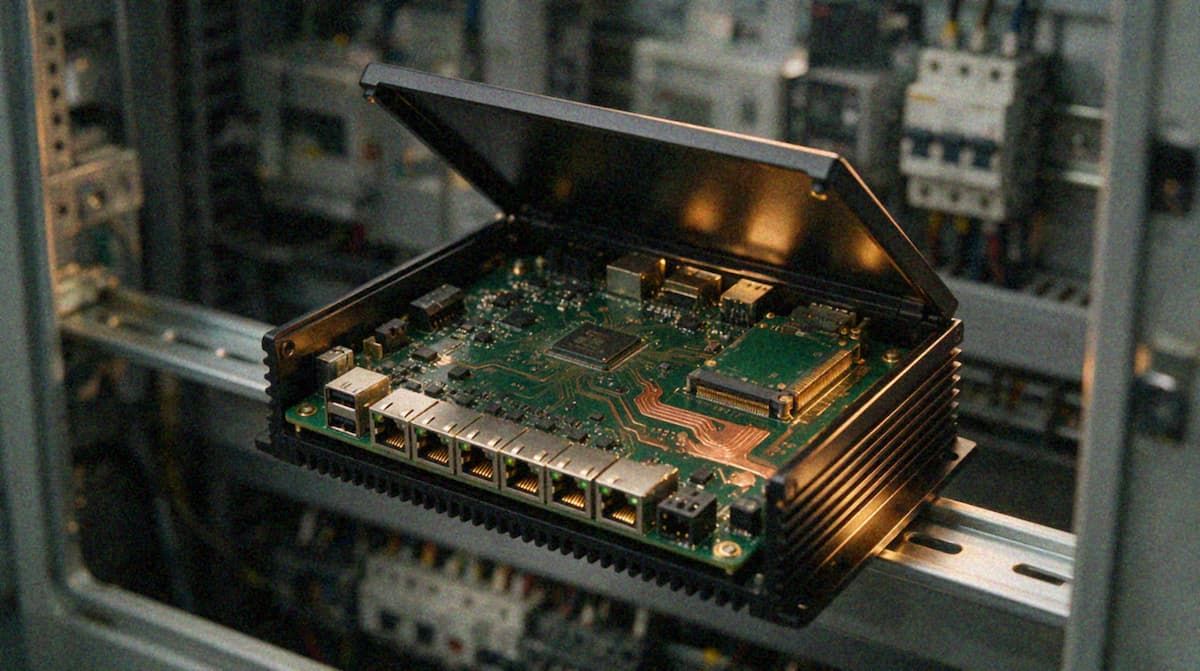
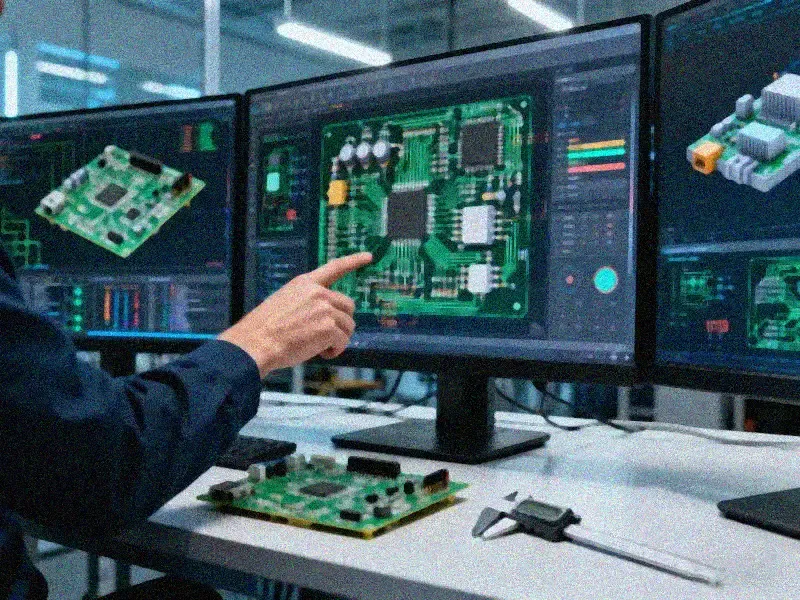
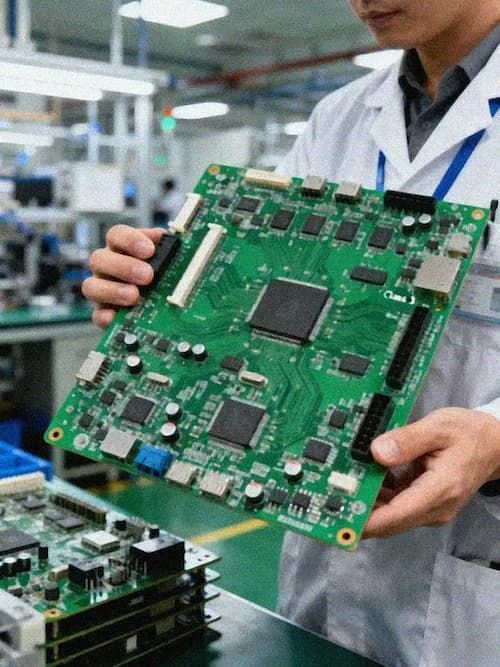
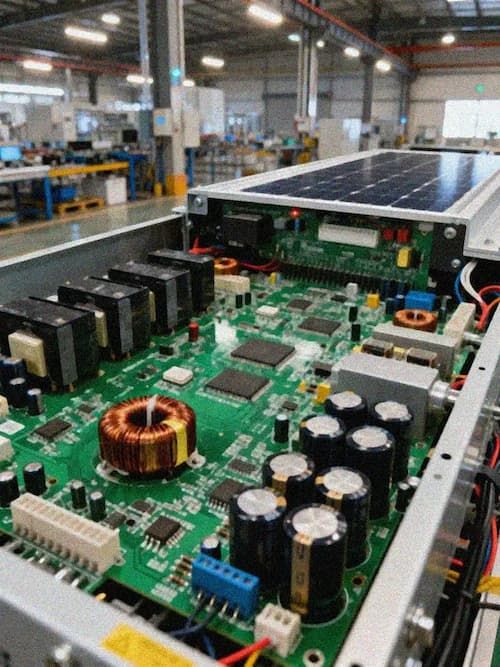
An industrial edge gateway is unlike an ordinary consumer router or IoT gateway: it has to satisfy three requirements at once, namely multi-protocol connectivity, operation in harsh environments, and long-term reliability. In hardware terms, a typical industrial edge gateway is made up of a processor module, a connectivity module, storage, power management, I/O interfaces, and safety and reliability blocks.
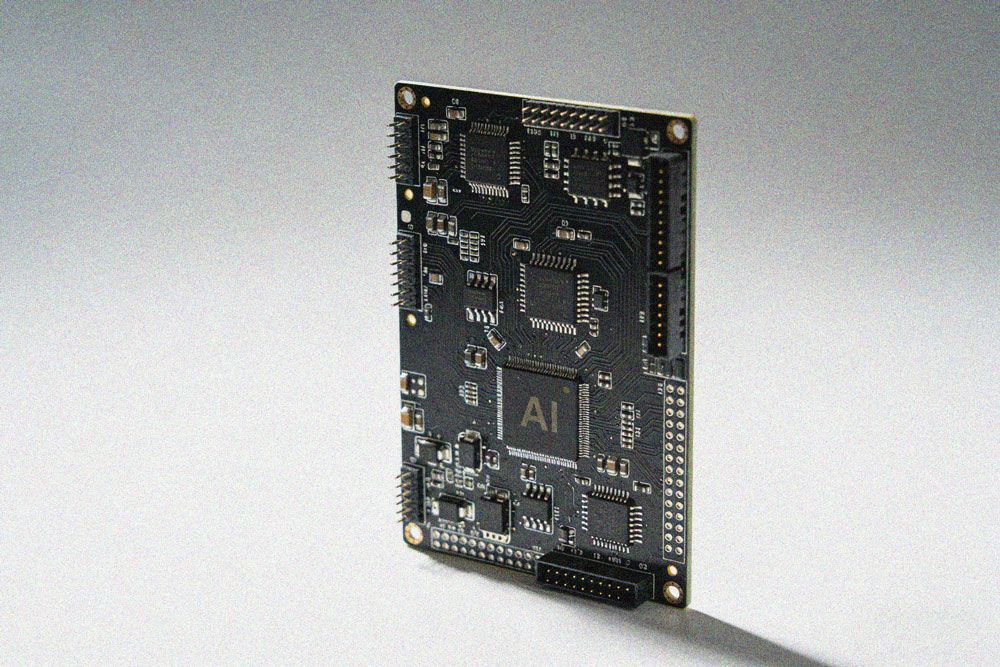
The processor is the core of the gateway. Processor choices for industrial edge gateways span the full spectrum from low-power ARM to high-performance x86. Low-power designs usually use ARM Cortex-A series SoCs such as the NXP i.MX and TI Sitara families, keeping power within a few watts. Scenarios that need more compute, such as edge AI inference and complex protocol conversion, turn to the Intel Atom x6000E series or higher-performance x86 platforms, where TDP can reach 12 W or more.
Connectivity is what sets an industrial gateway apart from other computing devices. A single gateway usually has to support several communication protocols at once: on the wired side, gigabit Ethernet, 2.5GbE, and even 10GbE, with some high-end models supporting TSN (time-sensitive networking); on the wireless side, Wi-Fi 6/6E, 5G, 4G LTE, and LoRa; and on the industrial serial side, RS232, RS485, and CAN/CAN FD, used to connect PLCs, sensors, and actuators. This coexistence of multiple protocols brings signal-integrity and electromagnetic-compatibility challenges to PCB design.
Storage and memory configuration depends on application load. Lightweight data-acquisition and protocol-conversion gateways usually need only 1 to 2 GB of memory and eMMC storage. Gateways that run edge AI models or handle heavy video streams need 4 GB or more of memory, and some Intel platforms support up to 32 GB of DDR4 with in-band ECC for higher reliability. On storage, industrial-grade eMMC, SD cards, and NVMe SSDs are all used, with the right grade chosen according to data write volume and operating temperature.
Power management matters especially in industrial settings. Industrial gateways usually take a wide 12 to 24 V DC input and have to tolerate grid fluctuation and power noise from the field. The ripple, transient response, and efficiency of the DC-DC conversion circuit directly affect system stability. Beyond that, industrial gateways often need isolated power design to protect internal circuitry from field surges and common-mode interference.
The richness of the I/O interface determines how broadly a gateway can be applied. Beyond the network interfaces, common interfaces such as USB, GPIO, UART, SPI, and I2C are standard. Some models also offer isolated digital I/O, analog inputs and outputs, relay outputs, and ADC/DAC channels to meet different industrial needs.
Mainstream Processor Platforms
Choosing the processor platform is the first step in industrial edge gateway design and the decision that shapes the rest of the hardware architecture and software path. Several mainstream options exist today, each with its own emphasis.
The NXP i.MX family has deep roots in industrial and automotive. The i.MX 95 is the family's flagship, integrating a six-core Cortex-A55, Cortex-M33, and Cortex-M7, supporting 10GbE and two 1GbE ports with TSN capability, and also supporting LPDDR4/4X/5 memory with ECC for automotive, industrial, and IoT edge computing. The i.MX 8M Plus is a more mature industrial platform that integrates an NPU, an ISP, and a rich set of industrial interfaces, and it has been validated in volume across many industrial devices. The i.MX 8X and i.MX 8ULP target low-power scenarios, fitting power-sensitive, battery-powered, or passively cooled devices.
The TI Sitara family also holds an important place in industrial control. The AM65x integrates a Cortex-A53 and Cortex-R5F dual-core architecture with three gigabit industrial communication subsystems, suiting industrial control, industrial connectivity, and functional safety applications. The AM62x leans toward lower power and cost optimization, targeting industrial HMIs, gateways, and automation equipment. The AM335x is a classic entry-level industrial processor that supports EtherNet/IP, Profibus, Profinet, and other industrial protocols and remains widely used today.
The Intel Atom x6000E series (Elkhart Lake) represents x86 in industrial edge computing. The series tops out at four cores and up to 3.0 GHz, with TDP ranging from 4.5 to 12 W. Memory support includes LPDDR4/x-4267 or DDR4-3200 with in-band ECC. On the network side, it integrates three 2.5GbE Ethernet controllers along with the Intel Programmable Services Engine (PSE) for real-time control and remote management. For scenarios that must be compatible with a large body of x86 industrial software, this platform has an irreplaceable advantage.
The Qualcomm QCS series stands out for AI compute and wireless connectivity. The QCS6490 uses a 6 nm process, with its Hexagon DSP providing 12 TOPS of INT8 compute and support for global 5G and Wi-Fi 6E, fitting industrial scenarios that need edge AI and high-speed wireless. The higher-end IQ-8275 platform reaches 20 to 40 TOPS of AI compute, aimed at industrial PLCs, high-compute edge AI, and machine vision.
Rockchip's industrial platforms also hold a share of the mid- to low-end market. The RK3568J integrates a 1 TOPS NPU and suits low-power edge computing and industrial gateways; the RK3588J offers more compute and has been applied in coal mine data collection, tower operation and maintenance, and wind power generation.
ARM and x86 platforms each involve trade-offs. ARM platforms win on power and cost, suiting edge devices deployed in volume, while x86 platforms are stronger in software ecosystem compatibility and handling complex workloads, suiting scenarios that need to run heavy industrial software. Real-world selection has to weigh compute requirements, software stack, power budget, cost targets, and supply chain conditions together.
Industrial-Grade PCB Design Challenges
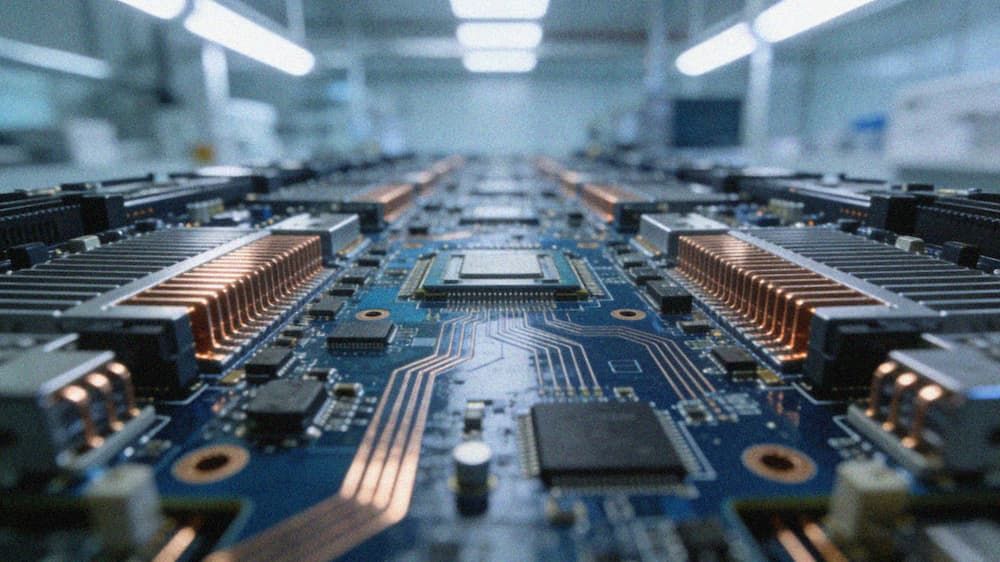
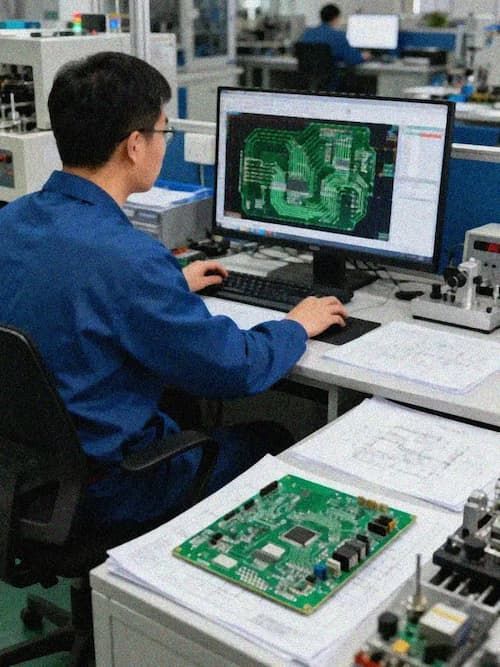
PCB design for an industrial edge gateway adds several dimensions of constraint on top of conventional electronic design. Multi-protocol interconnect, EMI/EMC, wide-temperature operation, power reliability, and high-speed signal integrity are the five core challenges.
Multi-protocol interconnect is the first problem to face. A single gateway integrates Ethernet, Wi-Fi, 5G, RS485, CAN, USB, and several low-speed serial interfaces, whose operating frequencies and signal characteristics differ widely. Radiation from high-speed digital signals can interfere with analog sensors or low-speed communication links, and RF signals from wireless modules can couple into other circuits. Layout needs to divide functional zones sensibly, physically isolate high-speed from sensitive circuits, and ensure every signal has a complete return path.
EMI/EMC design is a baseline requirement for industrial products. Electromagnetic noise is strong in factory environments, and the gateway itself must not radiate excessively. Design details worth attention include shrinking the return-path area of high-frequency signals, using adjacent reference planes, avoiding right-angle traces in favor of 45° or curved routing, adding ESD protection at interfaces, and choosing shielding and filtering sensibly. Multilayer stack-up design has a large impact on EMC performance, and a sensible distribution of ground and power planes can significantly lower radiation levels.
Wide-temperature operation is a hard requirement for industrial applications. Industrial gateways usually have to work reliably from -40°C to +85°C, with some outdoor or energy scenarios demanding an even wider range. The glass-transition temperature (Tg), coefficient of thermal expansion (CTE), and long-term reliability of the PCB material all need careful screening. Industrial-grade high-Tg FR-4 is a common choice, while harsher scenarios may require specialty materials such as polyimide. Beyond the material itself, solder-joint reliability, connector selection, and conformal coating must also fit wide-temperature environments.
The difficulty of power design comes from several factors stacking up. A wide 12 to 24 V input needs enough regulation headroom from the front-end DC-DC stage; multiple output rails need sensible power-up sequencing and monitoring protection; and field power noise and surges must be suppressed through filtering and protection circuits. In multi-board systems and multi-connector designs, contact resistance, loop inductance, and PDN impedance in the power path add further difficulty. Power integrity affects stability and EMI performance alike, since excessive power noise often leads to radiation that exceeds limits.
Signal integrity for high-speed interfaces matters just as much in industrial gateways. With the introduction of 2.5GbE, 10GbE, and PCIe, impedance control, trace length matching, via optimization, and reference-plane continuity become increasingly important. High-frequency signals should be routed as close to their return path as possible, avoiding large splits in the reference plane. Via design needs particular attention to the impedance discontinuity and signal reflection caused by stubs, and back-drilling may be needed at higher data rates. Connector selection also significantly affects high-speed link performance, calling for impedance-controlled industrial-grade connectors.
Manufacturing-Level Reliability Considerations
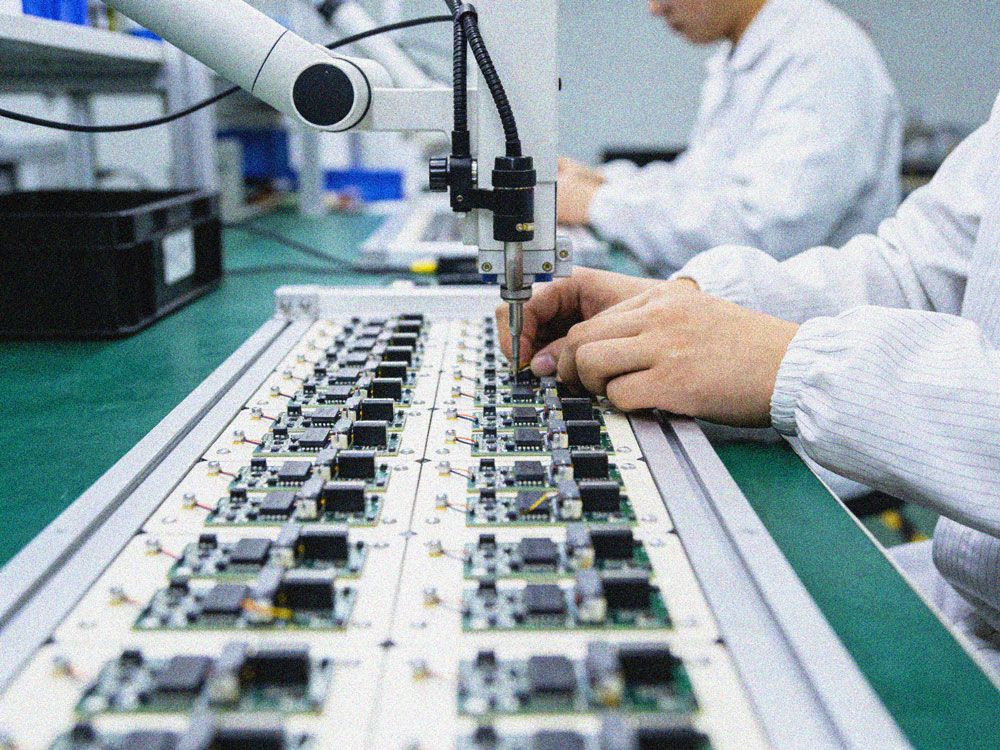
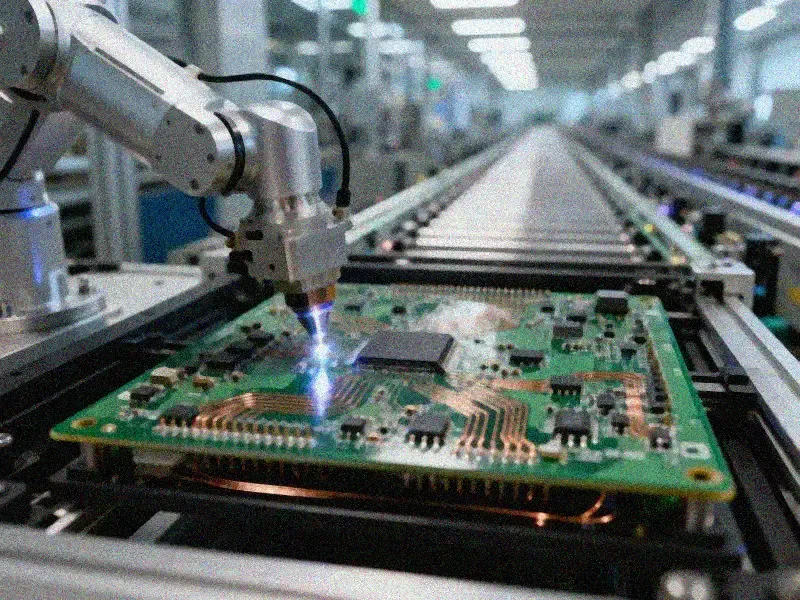
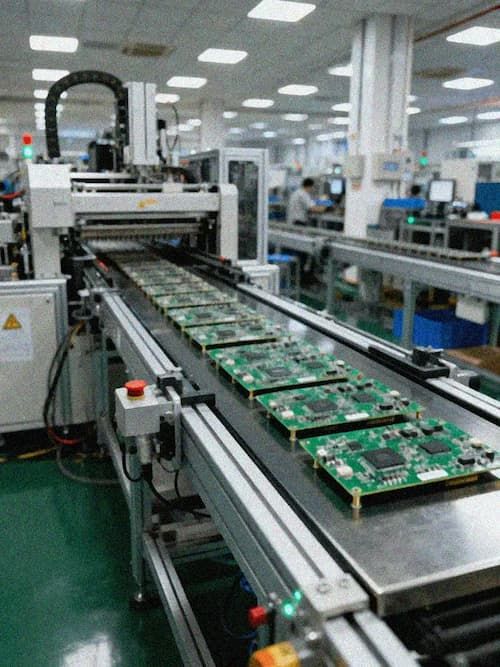
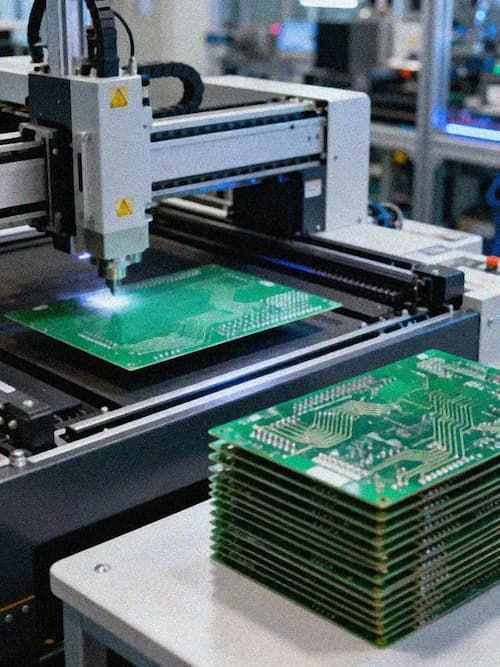
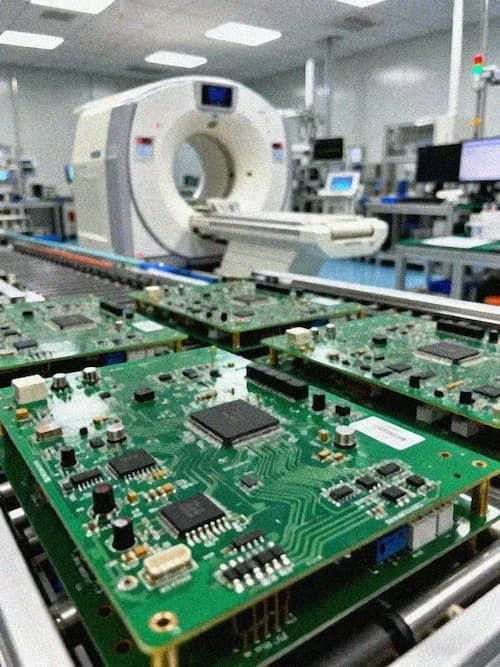
An industrial edge gateway's reliability depends not only on design but also directly on manufacturing processes. Heavy copper, impedance-control consistency, conformal coating, and reliability testing are the four key links.
Heavy-copper PCBs appear in several places within an industrial gateway. Power input loops, high-current ground planes, motor drives, and relay drives all need thick copper conductors to carry large currents and reduce voltage drop. Heavy-copper PCBs are harder to manufacture than ordinary boards, requiring attention to copper foil oxidation, board warpage, solder-joint strength, and through-hole wall integrity. IPC-6012 defines reliability testing for heavy copper, including solder float testing, cross-section analysis, conductor thickness measurement, and plated-through-hole (PTH) wall integrity testing.
Consistency in impedance control directly affects high-speed interface yield and long-term stability. Many factors influence impedance: variations in dielectric constant, copper foil thickness, trace width and spacing, via size, and dielectric thickness all cause impedance deviation. Manufacturing has to tightly control every process parameter and verify through sampled TDR testing. For high-density, high-frequency industrial PCBs, process-control capability is often what separates one manufacturer from another.
Conformal coating is a standard process for industrial products to withstand harsh environments. The coating protects the PCB from moisture, dust, chemical corrosion, and contaminants, significantly improving long-term reliability in industrial settings. IPC-CC-830 specifies performance testing for conformal coating, including thermal cycling, moisture resistance, electrical insulation, adhesion, fungus resistance, and chemical resistance. Coating material selection has to coordinate with board-level thermal management, repairability, connector mating, and downstream inspection requirements.
Reliability testing is the necessary step for verifying whether an industrial gateway can run reliably over the long term in its target environment. Common reliability tests include thermal cycling, high- and low-temperature operation, vibration, shock, EMC testing, burn-in, and HASS/HASA (highly accelerated stress screening/audit) testing. IPC-9592B explains the definitions and methods for HASS/HASA testing in detail. Testing should cover the -40°C to +85°C operating range as well as real-world conditions such as vibration, dust, moisture, and long-duration operation. Accelerated stress testing can expose weak points in design and manufacturing within a short time, reducing the risk of field failures.
Applications and Development Directions
The application scenarios for industrial edge gateways are expanding beyond traditional factory automation into more vertical industries.
Factory automation is the most mature application area. Gateways connect PLCs, CNCs, robots, sensors, and actuators, converting field protocols such as Modbus, Profinet, and EtherNet/IP into OPC UA or MQTT and uploading them to MES, SCADA, or cloud systems. Predictive maintenance, real-time quality control, OEE analysis, and energy management are the main functions. Industrial gateways from vendors such as InHand Networks are already widely deployed in factory operations.
The smart grid is another important market. 5G industrial gateways are used for data collection and remote monitoring of substations, distribution networks, smart meters, PV inverters, and energy-storage systems. In Robustel's energy-industry solutions, gateways connect PLCs, Modbus devices, and field instruments, uploading data to the cloud or a SCADA system to support remote monitoring, fault diagnosis, and optimized dispatch.
Oil and gas impose the strictest reliability demands. Wellhead monitoring, remote valve control, leak detection, and HD video surveillance all require industrial gateways to run reliably in extreme environments. 5G industrial gateways can support both high-bandwidth video transport and low-latency remote control while also connecting to legacy PLC systems, and this multi-protocol convergence is precisely the value of industrial edge gateways.
Transportation and logistics, building automation, and similar scenarios are also growing quickly. Fleet management, in-vehicle edge computing, warehouse automation, and connecting autonomous equipment all need edge gateways as data hubs. In building automation, gateways connect BACnet, Modbus, and other building-protocol devices to unify lighting, HVAC, security, and energy management.
Edge AI integration is an important development direction for industrial gateways. Traditional industrial gateways mainly handle data collection and protocol conversion, but the new generation is adding AI inference so that defect detection, anomaly recognition, and predictive maintenance can run locally. Platforms such as the Qualcomm IQ-8275 and NXP i.MX 95 both integrate NPUs, providing the hardware foundation for industrial edge AI.
Another trend is the spread of time-sensitive networking (TSN). As the industrial internet raises its real-time requirements, TSN-capable industrial gateways will become increasingly important. The NXP i.MX 95 already integrates a TSN-capable 10GbE interface, and TI and Intel platforms are also adding TSN support. This trend raises the bar on timing and synchronization in PCB design.
Hardware design and manufacturing for industrial edge gateways is a multidisciplinary challenge that must satisfy three requirements at once: multi-protocol connectivity, harsh-environment operation, and long-term reliability. For PCB manufacturers, the ability to design and build industrial-grade PCBs, including heavy-copper processing, wide-temperature materials, impedance control, and reliability testing, is the foundation for serving the industrial edge computing market. KINGBROTHER has years of experience in industrial control PCBs and can provide complete solutions spanning design support through volume production, helping customers meet the hardware challenges of the industrial edge era.