On August 19, Unitree listed on the STAR Market of the Shanghai Stock Exchange, joining the board after the memory chip makers as a humanoid robot company that has drawn wide attention from overseas markets. According to its prospectus, the offering raised roughly RMB 6.1 billion, or about USD 905 million. On the first day of trading, the share price briefly surged nearly 630% before pulling back to close at RMB 845, still up more than 460% for the day. Capital markets saw a high-profile pricing event, while the hardware supply chain saw a turning signal.
The numbers that matter most come from Unitree's previously disclosed production plan: roughly 5,500 humanoid robots actually delivered in 2025, and a 2026 shipment target of 10,000 to 20,000 units. In June, Morgan Stanley raised its 2026 forecast for China's humanoid robot shipments from 28,000 to about 50,000 units and projected the market at about USD 2 billion this year, potentially reaching around USD 15 billion by 2030. When the industry starts pricing a company on its delivery capability, pressure flows backward along the supply chain, and the first thing it rewrites is the demand structure and evaluation standards for robot PCBs.
Shipments Enter the Ten-Thousand-Unit Range, and the Demand Structure Shifts First
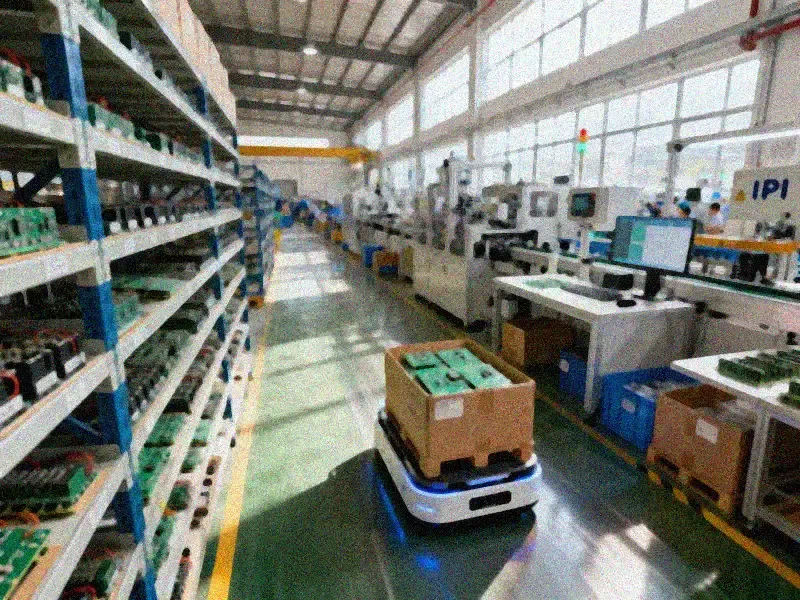
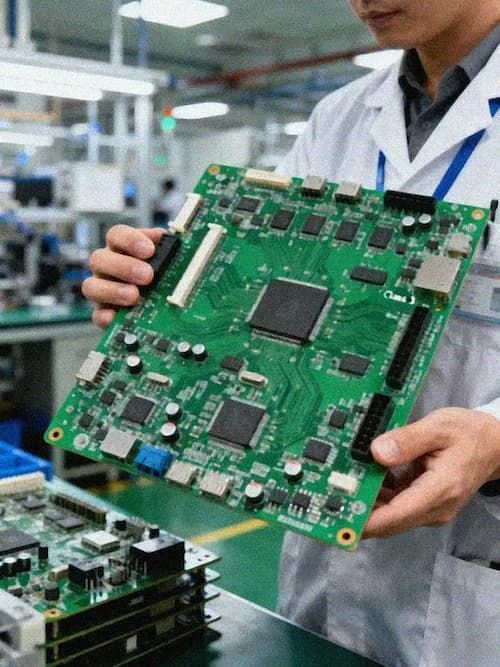
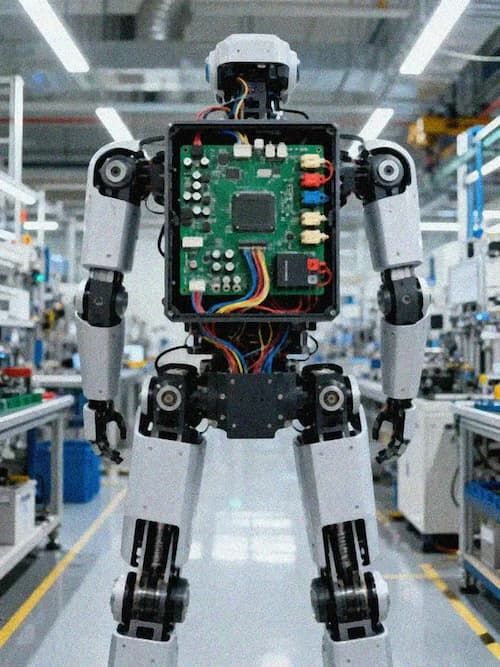
The boards inside a humanoid robot are spread across control, vision, drive, communication, and power functions, and a single unit often requires dozens of boards or more. The control board handles whole-machine decision-making and motion planning, the vision board processes camera data, the drive board is tightly coupled to the joint motors, and the power board supplies the various actuators, each with its own reliability requirements. Once whole-machine shipments reach the ten-thousand-unit range, the annual demand for the control and drive boards alone runs into the hundreds of thousands of pieces, and the supply chain's volume logic becomes completely different from the prototype stage.
Robot makers generally use modular design to compress the whole-machine bill of materials. When the modular reuse rate reaches around 68%, the same board can keep shipping across models. That figure is well above the industry's typical 35%; for a PCB supplier, it keeps orders steady while also forcing the process platform to deliver with long-term consistency. The fragmentation of board types also means building separate assembly, testing, and rework flows, and batch variation in any one board type can disrupt the whole machine's line-off cadence.
The Joint Driver Board Cannot Avoid Rigid-Flex Processing
The joint driver board is one of the more technically dense parts of a robot PCB, and its common form is a rigid-flex board with a flexible region. The rigid section handles component soldering and structural mounting, while the flexible section passes through the joint for dynamic routing, and the two must work together on a single board. Dynamic flexing requires the flexible region to stay stable in copper foil elongation, coverlay selection, and lamination expansion control; these indicators drift apart gradually with use, and prototype testing cannot fully cover them.
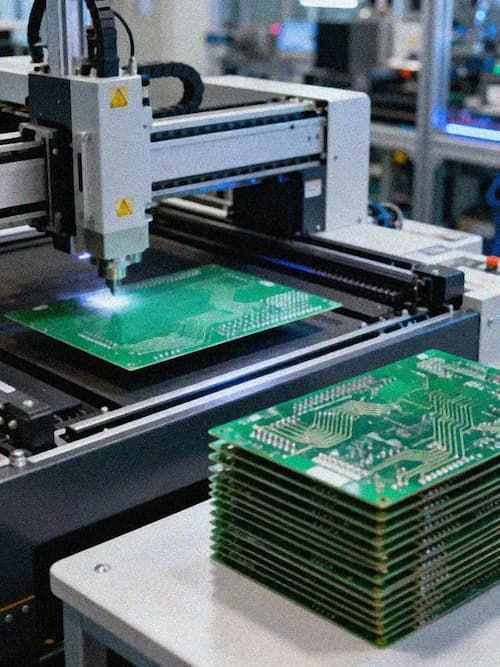
To cover this kind of processing, a supplier needs volume capability in both rigid-flex and high-density interconnect. Rigid-flex boards reach 32/30 layers for prototypes and 20/12 layers for production; HDI reaches 30-layer any-layer for prototypes and 26-layer four-step for production; copper thickness reaches 18 oz for prototypes and 6 oz for production. Together these largely cover the mainstream specifications for today's humanoid robot joint boards. KINGBROTHER's robotics capability falls within this range, spanning 28-layer high-multilayer rigid-flex boards, flying-tail structures, and laser depth-controlled cover opening, used mainly for the flexible connection between the joint and the body.
Mass Production Consistency Is Harder to Verify Than Single-Board Specs
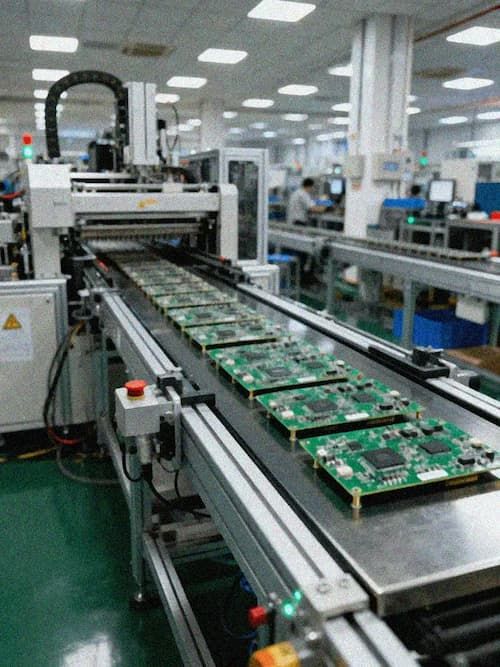
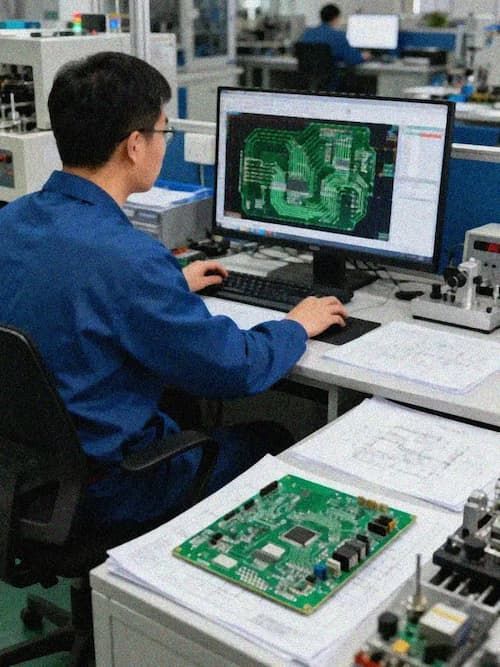
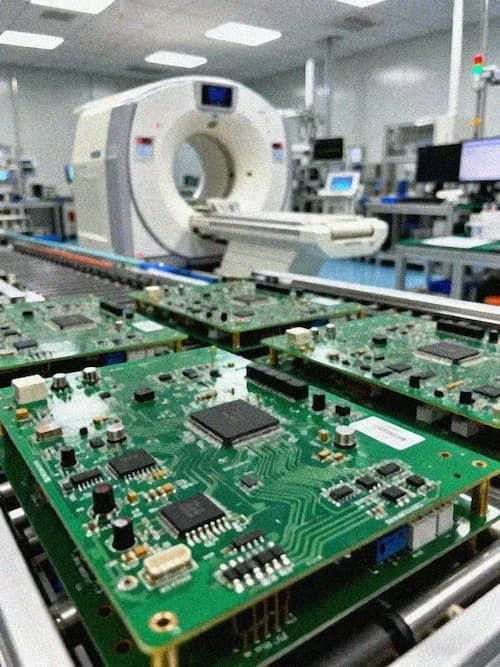
At the prototype stage, a single board's electrical performance can be corrected through repeated debugging. Once production moves into volume, parameter stability, batch consistency, and lead time replace individual performance specs as the primary criteria in supplier evaluation. The DFM rule base, certified material system, and inspection equipment together determine how fast yield ramps, and yield in turn is directly tied to the assembly cadence of the complete robot.
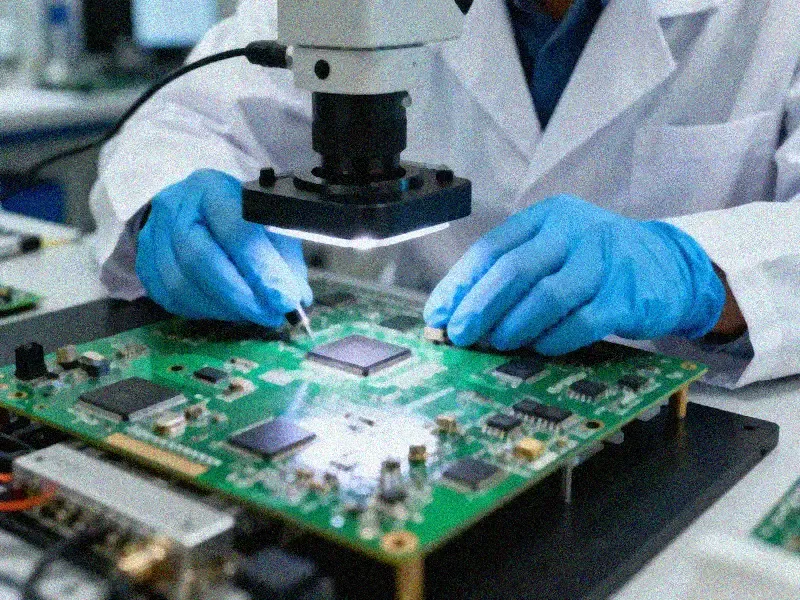
A supplier's volume capability is hard to read from the single-board quote, where differences are usually small. What matters is whether the pre-production design review, closed-loop response, and outgoing inspection are systematic. KINGBROTHER's IPDM model places design, DFM, prototyping, and volume production on a single path, with 2,368 DFM rules and 3.27 million certified materials allowing a robot project to complete design review before the first board is built, volume issues handled on a 24-hour closed loop, reliability verification carried out by CNAS/CMA laboratories, and AOI, X-ray, and electrical performance testing intercepting defects before shipment. This kind of systemic capability only shows its value once batch orders arrive.
The next phase of competition in the humanoid robot industry will center on stable delivery. The yield and batch consistency of joint driver boards, rigid-flex boards, and multilayer HDI ultimately determine whether a robot maker can turn an order plan into actual shipments. For PCB suppliers, the DFM rules, inspection systems, and multi-process integration built up over time will be worth more than single-board technical specs. If a robot project has entered the prototype-to-production transition, supply chain teams should make stack-up, flex validation, and batch consistency the focus of evaluation.