Industrial environment long-term test of PCB reliability
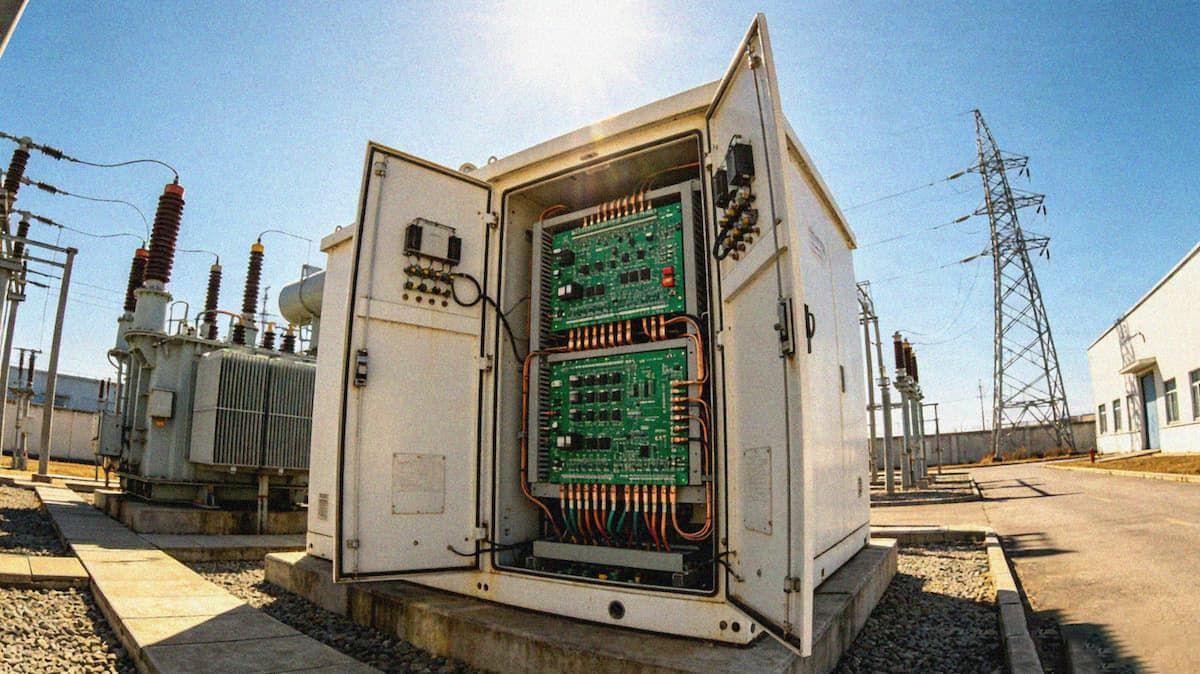
The deployment environment of industrial control equipment is far from comparable to office scenarios. In the petrochemical unit area, control boards need to withstand corrosive gases containing hydrogen sulfide and chlorides, which can form acidic electrolytes in a humid environment and accelerate the electrochemical corrosion of copper conductors and solder joints. At the bottom of rail transit cars, the vibration acceleration can reach more than 5Grms. At the same time, with severe temperature fluctuations, large electrolytic capacitors and transformers on the board risk solder joint fatigue or even physical falling off under continuous vibration. In outdoor substations, the surface temperature exceeds 70°C in summer and may drop to minus 40°C in winter. The annual temperature difference of nearly 100 degrees Celsius poses a continuous test on the interface adhesion between the substrate and the coating. The control system of offshore oil platforms is in an environment filled with salt fog and saturated humidity all year round. Ordinary FR-4 substrates may experience obvious copper foil corrosion and insulation degradation within two years. The maintenance window of platform equipment is limited by weather and sea conditions, and maintenance opportunities are often only available every six months or even every year. These environmental stresses continue to act on the PCB and its components in a combined form. Excellent performance under a single stress does not mean long-term reliability under compound stress. The design life of industrial PCBs is usually required to reach 10 to 15 years. During this period, the value of reliability verification methodology has gradually become prominent. A single test indicator is not enough to ensure the long-term survival of the product under complex stress combinations.
Collaborative Design of Materials, Processes and Architecture
Substrate material is the physical basis of PCB reliability, and its upper performance limit determines the survival boundary of the board in extreme environments. FR-4 high TG material is the mainstream choice of the current industrial PCB, the TG value of conventional FR-4 is between 130°C and 140°C, and the TG of industrial scene generally requires more than 170°C. High-TG materials show better size stability under welding thermal stress and long-term thermal aging conditions, can effectively inhibit thermal expansion of multilayer boards in the Z-axis direction, and prevent hole wall fractures or corner cracks in plated through-holes during temperature cycles. For industrial control boards that require continuous operation from a wide temperature range of minus 40°C to 85°C above zero, high TG FR-4 is the basic prerequisite to ensure that the substrate does not delaminate or crack due to temperature cycling. High-TG materials usually have lower moisture absorption, which is particularly important in high-humidity environments. Moisture penetration is one of the main media that causes ion migration and insulation failure. Every 0.1% decrease in moisture absorption can significantly extend the insulation resistance. Decay period. When the ambient temperature exceeds 200°C or the board needs to withstand frequent high-power thermal shocks, polyimide substrates become an upgrade solution. Their thermal decomposition temperature exceeds 500°C and maintain excellent electrical and mechanical properties in extreme high temperature environments. Flexible PI plates exhibit unique mechanical fatigue advantages in vibration environments. Their bendable characteristics can effectively absorb and disperse vibration stress and reduce the mechanical load borne by solder joints.
After the materials are determined, the manufacturing process becomes the second barrier in determining the environmental resistance of the PCB. In terms of corrosion-resistant surface treatment, immersed gold is the most common choice for industrial PCBs. The nickel layer serves as a barrier to prevent the copper conductor from coming into direct contact with the external environment, and the thin gold layer provides excellent solder wettability and low contact resistance. The gold sinking process achieves a good balance between corrosion resistance and welding reliability, and is especially suitable for boards that require long-term exposure to sulfur or chlorine-containing gases. Chemical nickel and palladium have attracted attention in the field of industrial control in recent years. The introduction of palladium layers further enhances the protective ability of the nickel layer, and at the same time avoids the risk of "black disk" defects in the gold sinking process, demonstrating it in high-reliability welding scenarios. Wider process window. Thermal design is an easily ignored but far-reaching part of the industrial PCB process. The functional density of modern industrial control equipment continues to rise, the power consumption of FPGAs and ARM main control chips continues to increase, and local hotspots have become an important factor inducing long-term failure. Copper-filled vias have lower thermal resistance than traditional resin-filled vias, which can significantly enhance the heat dissipation efficiency of local hot spots, and are especially suitable for power modules and power drive areas. The layout strategy of heating components is equally critical. High-power consumption devices should be dispersed to avoid thermal coupling and thermal superposition, while reserving enough copper area as thermal diffusion channels.
The tri-protective coating and potting process provides an additional environmental isolation layer for the PCB. Acrylic acid, polyurethane and silicone are three mainstream three-resistant coating materials, each with its own protective characteristics and scope of application. Acrylic coating is easy to construct and repair and is suitable for general moisture and dust protection needs; polyurethane coating is more resistant to chemical corrosion and is suitable for use in oil pollution or solvent exposure environments; silicone coating remains elastic over a wide temperature range and has certain resistance to vibration stress. Buffering effect. There is a natural tension between the thickness of the coating and the heat dissipation performance. Too thick the coating will hinder the heat from being dissipated from the plate surface, so it is necessary to find a balance between protection and heat dissipation. The potting process is used for boards in extreme environments, where the entire board is immersed in epoxy resin or polyurethane gel to achieve complete airtight and water-tight sealing. At the expense of later maintenance, it is usually only used during the life cycle. Maintenance-free modules. In industrial PCB manufacturing, KingBrother will recommend appropriate three-prevention solutions based on the stress combination of the target environment rather than uniformly applying a certain coating.
In key industrial control applications, redundant design is an effective means to improve system availability. The PCB layout of dual power supply inputs needs to consider the isolation and switching logic of the main and standby power supplies to avoid common mode faults causing both power supplies to fail at the same time. The hardware implementation of the watchdog circuit requires a separate reset link and timeout detection module to be configured on the PCB to ensure a forced restart when the main processor crashes. In terms of communication redundancy, the physical layer interface of the ring network topology requires a switch or relay driving circuit to be reserved on the PCB. When the main communication path is interrupted, the backup path can take over data transmission in milliseconds. The essence of redundant design is to reduce the probability of a single point of failure, at the expense of increased board complexity and cost, so it is usually only applied to critical control loops with zero tolerance for downtime. KingBrother participated in customers 'reliability architecture discussions at the early stage of the project, advancing manufacturing feasibility to the design stage to avoid the failure to implement redundant solutions due to process constraints in the later stage.
Composite stress verification of rail transit control panels
The development process of a rail transit signal control board embodies the complexity of reliability verification in harsh environments. The board is deployed at the bottom of the carriage and needs to withstand a wide temperature cycle of-40°C to +85°C, random vibration of 5Grms, and periodic salt spray erosion. A single high and low temperature cycle test or vibration test could not cover this compound stress scenario. The verification team designed a three-comprehensive temperature-vibration-humidity test, placing the board in 500 cycles at-40°C +85°C. At the same time, random vibration of 5Grms was applied in the high temperature section and the relative humidity of 85% was maintained in the low temperature section. Power rail voltage fluctuations and critical signal integrity are monitored during testing, and any transient anomalies that exceed thresholds are recorded as a potential failure mode. The surface treatment uses gold immersed and polyurethane three-protective coating, and the coating thickness is controlled at 50±10um. After 96 hours of salt spray testing, there is no sign of copper foil corrosion. After vibration testing, the BGA solder balls were inspected under a microscope and no cracks or false solder extensions were found. The key revelation of this case is that combining multiple environmental stresses according to actual deployment scenarios can expose the real failure mechanism better than testing one by one, which is the value of the verification methodology. KingBrother participated in the entire process from material selection to test scheme design in this project, feeding back the manufacturing end's understanding of process limits to the verification team, making the test conditions closer to the actual stress boundary.
Verification system and standard framework
ISO/IEC17025 is a general requirement of the International Organization for Standardization for testing and calibration laboratories. Laboratories recognized by this system have international mutual recognition of their testing processes and results. For industrial PCB suppliers facing the global market, this system certification is the basic prerequisite for testing results to be accepted by overseas customers. AOI, X-RAY testing and impedance testing constitute the basic means for industrial PCB finished product testing, and environmental testing capabilities determine whether the verification system can cover harsh conditions in actual deployment. The typical range of high and low temperature cycle tests ranges from minus 40°C to 125°C above zero, and the number of cycles ranges from tens to hundreds. The heating and cooling rate during the cycle also affects the severity of thermal shock. Vibration testing is divided into two modes: random vibration and sinusoidal sweep. The former simulates complex vibration spectra during transportation and field operation, and the latter is used to identify the natural resonance frequency of the board. Salt spray testing evaluates the corrosion resistance of surface treatments and substrates by exposing the board to a 5% sodium chloride atomized environment at 35°C for 48 to 96 hours. These test items together constitute a comprehensive verification matrix covering thermal, wet, mechanical and chemical stresses. The design logic, stress combination method and failure determination standard of the test plan can better reflect the true reliability of the product than the absolute value of a single indicator. level.
IPC-6012 divides PCBs into three levels, of which Class 3 is for high-reliability applications, and industrial PCBs usually require Class 3 level, which puts forward stricter requirements for thermal stress testing, solderability verification and hole wall quality. IPC-6013 provides performance specifications for flexible plates and rigid-flexible composite plates, and provides clear acceptance criteria for the bending resistance of flexible substrates and the conductor integrity of dynamic bending areas. Rigid-flexible composite plates involve both rigid areas and flexible areas. Their manufacturing and acceptance need to refer to the dual frames of IPC-6012 and IPC-6013 at the same time, which puts forward additional requirements for the press-fit alignment accuracy and the mechanical strength of the rigid-flexible transition zone. Standard compliance is the basic condition for entering the market, and exceeding standards constitutes differentiated competitiveness. An industrial PCB certified by Class 3 has significantly lower failure rates, maintenance costs and downtime losses throughout its life cycle. As industrial automation continues to extend to the edge and the field, reliability is no longer a simple investment, but a core qualification for suppliers to participate in global competition. Reliability verification methodology in harsh environments is more important than a single test indicator. Only by systematically integrating materials, processes, design and verification according to actual stress scenarios can we ensure stable operation of industrial control PCBs over a design life of more than ten years.