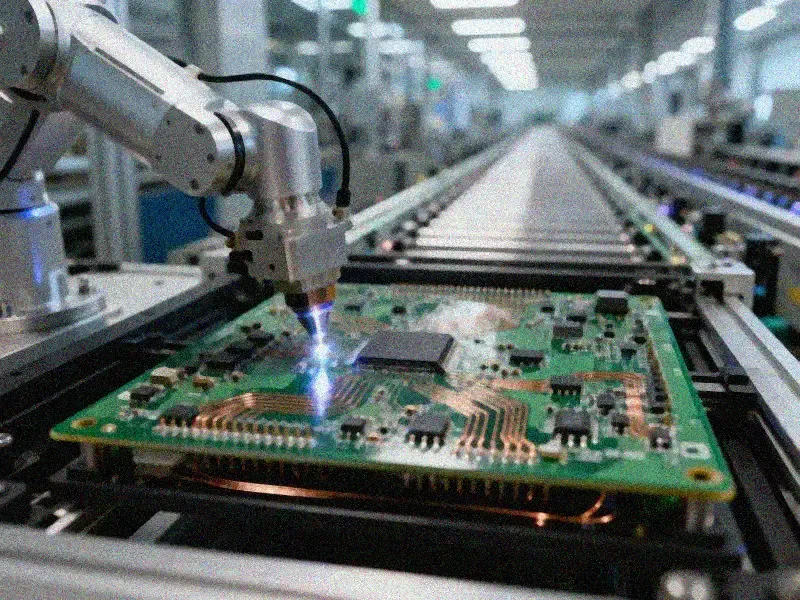
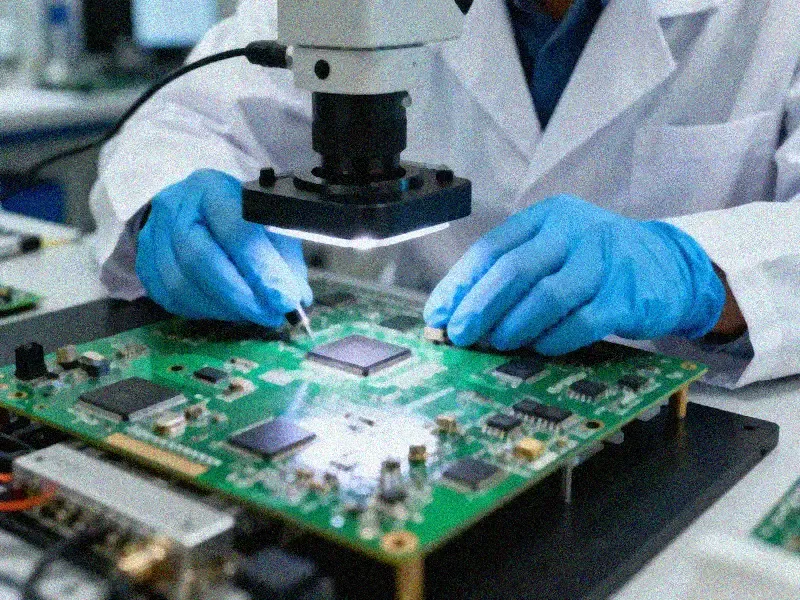
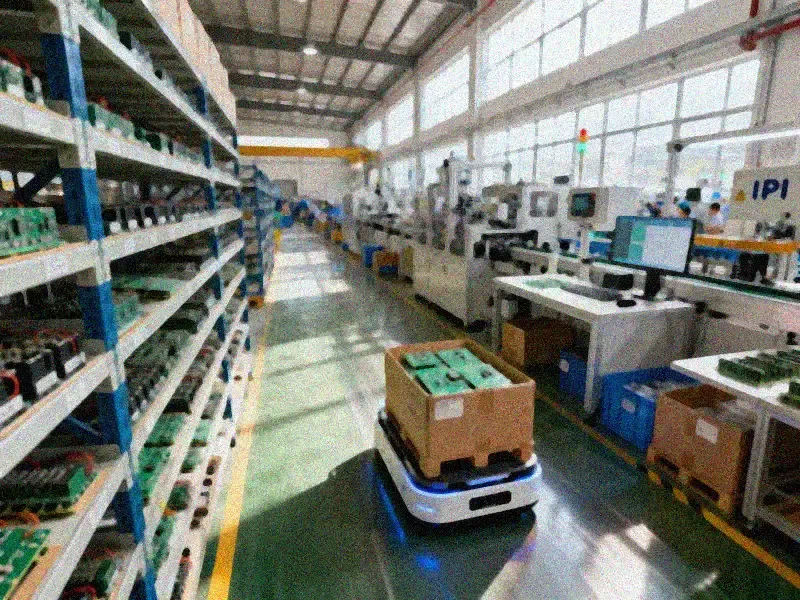
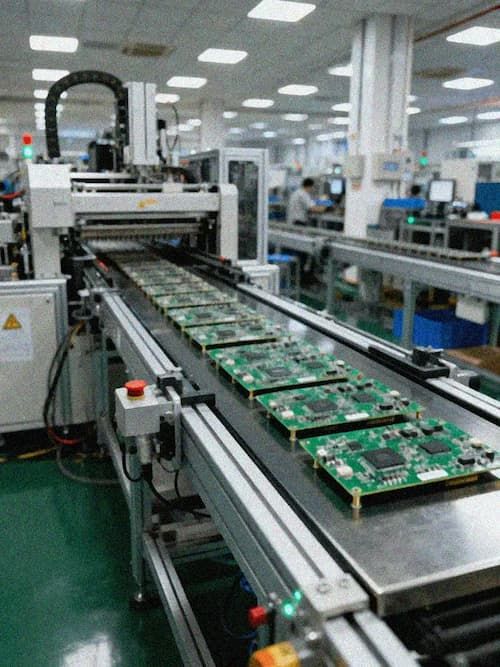
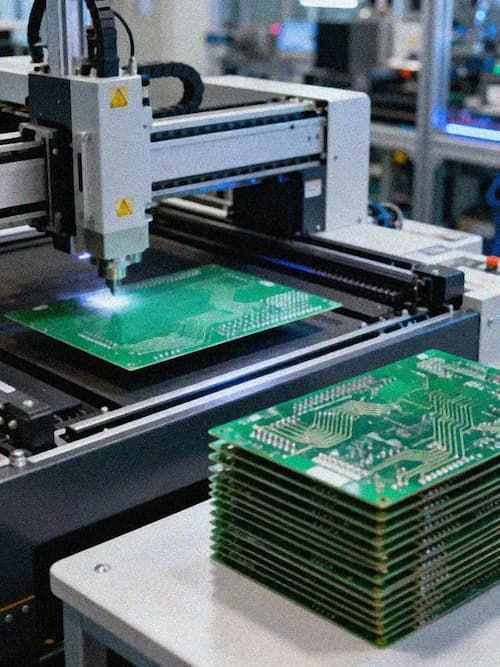
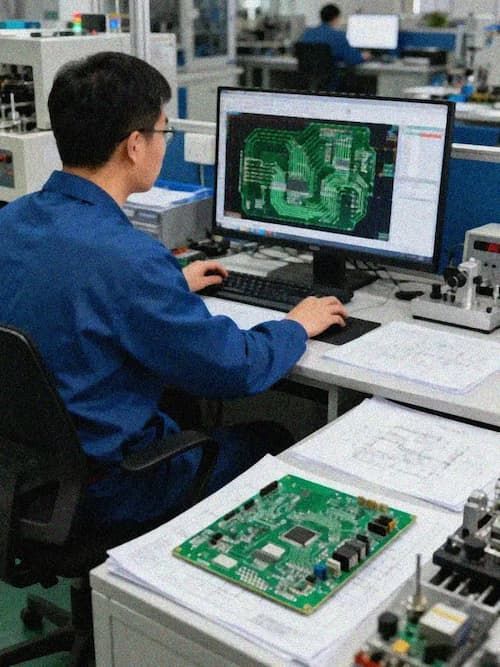
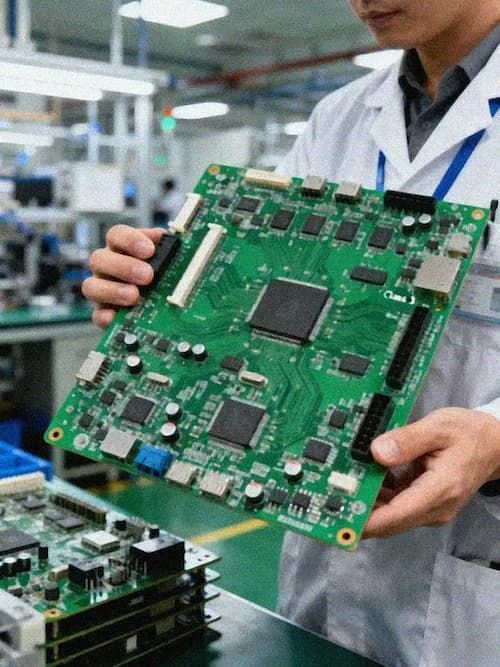
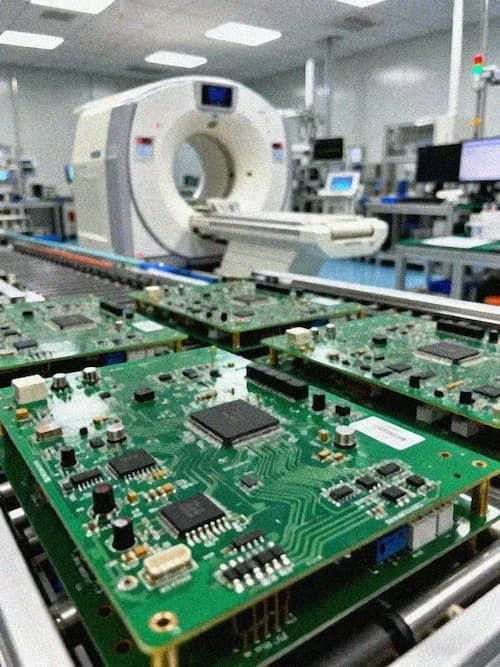
On July 3, on the day when electronica Shanghai 2026 closed at the Shanghai New International Expo Center, several price increase letters appeared on the headlines of the industry media almost simultaneously: Fuqiao Industries announced a price increase of 30% across the board of electronic fabrics, including the Low DK2 specification for AI servers. The price of FR-4 copper clad laminate increased by 15%; Kingboard Laminates increased the price of FR-4 copper clad laminate for the fifth time in the year, and the cumulative increase has exceeded 55%; YAGEO launched the largest range of price increases in recent years. Mulinsen announced on the same day that a 20% increase in PCB products across the board, followed closely by Taijing Technology, Yangjie Technology, and Core Integration. The prices of crystal crystals and power semiconductors were increased by 10%-30% respectively. The exhibition has not completely ended, and the supply chain has begun to change. June-July should have been a traditional off-season for the electronics industry, but 2026 has seen a completely opposite trend.
Material price increase and structural differentiation
The most noteworthy feature of this round of price hikes is its structural differentiation. Among the copper-clad laminate companies that announced price increases on the same day, Panasonic and Kingboard adjusted the amplitude modulation of ordinary FR-4 between 5% and 15%, while Shengyi Technology separately increased the M9-level high-frequency CCL dedicated to Nvidia's Rubin architecture by 25%, and imposed a purchase restriction on small and medium-sized bulk orders. The price increase between high-end products and conventional products has opened a significant gap, because AI servers have far higher requirements on material performance than conventional products. The M9-grade CCL uses Low-Dk2 resin and HVLP4 extremely low-profile copper foil to effectively control insertion loss and impedance deviation in a 224G PAM4 signal transmission environment. Since the certification cycle for M9 materials is as long as 4-5 years, almost no new production capacity will be released in 2026, and the tight supply and demand situation will not be alleviated in the short term. It is no coincidence that the price increase news was concentrated on July 1. On June 26, the three major CCL leaders, Kingboard Laminates, Shengyi Technology, and South Asia New Materials, jointly held a dealer meeting to release a price increase signal to channels in advance. The exhibition opens three days later, and the official price increase letter will be issued five days later. Industry data released simultaneously during the exhibition showed that CCL costs accounted for 40%-50% of the total cost of PCB. Since 2026, the industry has embarked on a rare multi-round price increase cycle. The frequency of price increases for copper clad laminates has been increased from once a half month to once a week, and the pricing power of upstream materials (copper foil, glass fiber cloth, and special resins) has continued to be strengthened.
224G PAM4 mass production and high-speed interconnection shift the industry landscape
High-speed interconnection is one of the most product-intensive areas at this exhibition. Zhaolong Interconnect exhibited a 1.6T OSFP DAC based on self-developed HSC-60 series high-speed twin-shaft cables in Hall W3. The transmission rate reaches 224 G-PAM4 and has been mass produced and delivered. Also on display is the 400G to 1.6T active copper cable ACC/AEC series, which has built-in signal compensation technology to adapt to long-distance wiring scenarios in cabinets. On the forward-looking layout of PCIe 7.0, Zhaolong developed its own HSC-48 cable and demonstrated the insertion loss test data of HSC-110 (448G-PAMx) cable for next-generation data center interconnection. Amphenol demonstrated the mass delivery capabilities of 112G and 224G platforms in Hall W1, and the average daily shipment of high-speed connectors has exceeded 1 million pairs of differential signals. It is worth noting that Amphenol has begun to provide technical licenses to local manufacturers in China to achieve dual-source supply. This practice has been extremely rare in the past, reflecting the production pressure of high-speed connectors in the context of explosive demand for AI data centers. Murata launched two differentiated products at the exhibition: a high-density silicon capacitor based on semiconductor MOS process, which uses a 3D structure to increase the capacitance density and is suitable for optical module AC coupling and lidar scenarios; a retractable circuit board SPC, which installs components on a flexible film with an elongation of 60%, and is aimed at wearable medical devices. HARTING exhibited the M17 round connector, which follows the IEC 61076-2-117 standard. Power supply, signal and data are integrated in three wires, adapted to servo motors above 7.5kW. It also built a visual robotic arm integrated wiring prototype on site, fully displaying the connector layout at the robot joints. Technical licensing cooperation between connector manufacturers and local China companies is accelerating, and Amphenol's approach has been followed up by other international manufacturers. At the special technical forum on July 2, Haoting dismantled the connection transformation logic of the AI flexible factory. The IP66/IP67 protection level and tool-less design of the M17 connector directly responded to the robot's resistance to connectors in the production line environment. Requirements for durability and maintenance efficiency.
Quantification of the AI server PCB supply and demand conflict
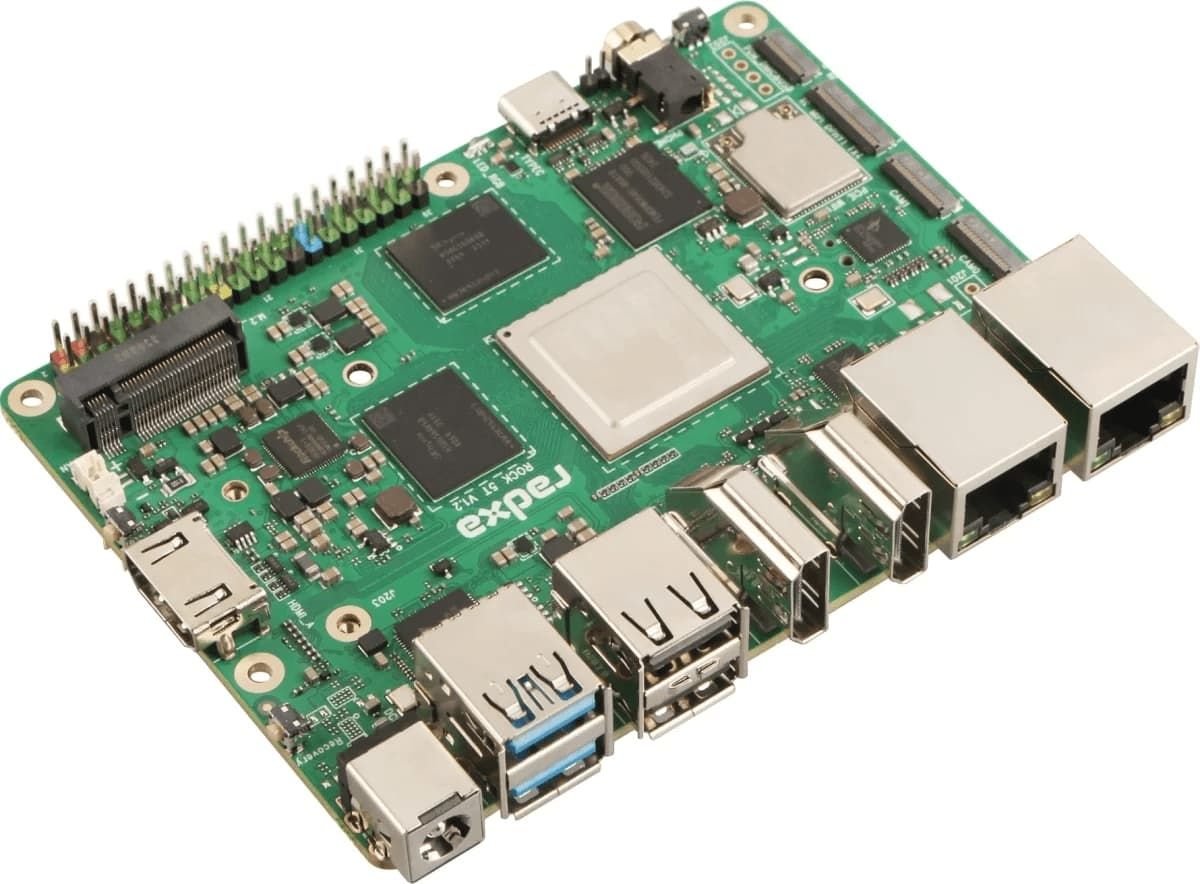
During the exhibition and one week after the exhibition, multiple sets of data quantified the contradiction between supply and demand of AI server PCBs to specific figures. The value of a single PCB of the new generation of NVIDIA Rubin architecture AI servers has exceeded US$3100, nearly 10 times that of ordinary commercial servers (12-20 layers, approximately US$320). The PCB cost of the NVL72 cabinet has increased by 233% compared with the previous generation GB300 model, ranking first among all non-storage components. The demand growth rate of AI high-end PCBs exceeds 80%, while the annual expansion rate of high-end supply is only about 20%. Orders from head PCB manufacturers have been placed until the end of 2027. Specifically at the enterprise level, Hudian is one of the few manufacturers in mainland China that can mass-produce Nvidia's 78-layer M9 orthogonal backplates. Ultra-high multilayer boards from 40 to 112 layers have been stably mass-produced. The 224G high-frequency process is relatively mature, and the AI business revenue accounts for nearly 60%. As the global leader in graphics card PCB (market share is about 40%), Shenghong Technology has entered the first-level supply system of NVIDIA Rubin, and AI orders are locked until the end of 2027. Supply-side constraints can also be measured in numbers. Among the six core materials, the global monthly demand for HVLP4 extremely low-profile copper foil exceeds 3000 tons, and the effective production capacity is only 1000- 1,100 tons/month, with a gap of nearly 48%; the monthly demand for Low Dk glass fiber cloth is 18.5 million meters, with a production capacity of only 10 million meters; the global gap for M8/M9 grade special resins is about 50%. The delivery cycle for high-end equipment is 12-18 months, the customer certification cycle is 6-12 months, and the production expansion cycle is 18-36 months. These numbers are superimposed together to form a complete picture of the "material shortage year" of high-end PCBs in 2026.
Relationship between robot shipment and PCB demand
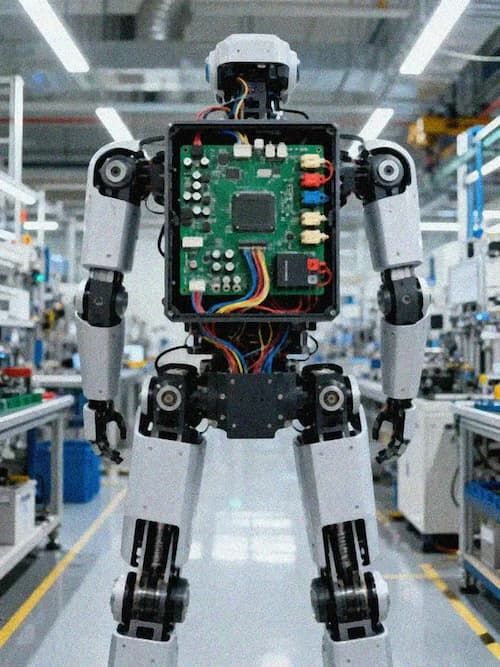
Another key difference between this exhibition and the previous one is that there are clear shipment data in the field of humanoid robots, rather than just staying at the conceptual display stage. During the exhibition, Zhiyuan Robot announced that it had sold 5168 units, and Ubisoft announced that it had sold 1079 units. Tesla Optimus's third-generation production line has been put into trial operation at the Fremont plant. Musk confirmed that small-batch mass production will start from July to August, and the single-week production target for September will jump to approximately 1000 units. Each humanoid robot usually contains more than ten PCB boards, covering functional modules such as head control, chest control, joint drive, communication, power supply, and sensor acquisition. Based on the shipments of Zhiyuan robots, one company alone has contributed more than 50,000 boards to the annualized demand. The requirements for PCB suppliers during the mass production stage are also undergoing qualitative changes. The proof-of-concept stage focuses on whether technical indicators can meet the standards. After entering the mass production stage, batch consistency, BOM cost control and supply chain response speed become core considerations. Since the robot factory's current shipments are still on the order of thousands to tens of thousands of units, the PCB order volume for a single product is much smaller than that of consumer electronics, but the technical specifications are close to the vehicle specification level, which has an impact on the flexible manufacturing capabilities of PCB manufacturers and The efficiency of multi-variety and small-batch delivery puts forward high requirements.
Maturity of semiconductor manufacturers 'robot solutions
ST ST, TI, ADI, NXP and other chip manufacturers focused on reference design solutions for humanoid robots at this exhibition, covering joint control, sensory decision-making, wireless interconnection and energy management. ADI's multi-modal tactile sensing solution integrates high-density tactile arrays with edge AI force computing to simultaneously sense pressure, vibration, contact and temperature, placing higher demands on signal integrity and EMC design of sensor acquisition boards. NXP's smart solution based on I3C bus reduces routing complexity on PCB by connecting multiple sensor nodes in series via I3C bus. Vicor demonstrated lateral and vertical power solutions for high-power GPUs, with BCM6123 (1.8kW) and BCM6135 (2.5kW) modules supporting 800VDC rack level power supply, with current density increasing from 0.1A/mm² to 3A/mm² in twelve years. The concentrated appearance of these chip solutions provides a clear selection basis for PCB design: the determination of the processor platform means that the power domain architecture and stacking schemes can be planned in advance, and the standardization of communication protocols means that the layout of the interface circuits has a reference design. The improved integration of sensors means that the area of the acquisition board can be further reduced.
Conclusion
After the exhibition, the signal sent by the above information outlined the industry's direction more clearly than the samples on the booth. The surge in price increases in the entire industry chain confirms that the demand for AI computing power has driven electronic materials to the billing level; mass production of 224G PAM4 and pre-research of 448G mark the entry of high-speed interconnection into a new generation;AI server PCB supply and demand gap The specific figures show that the expansion rate of high-end production capacity is far behind the growth of demand; the actual shipments of humanoid robots have opened up new space for PCB increment. For PCB suppliers, the focus of competition in the second half of 2026 will be on the stable supply of high-end materials and the mass production and delivery efficiency of high-level multilayer boards. KingBrother has provided customers in multiple fields with the certification and storage of the full range of high-speed materials from TU933 + to M9, the high-level multi-layer manufacturing capability of mass production of 32 layers/72 layers of samples, and the IPDM one-stop service model. Full chain support from design to mass production. The production capacity competition for high-end PCBs is still accelerating.