On June 9, TrendForce released a forecast that global smartphone production will fall to approximately 1.051 billion units in 2026, a year-on-year decline of 16.2%. The immediate cause is the sustained surge in memory chip prices — Samsung Electronics and SK Hynix have already notified customers of second-quarter DRAM price increases, and Gartner has projected that combined DRAM and SSD prices will rise 130% over 2025 levels by the end of 2026.
The memory price surge is not an isolated event. Its root cause lies in the enormous demand from AI servers for HBM (High Bandwidth Memory) and server-grade DRAM, which is pulling wafer capacity away from consumer electronics on a massive scale. IDC captured this trend in a single phrase: "Every wafer to HBM is a wafer denied to consumer memory." The cascading effects of this capacity competition are now spreading from memory chips into the PCB supply chain.
The Transmission Path: From Wafers to Circuit Boards
The transmission mechanism behind rising memory prices is more complex than it appears on the surface. The three major memory manufacturers — Samsung, SK Hynix, and Micron — began reallocating advanced-process capacity toward HBM and server DRAM in the second half of 2025 to fulfill orders from AI chip companies such as NVIDIA and AMD. According to TrendForce data, contract prices for conventional (non-HBM) DRAM rose 55% to 60% quarter-on-quarter in Q1 2026, while NAND flash contract prices increased 33% to 38%. Citi, in its latest outlook, took an even more aggressive stance, projecting DRAM average selling prices could rise 88% in 2026 and NAND prices 74%.
For consumer electronics brands, memory typically accounts for 15% to 25% of a smartphone's BOM (Bill of Materials). When memory prices double, brands face a difficult choice: absorb the cost and compress margins, or pass it on to consumers. Several Asian smartphone brands have already raised retail prices on select models in Q2 2026. Price increases, in turn, suppress demand — TrendForce's 16.2% production decline forecast is precisely the quantified result of this cost-to-demand transmission.
The chain continues downstream. Falling smartphone production directly reduces mobile PCB order volumes. A mainstream smartphone typically contains one to two PCBs (main board and sub-board), so at 1.051 billion units annually, the corresponding mobile PCB demand is roughly 1.2 to 1.5 billion units. A 16% production decline translates to nearly 200 million fewer PCBs needed.
AI Server PCBs: The Other Pole of Demand Growth
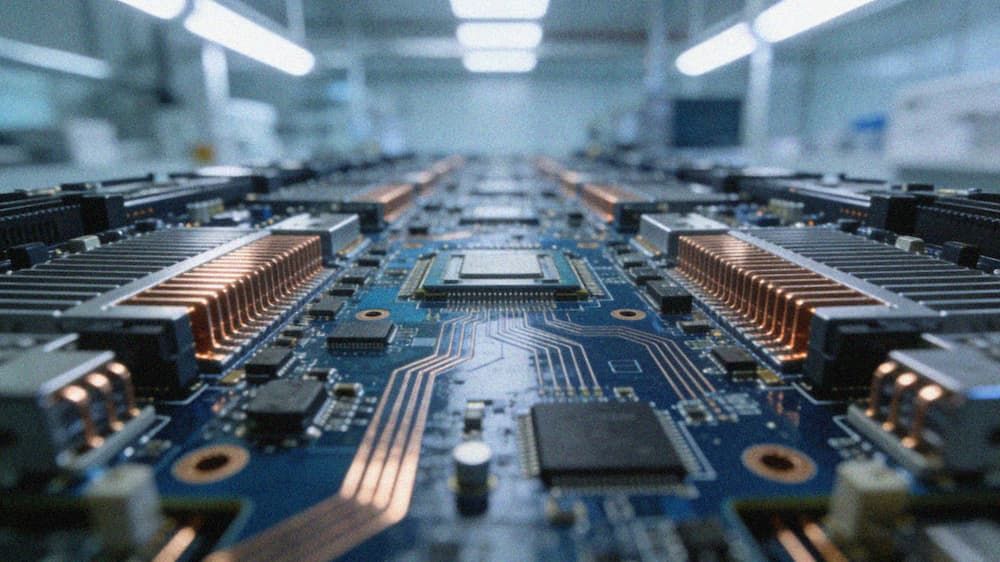
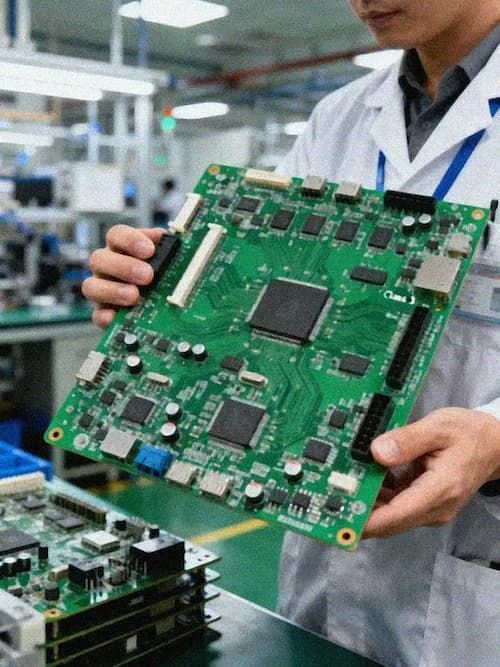
In sharp contrast to consumer electronics, AI server PCB demand is growing rapidly. NVIDIA's latest high-density AI rack systems impose far greater requirements on board-level interconnect, power delivery, and thermal management, with per-rack PCB values rising dramatically compared to the previous generation. A single AI server can contain PCBs with 30 or more layers, requiring 0.1mm laser-drilled microvias, impedance control within ±5%, and high-TG substrates with low-loss dielectric materials. These specifications are fundamentally different from those of mobile PCBs — smartphones rely primarily on HDI (High Density Interconnect) and SLP (Substrate-like PCB) constructions optimized for high-density routing in a limited area, whereas AI server PCBs prioritize high-speed signal integrity, high-power thermal management, and multi-layer lamination precision.
This demand divergence is creating a two-speed PCB market. On one side, consumer electronics PCB order volumes are contracting; on the other, AI server PCB order values are climbing rapidly. The problem is that production lines for these two product categories are not interchangeable — an HDI line built for smartphone boards cannot be repurposed for high-layer-count AI server boards, because the two require fundamentally different equipment configurations, process flows, and material systems.
The Practical Constraints of Capacity Reallocation
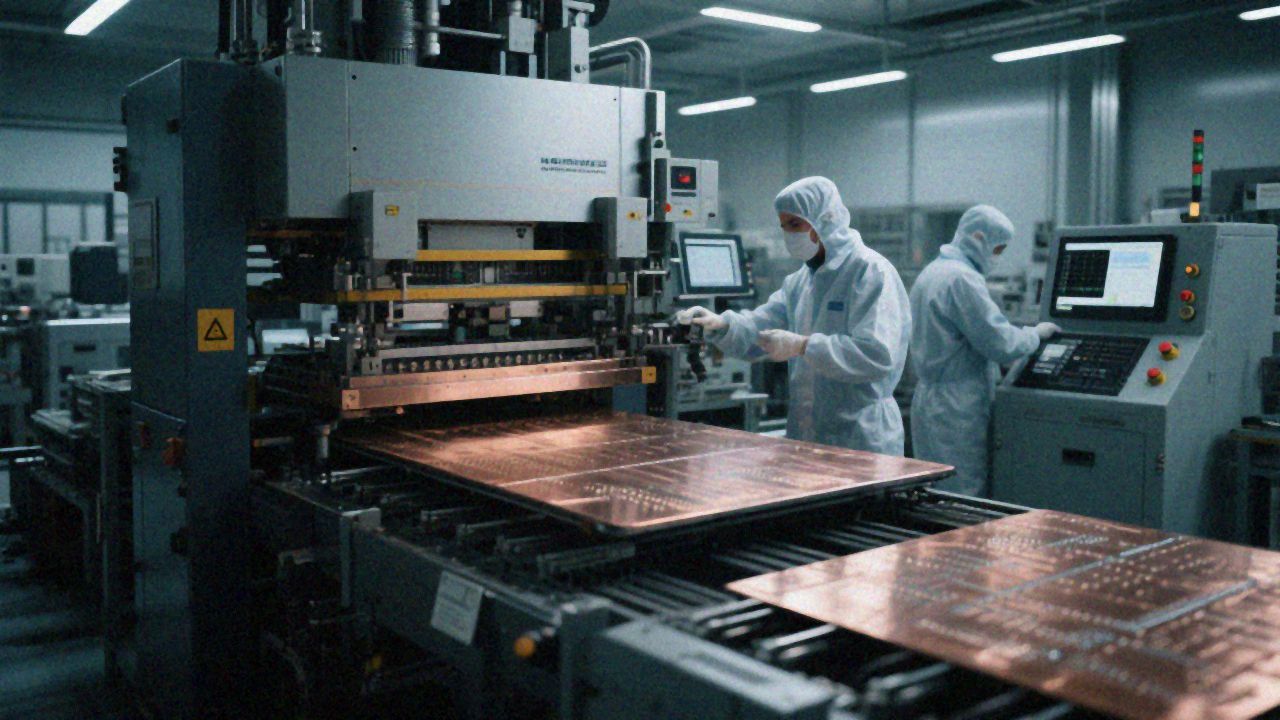
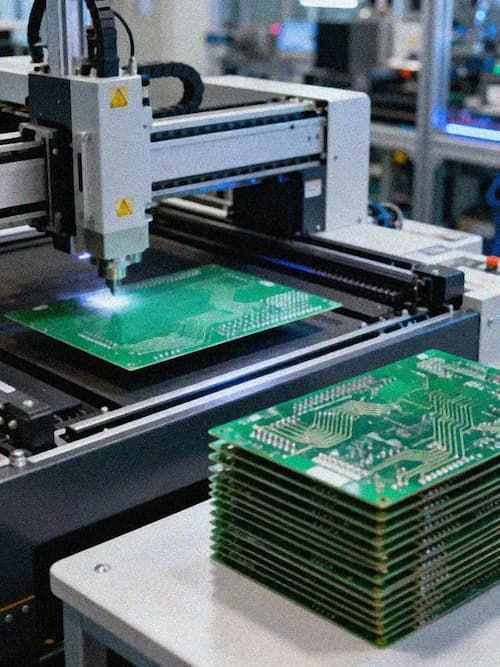
In theory, capacity freed by declining consumer electronics PCB demand could shift toward AI server production. In practice, this transition faces multiple constraints. Equipment barriers come first: AI server PCBs require laser direct imaging (LDI) systems, sequential lamination presses, plasma desmear chambers, and other specialized equipment, with a single production line often representing an investment of tens of millions of dollars. Process expertise follows: controlling layer-to-layer registration accuracy, thick copper etch uniformity, and microvia reliability in high-layer-count boards requires data accumulated across many production lots and continuous optimization — it cannot be acquired simply by purchasing equipment. Certification timelines add another layer: AI server customers typically require six to twelve months to qualify a PCB supplier, covering process capability audits, sample validation, and reliability testing.
One major Asia-Pacific PCB manufacturer attempted to convert part of its consumer electronics line to server board production in Q4 2025. During the pilot run, the post-lamination warpage exceeded the customer's specification limits because the existing hot press could not maintain the temperature uniformity required for high-TG laminate processing. The manufacturer ultimately chose to build a dedicated new line, with the timeline from planning to volume production exceeding nine months.
How PCB Suppliers Are Responding
Faced with this structural shift, PCB suppliers around the world are adopting different strategies. Leading manufacturers with existing high-layer-count capacity and established customer relationships are expanding aggressively to capture AI server orders. Mid-size manufacturers face a harder choice: continue deepening their presence in consumer electronics and wait for the cycle to recover, or invest heavily in line upgrades to enter the AI server supply chain. Some Southeast and South Asian PCB manufacturers have chosen a middle path — leveraging the trend of consumer electronics customers diversifying production away from single-region concentration to take on mid-range server and industrial control PCB orders as a stepping stone into higher-end markets.
For procurement decision-makers, this market divergence introduces new dimensions to supplier evaluation. Traditional frameworks emphasize capacity scale, price competitiveness, and delivery speed. In the current environment, a supplier's technology roadmap and capital expenditure direction have become equally important. Whether a supplier is investing in high-layer-count manufacturing capability, has experience with low-loss materials, and has passed target customer qualifications — the answers to these questions are often more predictive of a supplier's delivery capability over the next 12 to 18 months than their current pricing.
From Cost Pressure to Value Restructuring
The impact of the memory price surge on the PCB supply chain extends well beyond order volume changes. It is driving a transition across the industry from volume-based competition to value-based competition. When consumer electronics PCB order volumes decline while AI server PCB per-rack values multiply, the overall PCB market may not be shrinking — but the distribution of value has fundamentally changed.
The global electronics manufacturing industry is undergoing a supply chain restructuring driven by AI computing demand. The competition for memory capacity is a symptom; the deeper change is a structural migration of PCB demand from consumer electronics toward AI infrastructure. This migration will not be short-lived — as NVIDIA's Vera Rubin platform advances and AI inference demand continues to grow, AI server demand for high-end PCBs will remain strong for years to come. For every participant in the PCB supply chain, understanding this structural shift and making corresponding capacity and technology investment decisions will determine their competitive position in the next industry cycle.