Overview
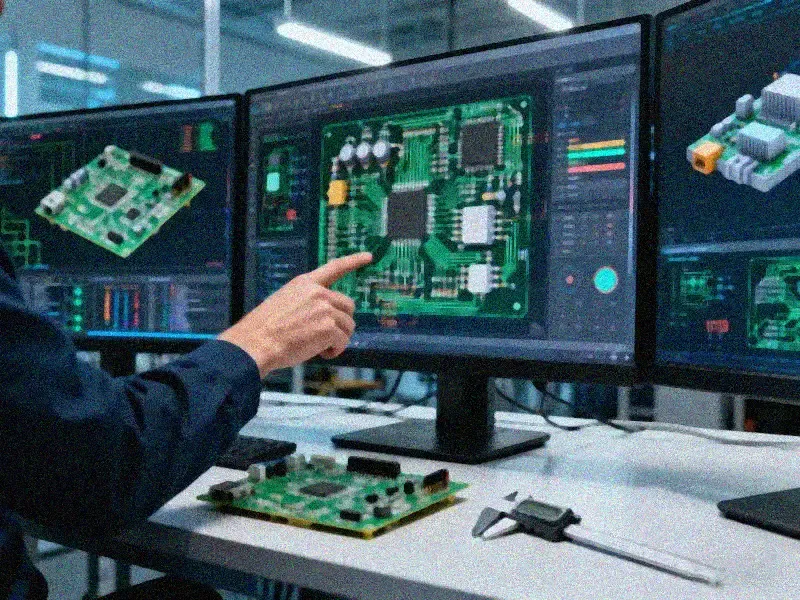
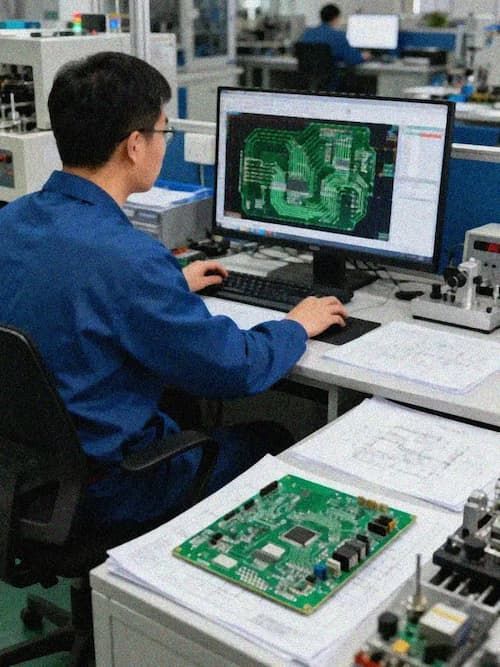
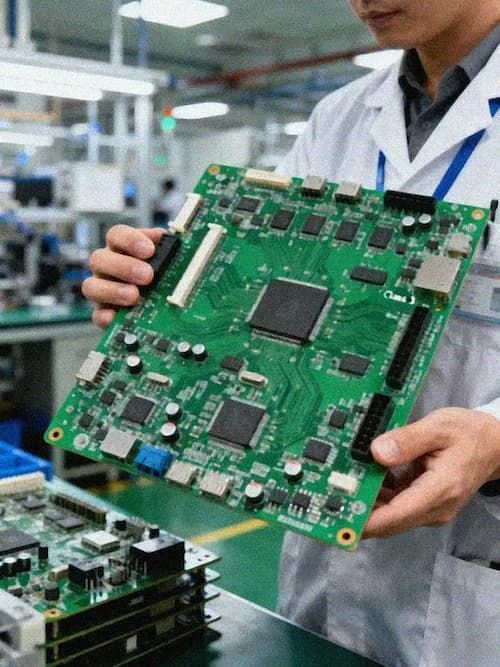
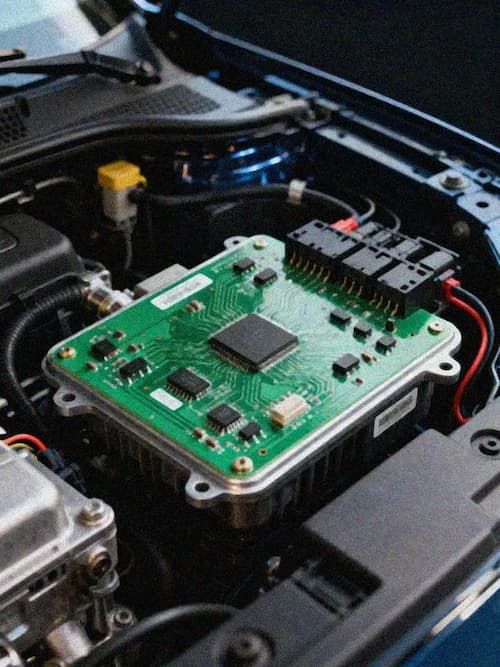
The automotive battery management system (BMS) serves as the core control unit for new energy vehicle battery packs, responsible for real-time monitoring of cell voltage, temperature, current, state of charge (SOC), and state of health (SOH), as well as controlling charge/discharge processes, cell equalization, and fault warning. Poorly designed BMS PCBs can lead to inaccurate sampling data, overheating, short circuits, or even battery safety incidents, making high-reliability PCB design a core foundation for BMS performance and safety. Our automotive battery management PCB design services cover the full development workflow from schematic review, stack-up planning, component placement and routing optimization, DFM/DFT analysis to pre-production performance verification, addressing core pain points including high current load heat dissipation, signal interference, wide temperature operation stability, and mechanical shock resistance, meeting the stringent requirements of automotive-grade BMS products.
Technical Capabilities
Our automotive battery management PCB design services cover a full range of technical configurations to adapt to diverse BMS architecture and performance requirements:
- Custom Stack Configuration Support: Supports 2-20 layer PCB design schemes, including heavy copper boards, high thermal conductivity metal core boards, rigid-flex boards, buried copper block boards, embedded component boards, and ceramic substrate boards, to meet high current carrying and heat dissipation demands of different BMS power levels.
- Precise Impedance and Signal Integrity Control: Achieves ±5% impedance control accuracy, with optimized routing designs for common BMS interfaces including I2C, TDM, PCM, DC and AC power ports, minimizes crosstalk, signal attenuation and reflection, ensures accurate data transmission between voltage sampling, temperature sensing, main control and communication modules.
- High Thermal Dissipation Design Optimization: Supports 2-12oz heavy copper routing, embedded copper blocks and ceramic substrate integration, reduces thermal resistance by up to 30% compared to standard PCB designs, adapts to continuous high current load scenarios of 100A+ common in 400V and 800V new energy vehicle battery packs.
- Mechanical and Environmental Resilience Design: Incorporates rigid-flex structures, reinforcement layers, and shockproof routing layouts, meets vibration and shock resistance requirements for automotive applications, supports mechanical blind and buried via designs for high density packaging without reducing structural stability.
- Full-Process Verification Support: Provides a full set of validation services including signal integrity testing, thermal cycling testing, EMC testing, high and low temperature reliability testing, and current load testing, to fully validate design performance before entering the manufacturing phase, reducing later iteration risks.
Quality Standards
All automotive battery management PCB designs follow strict automotive industry quality and performance standards:
- Material Compliance: All selected materials meet IPC-A-600 and IPC-6012 standards for automotive electronics, are RoHS and REACH compliant, with halogen-free material options available to meet low toxicity and environmental protection requirements for automotive products.
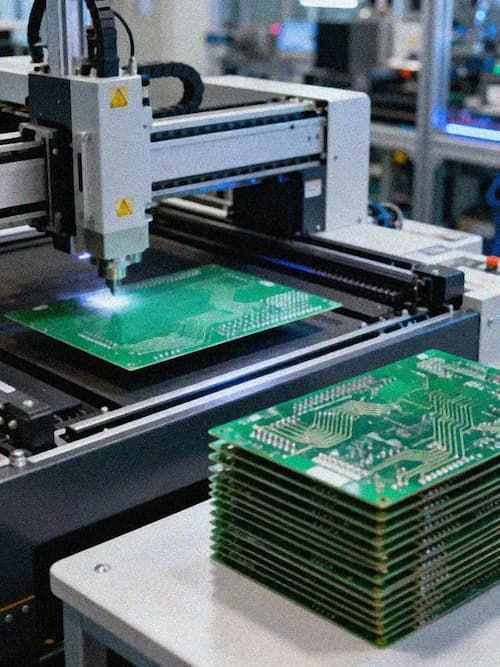
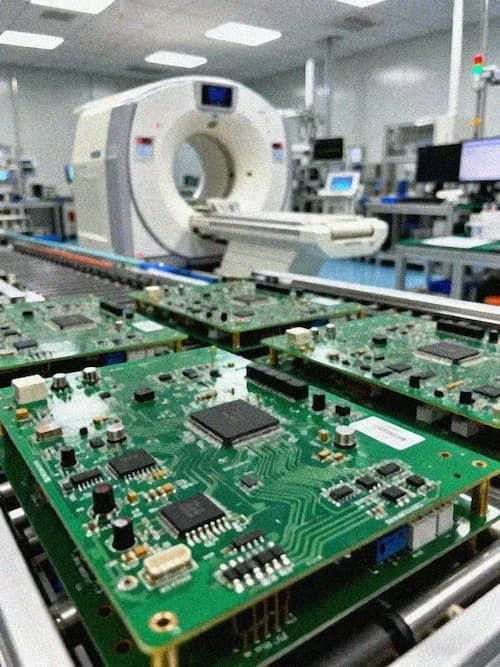
- Manufacturing Process Alignment: Designs are aligned with mature mass production process capabilities, supporting line width/space as low as 2.0/2.0mil, micro-vias down to 0.06mm, and high-precision laser drilling processes, ensuring design intent is fully realized during production, with defect rates controlled below 50PPM for mass production runs.
- Performance Validation Standards: All designs are validated against ISO 16750 automotive electronic environmental testing standards, including 1000+ hour temperature cycling tests between -40℃ and +125℃, 15G vibration testing, and EMC testing compliant with CISPR 25 Class 3 requirements for automotive electronics, ensuring stable operation in complex on-vehicle environments.
Applications
Our automotive battery management PCB design solutions are applicable to a wide range of BMS scenarios across new energy and related industries:
- Passenger Electric Vehicle BMS Main Control Boards: Supports both centralized and distributed BMS architectures for 400V and 800V passenger EV battery packs, ensuring accurate SOC and SOH monitoring, and reliable control of charge and discharge processes.
- Commercial Electric Vehicle BMS Control Modules: Adapted for high-capacity battery packs used in electric trucks, buses, and construction machinery, supporting high continuous current loads, dust and water resistance requirements, and harsh outdoor operating conditions.
- Hybrid Vehicle BMS Sampling and Control Boards: Optimized for mixed power system architectures, with high electromagnetic interference resistance to operate reliably alongside internal combustion engine components and high-voltage ignition systems.
- Battery Charging and Equalization Modules: Supports DC/DC converter and active/passive equalization circuit design for BMS, ensuring balanced charging across all battery cells to extend overall battery pack service life by 15% or more.
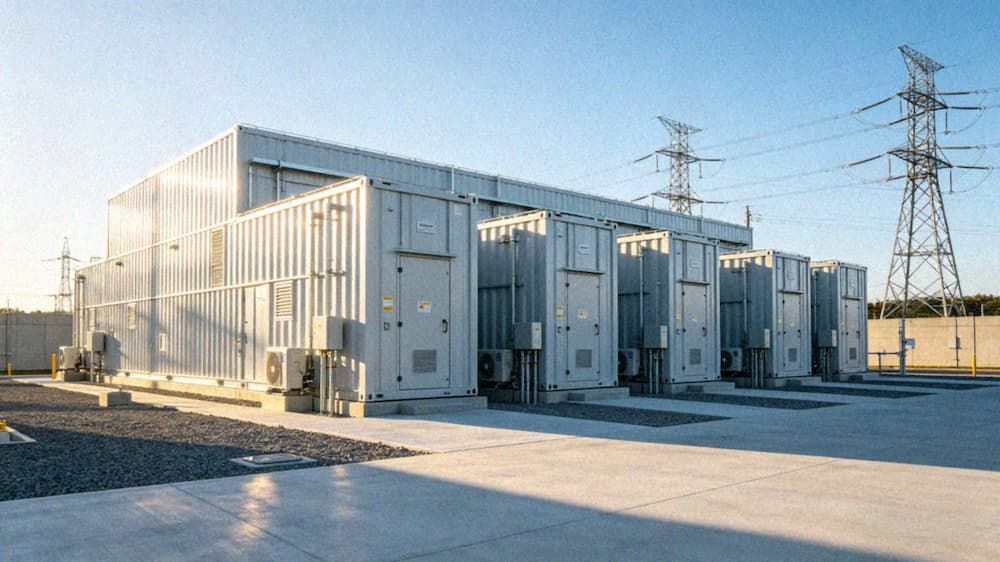
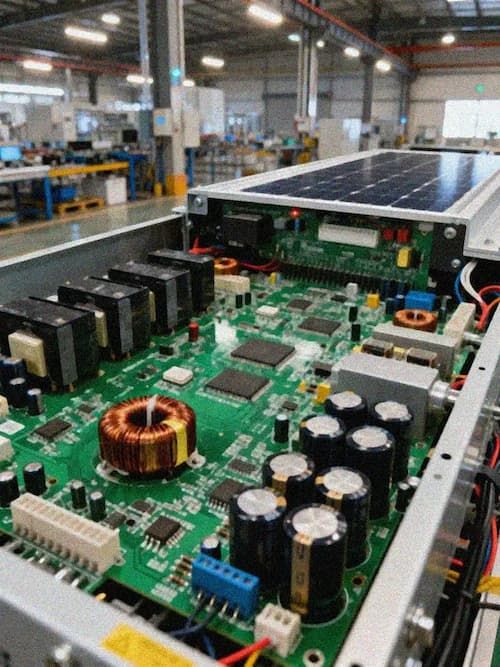
- Stationary Energy Storage BMS Boards: Applicable for residential and commercial stationary energy storage systems that share core BMS technology with automotive applications, supporting long cycle life and 24/7 stable operation requirements.
Key Advantages
Our automotive battery management PCB design services offer distinct advantages for BMS product development:
- Scenario-Specific Customization: Designs are fully tailored to specific BMS architecture, current load, operating environment, and packaging constraints, avoiding one-size-fits-all solutions that compromise performance or increase unnecessary costs.
- Design for Manufacturability (DFM) Optimization: DFM and DFT checks are integrated early in the development process, ensuring that design solutions are fully compatible with mass production processes, reducing development iteration cycles by up to 30% and lowering overall production costs.
- Full Lifecycle Support: Covers the entire development cycle from schematic design, prototype verification, small batch trial production to mass production support, with professional technical experts available to resolve issues at every stage of the product lifecycle.
- Cost-Performance Balance: Balances performance requirements with material and manufacturing costs, offering multiple material and process options to meet different budget and performance targets without compromising core reliability and safety requirements.
Contact Information
If you have automotive battery management PCB design requirements, you can reach out to our technical team for support. We provide free pre-design technical evaluation, customized solution development, and full-process technical consulting services to help you bring high-reliability BMS products to market efficiently.