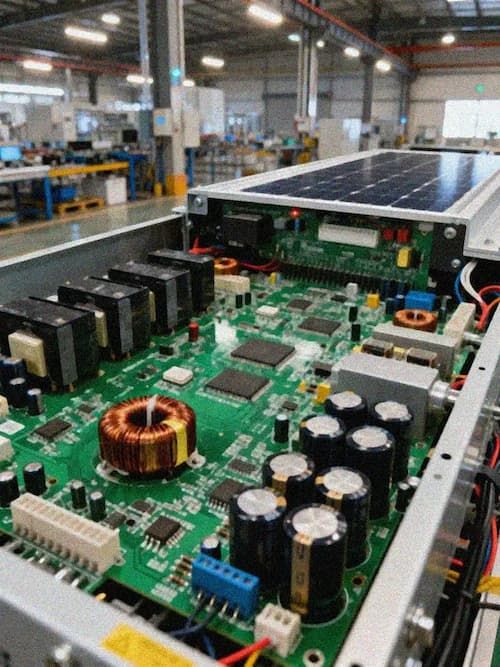
In smart grids or microgrid systems, achieving efficient and stable energy distribution and management hinges on optimizing energy transmission paths, improving system reliability, and suppressing environmental interference through precise PCB design. Based on industrial-grade power electronics practices and technical standards, the following are key design strategies:
High Power Carrying and Low Loss Design: Thick Copper and Power Layer Architecture
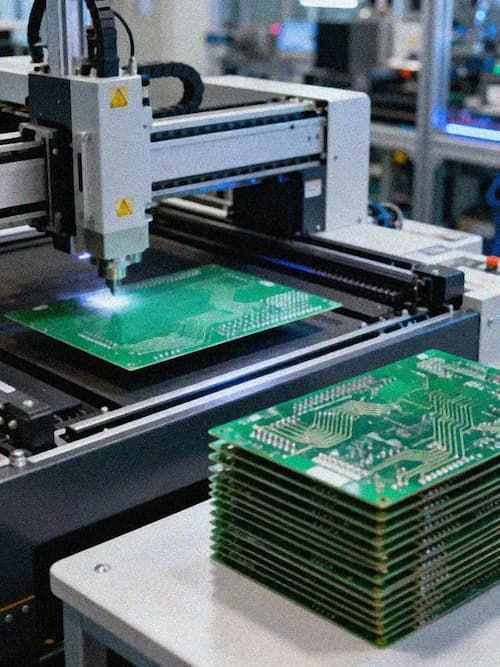
Smart grid equipment often needs to handle high currents of hundreds of amperes and kilovolts, which traditional 1-ounce copper foil is insufficient. To significantly reduce line resistance and Joule heat loss, a thick copper foil design should be adopted, with 2 to 6 ounces (70–210 μm) copper foil recommended. Some high-voltage converters even require ≥10 ounces of ultra-thick copper. In multilayer PCBs, 1–2 layers should be independently planned as dedicated "power layers" to specifically carry the high current of the main circuit, physically isolated from signal layers to reduce interference. Meanwhile, in high-current areas, wider traces with a line width ≥ 3mm are required, along with grid copper (e.g., 0.5mm/0.3mm line width/spacing) and dense grounding vias, which can effectively reduce temperature rise by more than 15°C. In areas with abrupt changes in copper thickness, a stepped thinning transition design (e.g., 4oz→3oz, transition area ≥ 5mm) can reduce the thermal stress concentration factor from 3.2 to 1.8, significantly improving mechanical reliability.
Thermal Management and Material Selection: Ensuring Stability in Extreme Environments
Localized temperature rise caused by high power density is a major cause of system failure. A high thermal conductivity substrate is required; FR-4 high Tg material (Tg ≥ 170°C), polyimide (PI), or ceramic substrate are recommended to ensure rigidity in harsh environments ranging from 85°C to 125°C. Thermal design requires a multi-pronged approach: increasing ventilation holes, using copper-filled areas, and rationally arranging heat-generating components, and combining this with aluminum substrates or DBC ceramic substrates to achieve efficient heat conduction. For high-power modules, employing thick copper and aluminum-based hybrid bonding technology or embedded copper-based heat sinks can significantly reduce thermal resistance. In energy storage systems or outdoor substations, PCBs must be adaptable to a wide temperature range (-40°C to +85°C), and the coefficient of thermal expansion of materials must be reduced by more than 20% to maintain long-term stability.
Signal Integrity and Electromagnetic Compatibility (EMC) Design: Ensuring Precise Control and Interference Resistance
The coexistence of strong and weak currents in the power grid easily generates severe electromagnetic interference (EMI). Layered isolation must be implemented in the design: employing a four-layer board design (signal layer/ground layer/power layer/shielding layer) to strictly isolate high and low voltage areas. Critical signal lines (such as sensor acquisition and communication interfaces) require impedance matching and differential pair routing to reduce signal reflection and crosstalk. In the design of the high-voltage control board, a π-type filter circuit and a common-mode inductor must be integrated, and a shielding cover must be used to protect sensitive circuits. To pass EMC Class 4 industrial-grade certification, SI/PI simulation pre-verification is required, along with rigorous verification such as 1100kV high-voltage testing.
High Reliability and Redundancy Design: Achieving System-Level Fault Tolerance
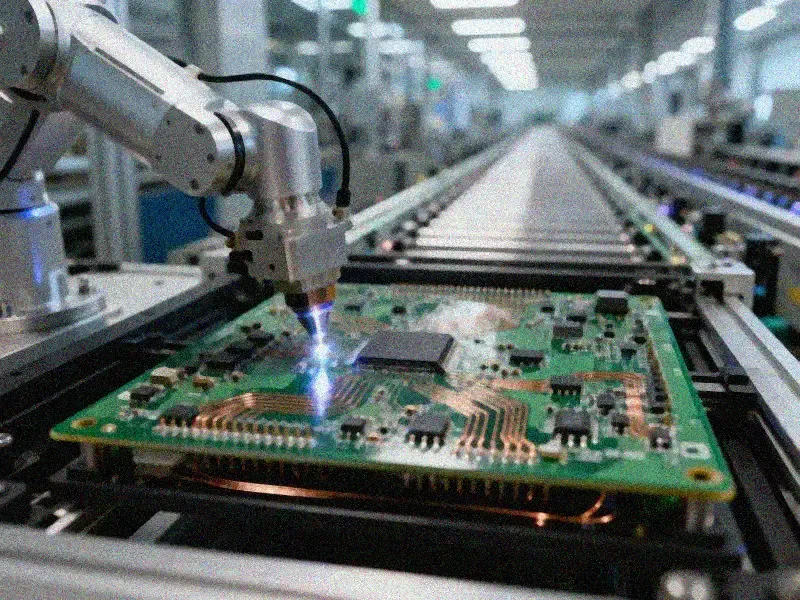
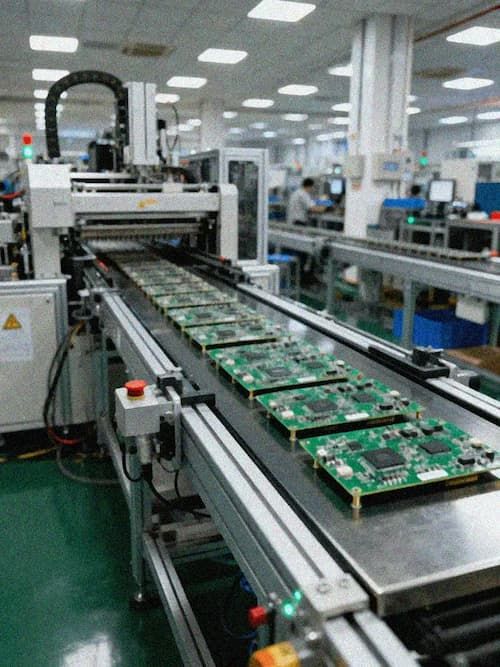
To address the risk that a single point of failure in the power grid could lead to grid-wide collapse, the PCB design must incorporate redundancy mechanisms. A dual-system parallel design should be adopted in the core control unit (such as the BMS high-voltage control board) to achieve hot or cold backup. Critical circuits (such as power supplies and control circuits) can employ dual-path or multi-path designs to ensure system operation even if a single path fails. PCB manufacturing must adhere to the IPC-A-610G Class 3 standard, employing nitrogen reflow soldering, 100% functional testing (FCT), and high-temperature aging testing (85°C/168h) to ensure long-term solder joint stability. The predicted MTBF (Mean Time Between Failures) must exceed 15,000 hours.
Integration and Intelligence: Fusion of AI and Advanced Processes
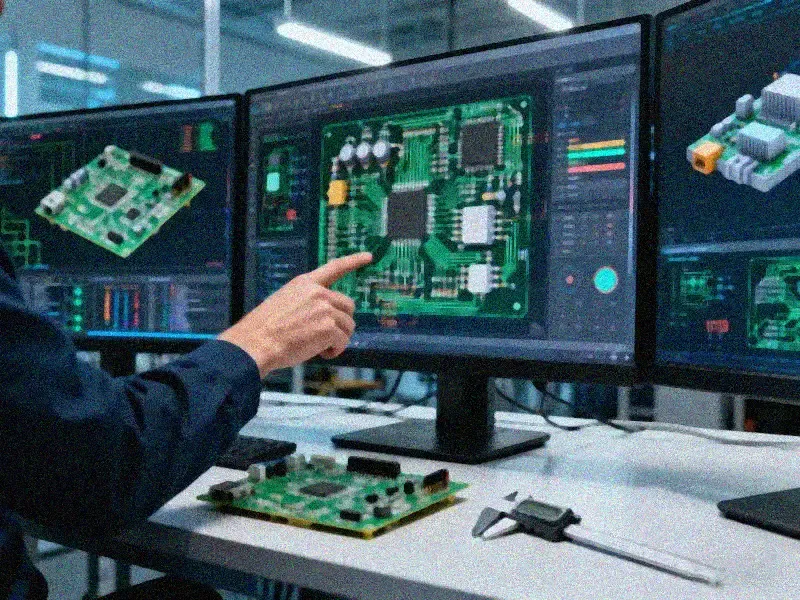
Modern smart grid PCBs are trending towards high integration. HDI (High-Density Interconnect) and Any-layer technology enable 0.1mm microvia interconnects, increasing wiring density by up to 30% within a limited area, meeting the needs of AI edge controllers integrating millimeter-wave radar, lidar, and other sensors. High-frequency materials such as Rogers/Panasonic MEGTRON are used in 77GHz millimeter-wave radar boards to ensure high-speed data transmission. The design process is evolving towards AI-driven, utilizing AI algorithms for defect detection and predictive maintenance, and optimizing designs through DFM/DFA (Manufacturability/Assemblability Analysis), improving mass production yield by 15–30%. Meanwhile, rigid-flex PCB technology enables compact layouts in complex spaces, meeting the flexible installation requirements of scenarios such as robots and smart meters.
In summary, through the comprehensive application of thick copper power layers, high thermal conductivity materials, layered EMC design, system-level redundancy, and HDI and AI optimization, PCBs have transformed from simple circuit carriers into core intelligent components for energy distribution and management in smart grids, serving as the physical foundation for achieving "efficient, stable, and reliable" grid operation.