Overview
Medical PCBs are subject to some of the strictest performance, reliability, and compliance requirements across all industries, leading many design teams to over-specify materials, layer counts, and process requirements to avoid compliance risks, which drives up unnecessary production costs. Medical PCB cost optimization is a systematic approach to identifying and eliminating these unnecessary cost drivers without compromising on functional performance, regulatory compliance, or long-term product reliability, covering the entire product lifecycle from initial schematic design to mass production scaling. This approach addresses common cost pain points for medical device manufacturers, including excessive layer counts for low-complexity devices, over-specified specialty materials that do not align with actual use case requirements, non-manufacturable design features that increase production scrap rates, and redundant process steps that add no functional value. By aligning design and manufacturing decisions with actual device performance needs and regulatory requirements, teams can reduce total PCB costs by 20% to 40% while maintaining full eligibility for medical device market approval.
Technical Capabilities
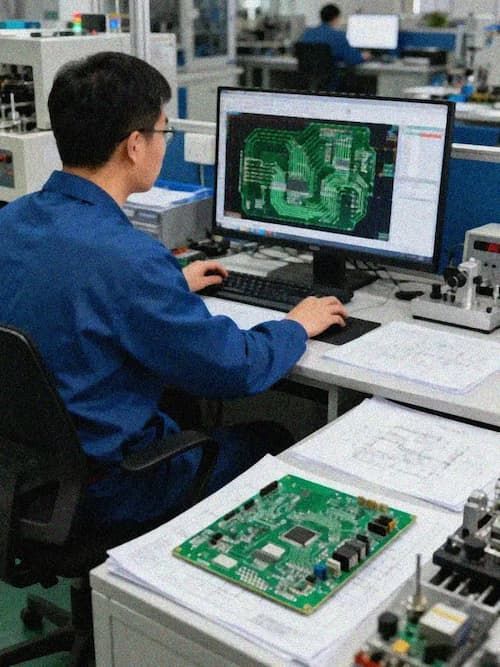
- Design for Manufacturing (DFM) Early Intervention: Integrate DFM checks at the schematic and layout stage to eliminate unnecessary design complexities, including overly tight line width/spacing requirements that do not serve functional needs, redundant layer counts, or over-specified via sizes that increase production scrap rates. Early DFM integration reduces design iteration costs by up to 30% and cuts prototyping lead times by avoiding costly post-design rework to fix manufacturing compatibility issues.
- Optimized Material Selection Guidance: Match material specifications to actual device performance requirements instead of defaulting to premium over-spec materials. For example, select standard high-TG FR4 for mid-tier medical monitoring devices instead of high-cost specialty ceramic substrates unless high-heat or high-frequency demands explicitly require it, while ensuring full compliance with biocompatibility and temperature stability requirements. Material consolidation across product lines also enables bulk purchasing savings for repeated material SKUs.
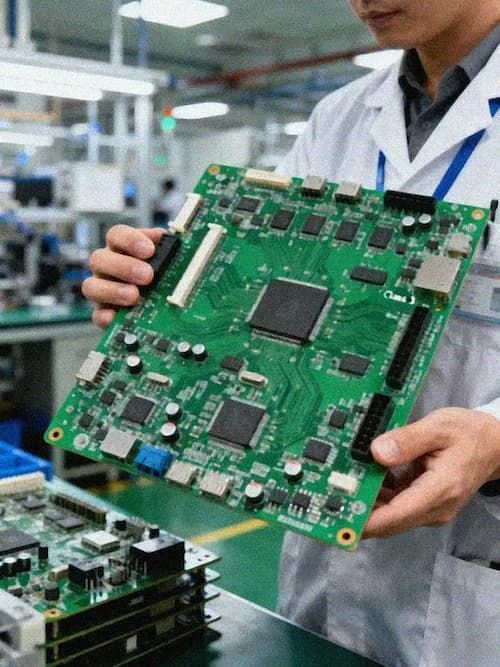
- Stack-Up and Routing Optimization: Reduce unnecessary layer counts by optimizing signal routing, separating analog and digital ground planes efficiently, and using shared shielding layers instead of dedicated layers for each signal group. For example, a 6-layer medical monitoring PCB designed for <1mV weak biopotential signal acquisition can be optimized to a 4-layer design with proper stack planning without compromising noise immunity, cutting material costs by 35% or more. For high-layer count imaging device PCBs, stack optimization can reduce total layer counts by 2 to 4 layers while maintaining high-speed signal transmission and electromagnetic shielding performance.
- Process Tuning for High Yield: Adjust manufacturing processes to match design requirements, avoiding over-processing that adds unnecessary costs. For example, use standard immersion gold plating for non-implantable devices instead of costly hard gold plating unless contact cycle requirements exceed 1000 insertions, and optimize lamination parameters for rigid-flex medical PCBs to reduce scrap rates by up to 20%. For high-volume production runs, process tuning also reduces per-unit labor and material waste costs.
- Volume Scaling Alignment: Adapt design and manufacturing workflows to support seamless scaling from prototyping to mid-volume and mass production, eliminating rework costs when moving between production stages. This includes standardizing component footprints, using widely available raw materials, and avoiding custom process steps that are not scalable for higher volume runs, ensuring cost savings are maintained across the entire product lifecycle.
Quality Standards
Cost optimization for medical PCBs never compromises on regulatory compliance or product reliability, with all processes aligned to global medical device requirements:
- All designs adhere to ISO 13485 quality management system requirements for medical device manufacturing, IPC-A-610 Class 3 acceptance criteria for high-reliability electronics, and IEC 60601 electrical safety and EMC standards for medical electronic equipment.
- For implantable medical devices, optimized PCB designs meet ISO 10993 biocompatibility testing requirements, with material selections validated for long-term contact with human tissue.
- All optimized designs undergo rigorous pre-production verification, including signal integrity testing, thermal cycling testing, vibration and shock testing, and EMC pre-compliance testing to ensure that cost adjustments do not impact product performance under real-world operating conditions.
- Full material and production batch traceability is maintained for all orders to support medical device audit requirements and post-market surveillance obligations, with full documentation provided for regulatory submission purposes.
Applications
Medical PCB cost optimization solutions are applicable across a wide range of medical device use cases, including:
- Life Science and In Vitro Diagnostic Devices: Optimize PCBs for gene analyzers, immunoassay equipment, and blood testing devices, balancing high-speed signal transmission requirements for ARM and FPGA processing modules with cost efficiency for mid-volume production runs.
- Patient Monitoring Equipment: Reduce costs for vital sign monitors, wearable ECG devices, and HRV monitoring systems while maintaining noise immunity for <1mV weak biopotential signal acquisition, through optimized ground plane design and appropriate material selection.
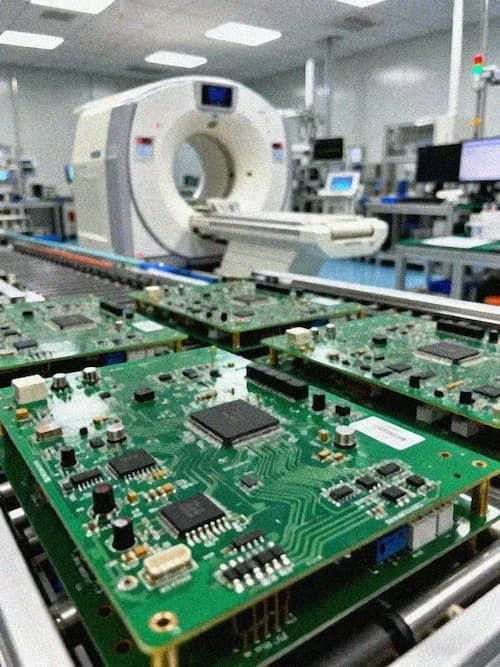
- Medical Imaging Systems: Optimize high-layer count PCBs for MRI, CT, and ultrasound equipment, balancing high-speed signal transmission and electromagnetic shielding requirements with stack-up optimization to reduce unnecessary layer counts and material costs.
- Surgical and Medical Robotics: Optimize high-TG PCBs for surgical robot control boards and vascular robot master control units, ensuring real-time gigabit Ethernet communication and multi-axis motion control performance while reducing production scrap rates through DFM optimization.
- Implantable and Wearable Medical Devices: Optimize rigid-flex PCB designs for implantable pacemakers, hearing aids, and wearable health monitors, balancing miniaturization requirements and biocompatibility with process tuning to reduce manufacturing scrap rates for high-complexity rigid-flex boards.
- Portable Medical Equipment: Optimize PCB designs for portable diagnostic devices, home health monitors, and medical beauty equipment, reducing material and production costs while meeting compact form factor and low power consumption requirements.
Key Advantages
- No Compromise on Performance or Compliance: All cost optimization strategies are validated against medical industry regulatory requirements and device functional specifications, ensuring zero impact on signal integrity, reliability, or compliance eligibility. All adjustments are documented to support regulatory submission and audit requirements.
- Full Lifecycle Cost Reduction: Address cost drivers across the entire product lifecycle, from design and prototyping to mass production and after-sales support, delivering total cost of ownership reductions of 20% to 40% for medical PCB assemblies. Optimization strategies account for both upfront production costs and long-term field failure costs to deliver maximum total savings.
- Customized Strategy for Each Use Case: Optimization strategies are tailored to the specific device type, production volume, and performance requirements, avoiding one-size-fits-all adjustments that may not align with product needs. For example, low-volume prototype devices focus on reducing iteration costs, while high-volume mass production devices focus on material and process cost savings.
- Transparent Cost Driver Identification: Detailed cost breakdown analysis is provided to identify unnecessary cost drivers, such as over-specified materials, redundant design features, or low-yield process steps, allowing product teams to make informed tradeoff decisions between cost and performance.
- Seamless Integration with Existing Design Workflows: Optimization services can be integrated at any stage of the product development cycle, from early schematic design to existing product cost reduction for mature devices, without disrupting ongoing development timelines or requiring full design overhauls.
Contact Information
If you have medical PCB cost optimization needs for new product development or existing product cost reduction, reach out to our technical team for a free, no-obligation cost analysis and customized optimization proposal. Our engineering team will work closely with your design and procurement teams to deliver balanced solutions that meet your cost, performance, and compliance requirements.