Overview
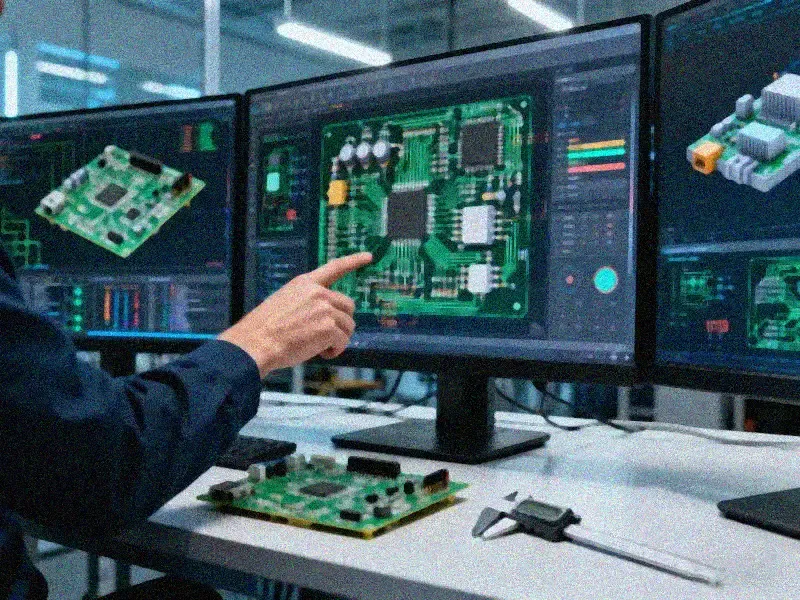
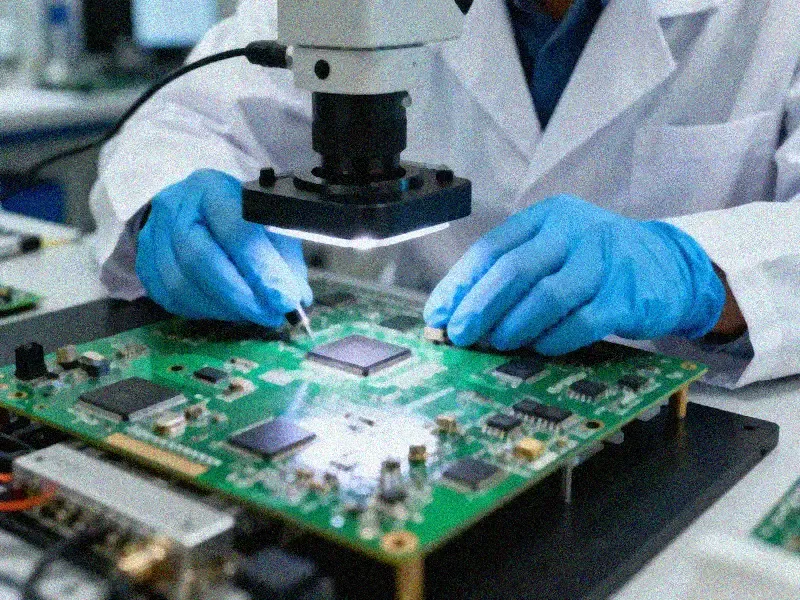
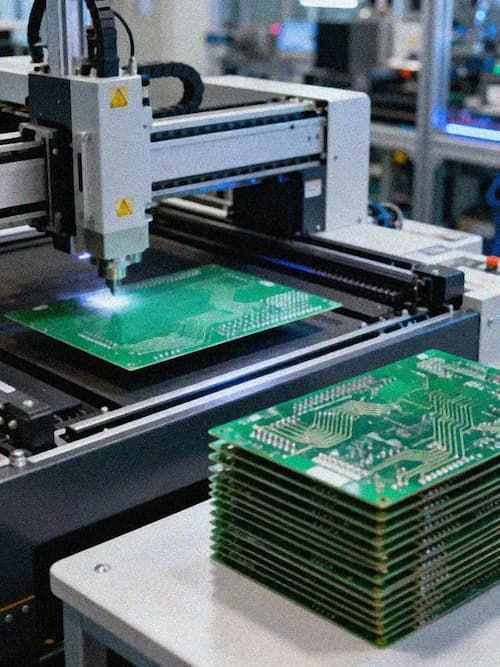
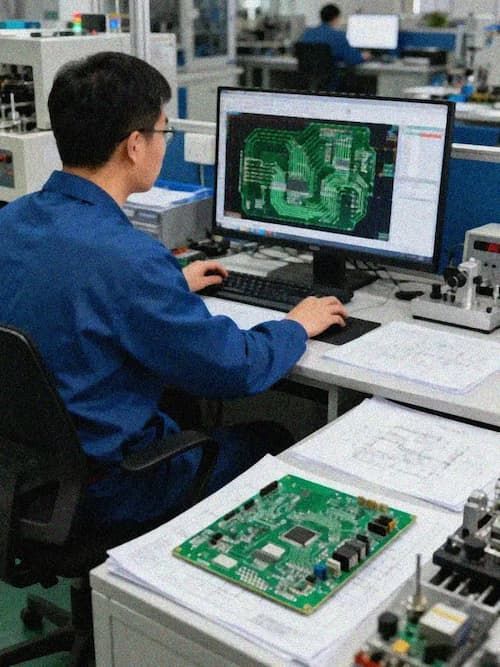
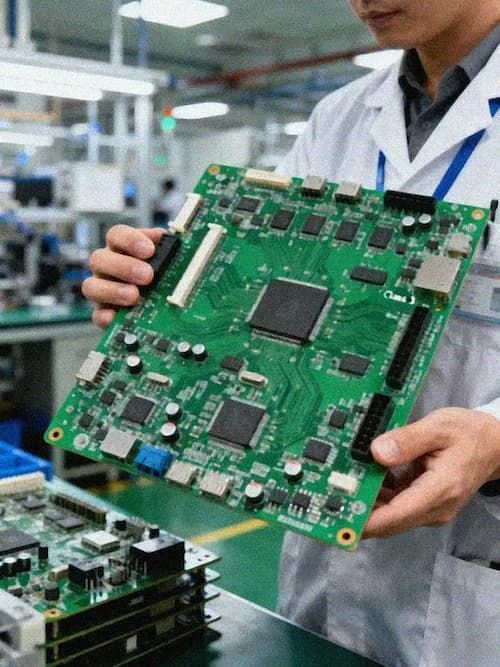
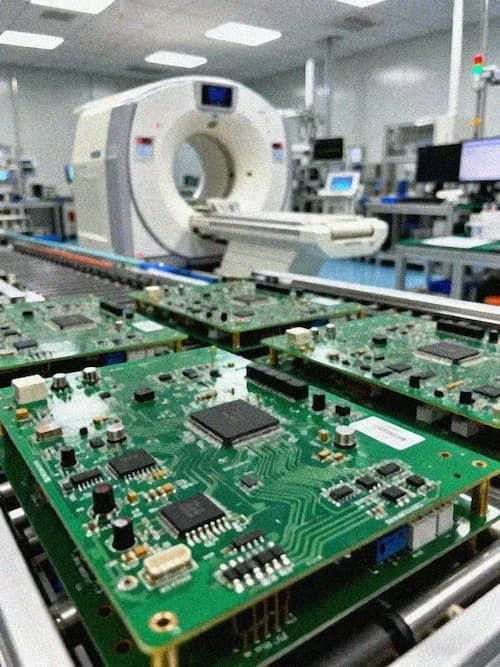
Medical emergency PCB design is a core technical pillar for the stable operation of life-saving medical devices, directly impacting the accuracy of diagnostic data, response speed of emergency treatment equipment, and survival rate of patients in critical conditions. Unlike consumer or industrial electronic PCB design, medical emergency PCB design faces unique constraints: it needs to reliably capture microvolt-level weak bioelectrical signals in high-interference hospital environments, support millisecond-level real-time response for surgical and interventional robots, meet biocompatibility requirements for long-term implantable devices, and adapt to harsh operating conditions such as vibration, temperature fluctuation, and impact for portable field emergency equipment. Our professional medical emergency PCB design services cover the full process from schematic optimization, stackup planning, layout and routing adjustment, to performance verification, addressing core pain points such as signal distortion, electromagnetic interference, and insufficient structural reliability in emergency medical device development, and meeting the design needs of various high-end emergency medical hardware.
Technical Capabilities
- High-precision signal integrity design: Support 20+ layer high-frequency PCB design with integrated shielding layers, achieving ±5% impedance control accuracy, and supporting independent analog/digital ground partitioning design to capture bioelectrical signals as weak as <1mV, effectively eliminating crosstalk, noise interference, and signal reflection, ensuring the accuracy of vital sign data and diagnostic imaging results.
- Rigid-flex and miniaturization design expertise: Provide mature rigid-flex board design solutions, compatible with nano-coating configuration for biocompatibility, reducing the overall volume of PCB assemblies by up to 40% while maintaining structural stability and signal transmission performance, perfectly adapting to the miniaturization requirements of implantable emergency medical devices and handheld portable emergency equipment.
- High-speed real-time control design: Support 16+ layer high-TG sheet design, compatible with gigabit Ethernet communication and multi-axis motion control signal transmission requirements, ensuring response latency lower than 1ms, meeting the real-time control needs of emergency surgical robots and vascular interventional robots to avoid operational deviations caused by signal delay.
- Special material and high-density process support: Compatible with a wide range of special substrate materials including heavy copper, high-frequency hybrid, buried copper block, ceramic substrate, and buried resistance/capacitance boards, supporting micro-via as small as 0.06mm and line width/space down to 2.0/2.0mil, meeting the high heat dissipation and high integration requirements of emergency medical imaging and gene detection equipment.
- Modular pre-validation framework: Provide pre-validated functional design modules including FPGA signal processing, ARM core control, motor drive, and bio-signal acquisition, effectively shortening the prototype development cycle of emergency medical devices by 30% while reducing design risk.
Quality Standards
All medical emergency PCB design processes strictly follow international medical electronics industry specifications to ensure the safety and reliability of final products:
- Comply with IPC-A-610 Class 3 medical electronics manufacturing standards, with design outputs fully compatible with medical-grade PCB production and assembly processes
- Align with ISO 13485 medical quality management system requirements, with full design traceability covering every link from material selection to testing verification
- Meet IEC 60601 medical device electromagnetic compatibility standards, with targeted anti-interference design to avoid operational abnormalities caused by electromagnetic radiation from other high-power medical equipment in emergency scenarios
- Support biocompatibility testing and verification for implantable device designs, meeting long-term implantation safety requirements
- Pass environmental reliability verification including -40°C to +85°C wide temperature operation, 15G vibration resistance, and 100G shock resistance, ensuring stable operation of portable emergency equipment during pre-hospital transport and field rescue.
Applications
Medical emergency PCB design solutions can be widely applied to various emergency medical device scenarios, including but not limited to:
- Pre-hospital and in-hospital multi-parameter vital sign monitors
- Emergency surgical robots and vascular interventional robot main control systems
- Portable ultrasound, X-ray, and other mobile emergency imaging equipment
- Implantable cardiac pacemakers, emergency monitoring sensors and other implantable emergency medical devices
- Point-of-care immunotherapy, gene detection, and blood analysis equipment for emergency diagnosis
- Brain electricity bio-signal feedback monitors for emergency neurology scenarios
- Handheld emergency first-aid equipment and wearable emergency monitoring devices
Key Advantages
- Critical scenario risk prevention: The design verification process prioritizes single-point failure prevention, with optional redundant power supply and signal path design, ensuring 99.99% operational reliability during life-saving emergency procedures, and avoiding equipment failure that endangers patient safety.
- Full lifecycle compatibility: Design outputs are fully compatible with low-volume prototype manufacturing, mid-volume trial production, and large-scale mass production requirements, eliminating repeated design work when device production scales, and reducing overall R&D and production costs.
- Medical environment adaptation optimization: Targeted shielding and grounding design to resist interference from high-power medical equipment such as MRI and CT machines in hospital emergency environments, ensuring stable signal transmission even in high-electromagnetic-interference scenarios.
- Customized configuration support: Provide targeted design adjustments according to special use requirements, including waterproof, dustproof, and anti-corrosion coating configurations for field emergency equipment, biocompatible material selection for implantable devices, and ruggedization design for equipment operating in extreme environments such as high altitude and low temperature.
Contact Information
If you have technical requirements or customization demands for medical emergency PCB design, you can reach out to our technical support team to apply for a free design feasibility evaluation and customized solution quotation. We provide end-to-end technical support covering schematic design, stackup planning, layout optimization, prototype verification, and mass production guidance to fully meet your emergency medical device development needs.