Overview
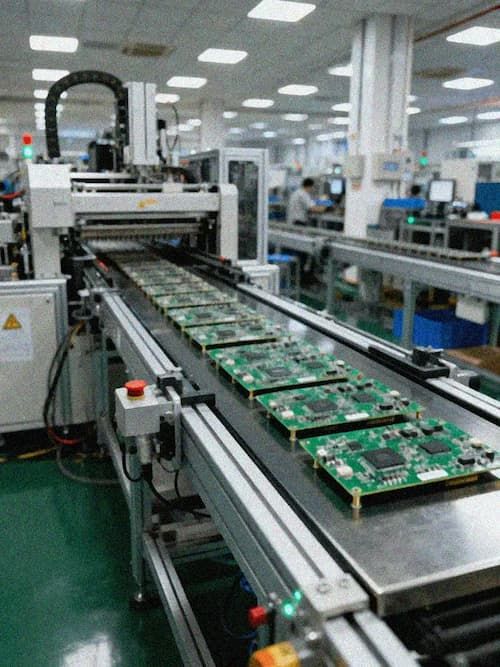
Rogers high-frequency laminates are widely preferred for high-frequency and high-speed electronic designs due to their stable dielectric constant (Dk), low dissipation factor (Df), excellent thermal stability, and low moisture absorption compared to standard FR4 materials. However, the unique material properties of Rogers laminates, especially PTFE-based variants, require specialized manufacturing processes and quality control measures that general PCB manufacturers often lack. Professional Rogers PCB manufacturers deliver end-to-end fabrication services tailored to the unique requirements of Rogers material processing, covering design optimization, prototyping, mass production, and performance testing to ensure your high-frequency designs perform as intended in real-world operating conditions. These services address core industry pain points including signal attenuation, impedance misalignment, delamination risk, and inconsistent high-frequency performance, catering to the strict performance demands of modern high-frequency electronic systems.
Technical Capabilities
- Layer Count Support: Supports pure PTFE Rogers PCBs up to 24 layers, high-frequency hybrid Rogers PCBs up to 28 layers, with flexible stack-up configurations including mixed Rogers-FR4 lamination that balances high-frequency performance and overall production cost for cost-sensitive projects. Stack-up designs can be customized to include independent ground planes for interference shielding, meeting the needs of high-density routing for complex high-frequency systems.
- High-Speed Transmission Adaptation: Supports maximum transmission rates up to 112Gbps, ideal for high-speed backplanes, optical modules, and high-bandwidth data transmission applications with low signal attenuation requirements. The manufacturing process is optimized to minimize Dk/Df drift across production batches, ensuring consistent signal integrity even for the highest bandwidth use cases.
- Precision Manufacturing Tolerances: Achieves ultra-fine trace width/space tolerances for dense routing, supports 0.5 Pitch component placement, and minimum package sizes down to 01005 (0.3mm*0.2mm) for high-density Rogers PCB designs. Double-sided component placement is supported with maximum component height up to 25mm, accommodating complex assembly requirements for integrated high-frequency systems.
- Dimensional Capacity: Accommodates rigid Rogers PCB sizes up to 550mm*1000mm, with maximum board thickness up to 12mm, supporting both standard and custom dimensional specifications for diverse project needs. Custom non-standard board sizes are also supported within semi-automatic production equipment limits, catering to unique form factor requirements.
- Specialized Process Support: Offers compatible manufacturing for related high-frequency board types including millimeter-wave radar PCBs, 5G coupler PCBs, and high-frequency step boards, adapting to niche high-frequency application requirements. Additional specialized process support includes heavy copper routing, blind and buried via fabrication, and rigid-flex Rogers PCB manufacturing for flexible high-frequency systems.
Quality Standards
- Impedance Control Accuracy: Implements strict impedance testing across 100% of production batches, with control accuracy tailored to meet design requirements for high-frequency signal integrity, minimizing signal reflection and cross-talk. Impedance values are verified via dedicated high-frequency testing equipment to ensure alignment with design specifications.
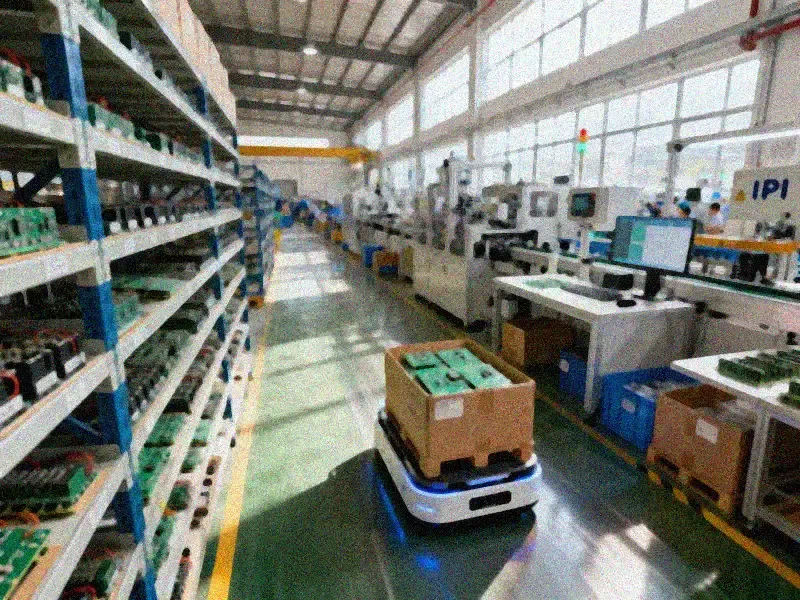
- Material Sourcing Compliance: Sources original Rogers laminates with verified Dk/Df values and full batch traceability, ensuring consistent material performance across prototyping and mass production runs. All materials are stored in temperature and humidity controlled environments to prevent pre-production material degradation.
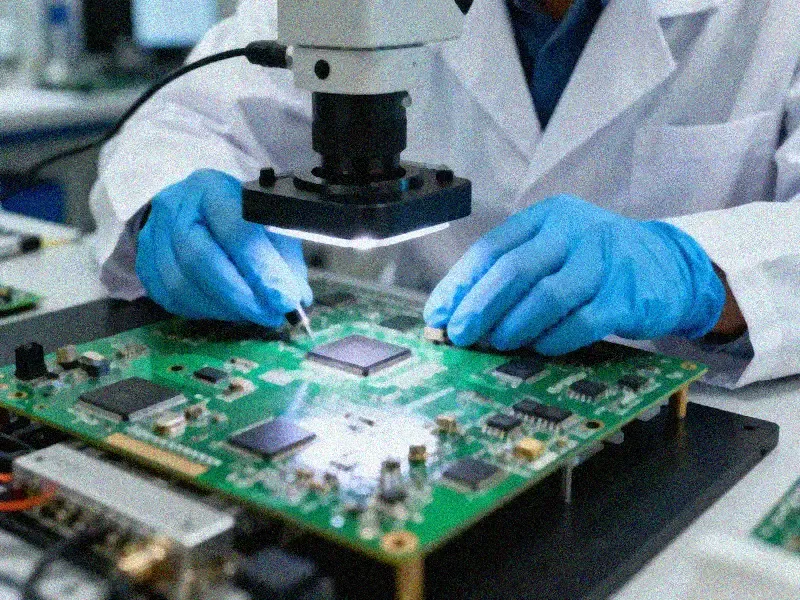
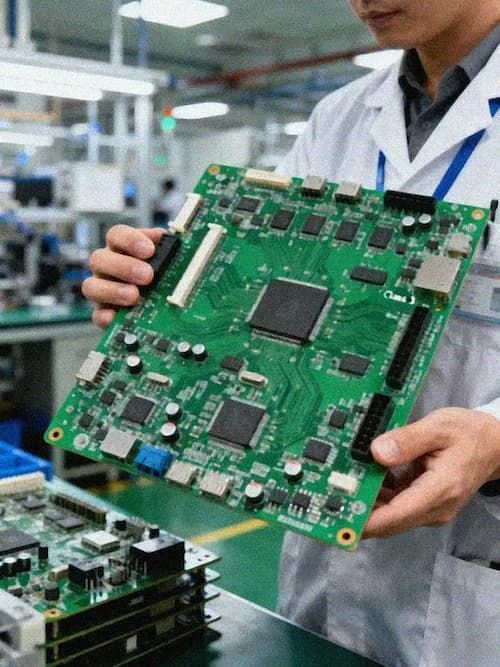
- Reliability Testing Coverage: Conducts mandatory pre-shipment testing including high-frequency performance verification, thermal cycling testing, dielectric constant validation, and humidity resistance testing to ensure stable operation across wide operating temperature ranges and harsh environmental conditions.
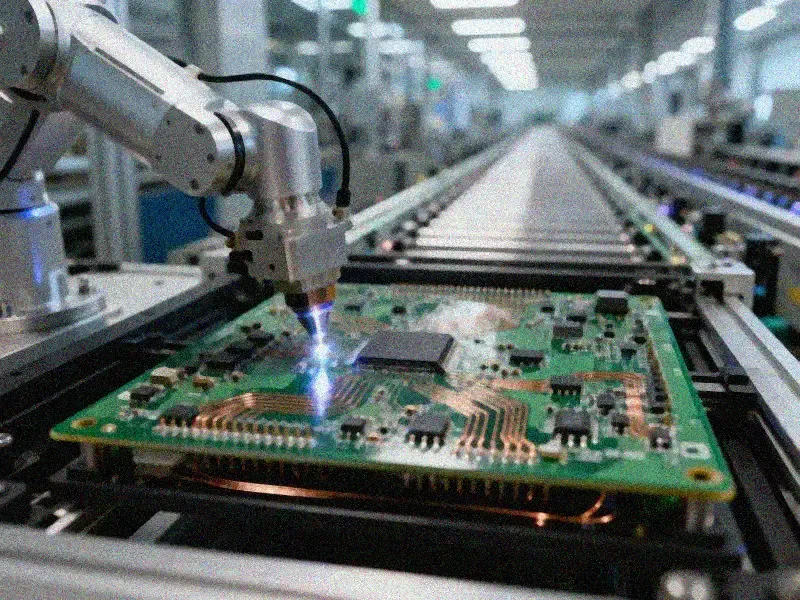
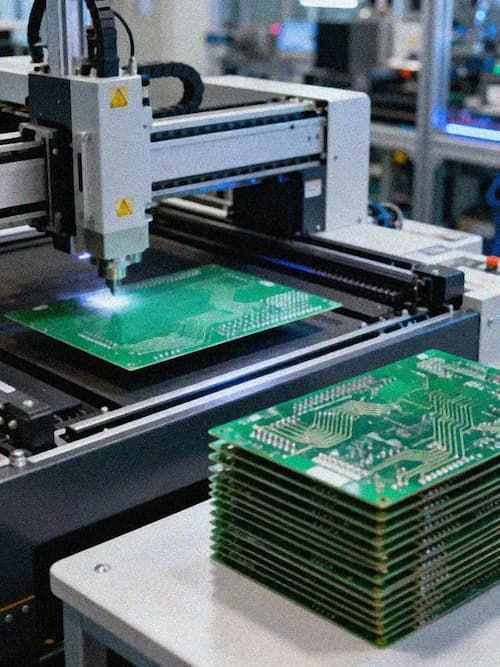
- Process Quality Control: Adheres to standardized process controls for PTFE lamination, drilling, and plating, eliminating common defects such as delamination, copper lift-off, and via voids in Rogers PCB production. Each production stage includes dedicated quality checks to catch defects early, reducing overall production waste and improving yield.
Applications
Rogers PCB manufacturing services are suitable for a wide range of high-frequency, high-speed application scenarios across industries:
- 5G Communication Infrastructure: Including 5G base station antennas, couplers, filters, and remote radio units (RRUs) that require stable high-frequency signal transmission with low insertion loss across wide temperature ranges.
- Millimeter-Wave and Radar Systems: Automotive millimeter-wave radar, aerospace collision avoidance radar, security imaging systems, and traffic monitoring radar that operate at GHz-level frequencies and demand consistent signal performance.
- High-Speed Optical Modules: 100G/400G/800G optical transceivers for data centers and telecom networks, requiring consistent dielectric performance to support high-bandwidth data transmission with minimal signal loss.
- Aerospace and Defense Electronics: Satellite communication systems, radar jamming equipment, airborne navigation systems, and ground-based military communication equipment that demand high reliability and performance under extreme environmental conditions.
- High-Speed Backplanes: Core routing and switching equipment backplanes that support 112Gbps+ transmission rates, requiring tight impedance control and low signal loss to support uninterrupted high-volume data transmission.
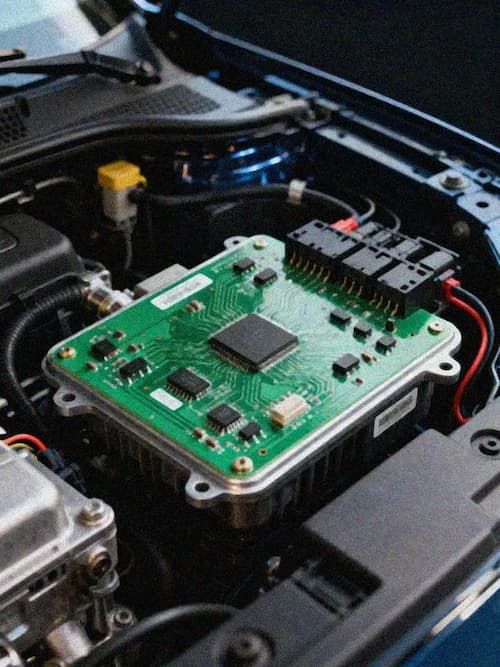
- Automotive Electronics: Intelligent cockpit communication systems, V2X communication modules, and autonomous driving perception systems that require stable high-frequency performance and long operational lifespans.
Key Advantages
- Specialized Material Processing Expertise: Possesses deep experience processing PTFE-based Rogers laminates, which require modified drilling, plating, and lamination processes compared to standard FR4 PCBs, ensuring high production yield even for complex high-density designs. Process parameters are optimized for different Rogers laminate grades to minimize material-related defects.
- Flexible Order Scalability: Supports both small-batch prototyping runs for R&D projects and high-volume mass production for commercial deployment, with consistent quality across all order sizes. Prototyping runs can be delivered in shortened lead times to accelerate R&D iteration cycles.
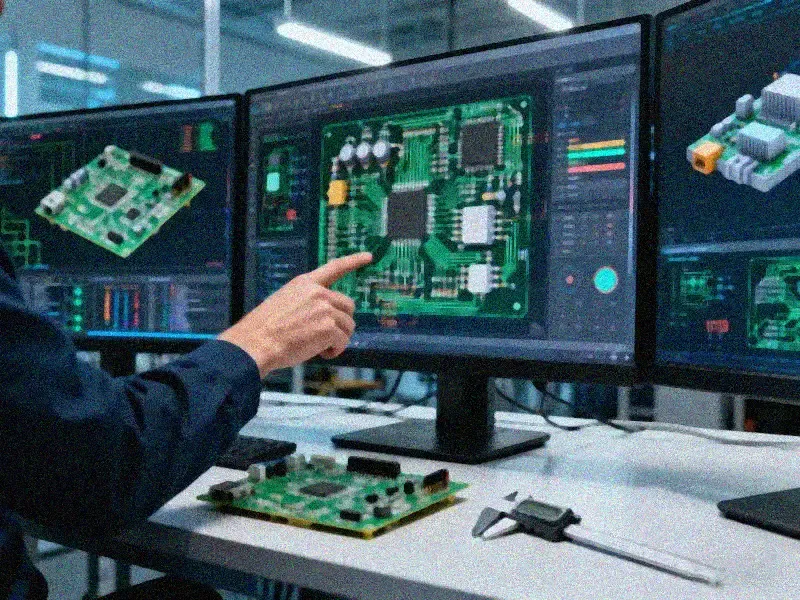
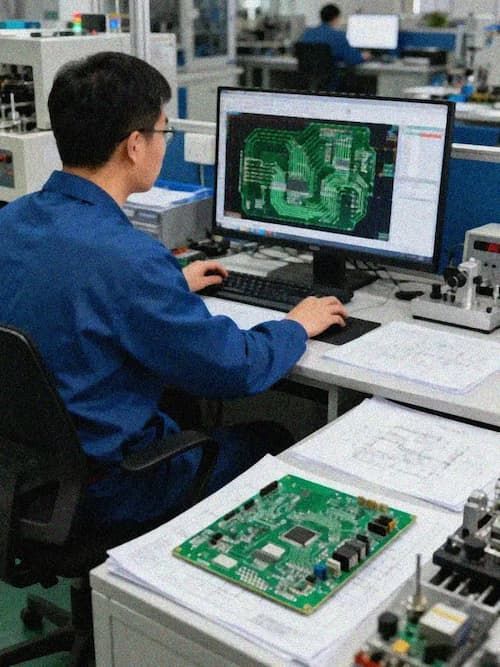
- Custom Design Support: Offers free pre-production DFM (Design for Manufacturing) reviews for Rogers PCB designs, providing optimization suggestions for stack-up, routing, impedance control, and material selection to reduce production risks and lower overall project costs. Technical teams are available to collaborate on design adjustments for challenging high-frequency use cases.
- Cost Optimization Options: Provides tailored material and stack-up recommendations, including hybrid Rogers-FR4 lamination options that deliver required high-frequency performance at a lower total cost than full Rogers PCB designs, making high-frequency PCB fabrication accessible for cost-sensitive projects.
Contact Information
If you have Rogers PCB manufacturing requirements for high-frequency or high-speed applications, you can reach out to our technical support team for a free DFM review and customized quote. We support custom specification adjustment, prototype performance testing, and mass production delivery to meet the needs of different industry scenarios and project scales. Our team will respond to your inquiry within 24 working hours to provide targeted technical support and pricing details.