Overview
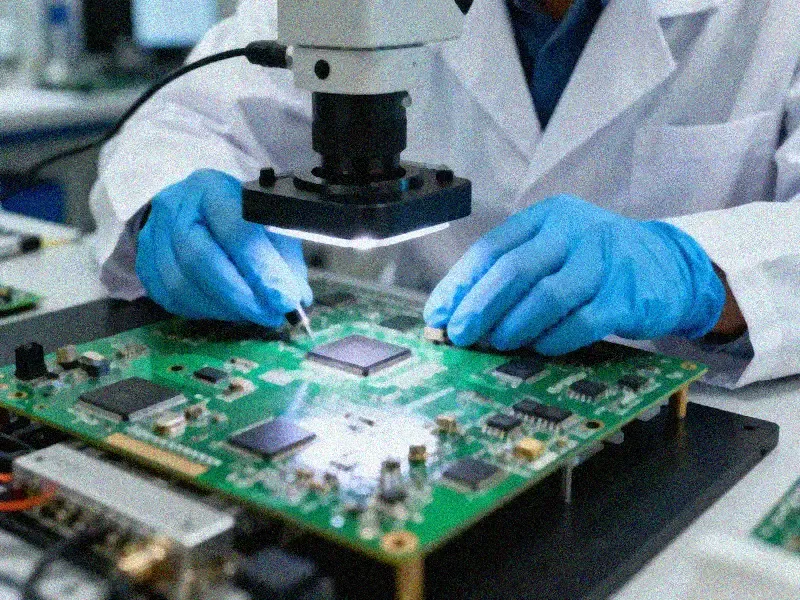
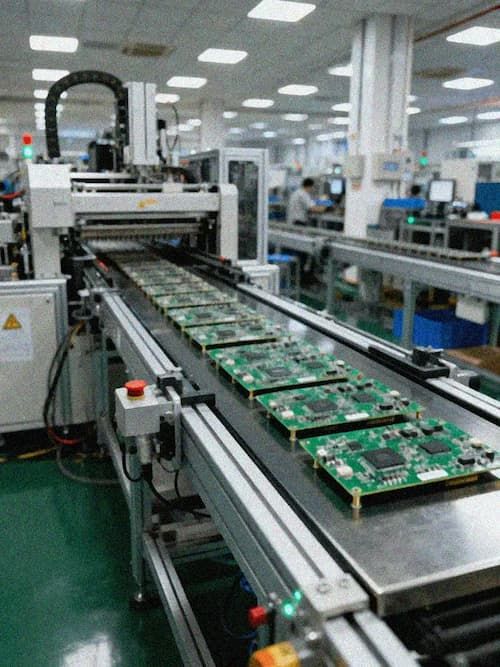
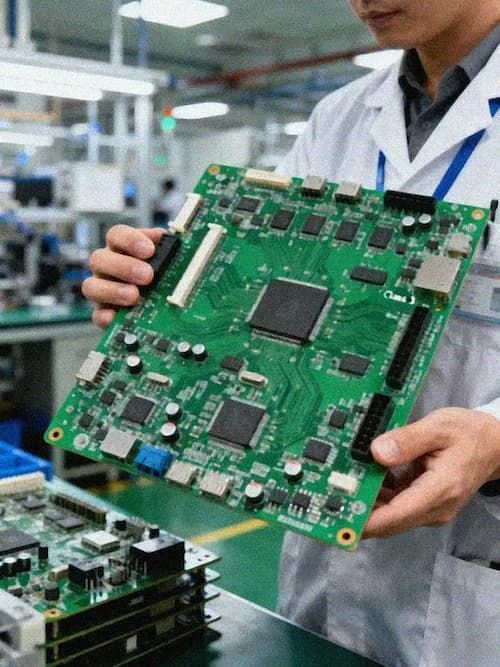
Edge processing PCB design is a core part of design for manufacturability (DFM) for printed circuit boards, directly impacting assembly yield, production efficiency, and long-term reliability of end products. Irregular edge design often leads to component collision during SMT processing, mark point recognition failure, edge burr defects, and mechanical fit errors, resulting in unnecessary production rework and cost losses. Standardized edge processing PCB design balances product functional requirements, mechanical fit demands, and mass production feasibility, supporting both conventional assembly workflows and custom edge process configurations, adapting to prototype, small-batch trial production, and large-scale mass production demands across different industry scenarios.
Technical Capabilities
- Edge Clearance Specification Compliance: Follows the standard requirement of ≥3mm clearance between top/bottom surface components, mark points and PCB edges, eliminating collision risks during printing, pick-and-place, and reflow processes, supporting stable SMT assembly for small package components down to 01005 (0.3mm*0.2mm) and 0.5 pitch high-density devices.
- Multi-Size PCB Adaptation: Supports conventional PCB sizes with SMT minimum dimensions of 50mm50mm, unconventional sizes up to 600mm450mm, compatible with both semi-automatic and fully automatic printing and assembly equipment, adjusting design parameters dynamically based on production line configuration to avoid equipment mismatch issues.
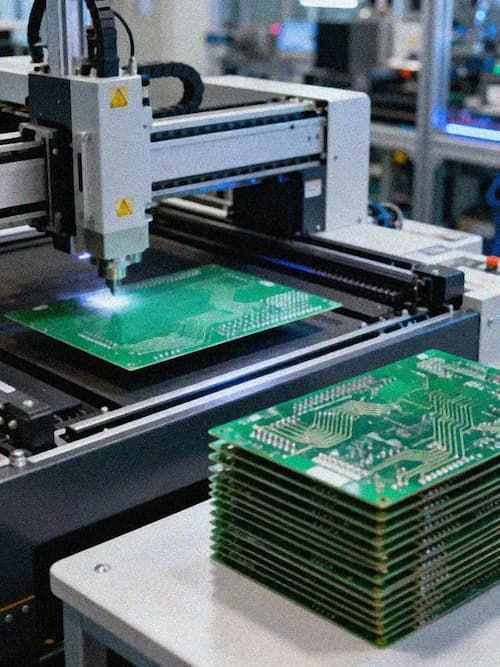
- Full-Range Special Edge Process Support: Covers all mainstream custom edge processing technologies including half holes, countersinks, step slots, laser cutting, depth control drilling, and long/short gold edge connectors, enabling custom edge configurations for specific interconnection, mounting, and mechanical fit requirements.
- Cross-Process Compatibility: Compatible with advanced PCB technologies such as blind & buried vias, rigid-flex boards, embedded copper blocks, high-frequency hybrid laminates, via-in-pad, epoxy fill, and embedded components, meeting edge design requirements for high-density, high-performance PCB products across different application fields.
- Component Dimension Adaptation: Supports standard component thickness ranging from 0.5mm to 3mm, double-sided component height up to 25mm, SMD component sizes up to 200mm*125mm, with custom process adjustment support for out-of-spec component dimensions to meet special design demands.
Quality Standards
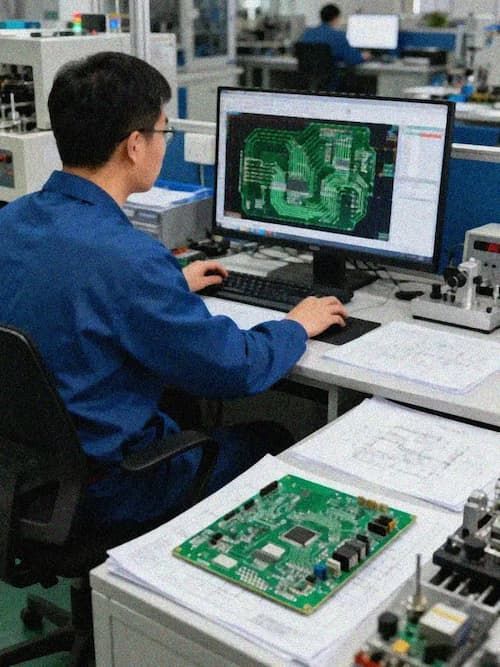
- Pre-Production DFM Verification: Implements mandatory edge design verification before manufacturing, including clearance check, edge process feasibility evaluation, size compatibility assessment with production equipment, reducing design iteration cycles and avoiding unnecessary production costs.
- High-Precision Dimensional Tolerance Control: Achieves edge processing dimensional accuracy down to ±0.05mm, ensuring tight mechanical fit for edge connectors, mounting slots, and custom edge features, meeting the assembly requirements of precision electronic devices.
- Special Edge Feature Validation: Implements first article validation for all non-standard edge processing designs, including half hole edge burr check, step slot depth deviation test, countersink angle and depth verification, ensuring 100% compliance with design specifications before mass production.
- Environmental Reliability Validation: Conducts edge stress tests, thermal cycle tests, and vibration tests for edge-mounted components and special edge features, ensuring stable performance of edge processing structures in harsh application environments ranging from -40℃ to +85℃.
Applications
Edge processing PCB design solutions are widely applicable across multiple electronic manufacturing sectors, including but not limited to:
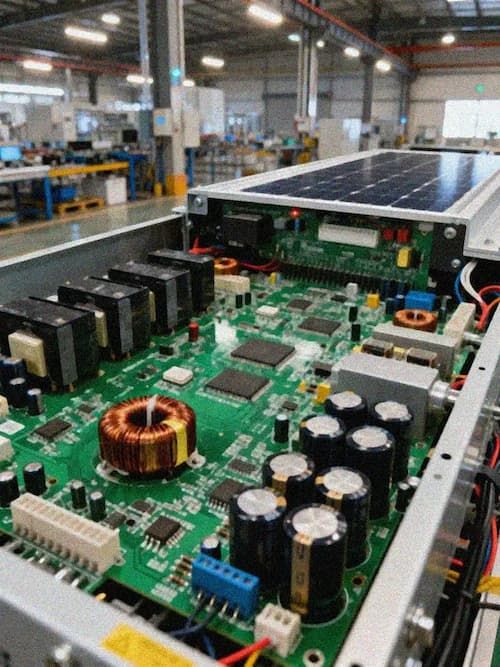
- Industrial control equipment: Edge-mounted connector PCBs for PLCs, servo drives, and industrial sensors, requiring high mechanical strength and reliable interconnection performance
- Consumer electronics: Half-hole edge PCBs for smart wearables, portable audio devices, and smart home terminals, supporting compact assembly and high-density interconnection
- Communication equipment: Gold edge connector PCBs for 5G base stations, routing devices, and optical modules, meeting high-frequency signal transmission requirements
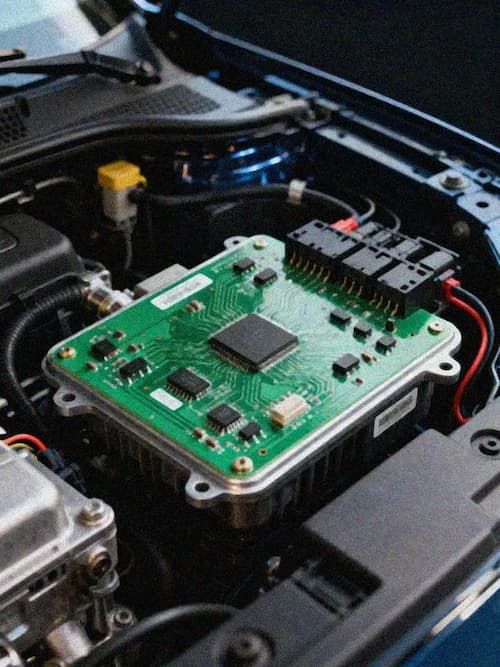
- Automotive electronics: Countersink and step slot PCBs for in-vehicle infotainment systems, ADAS controllers, and battery management systems, adapting to strict automotive grade reliability requirements
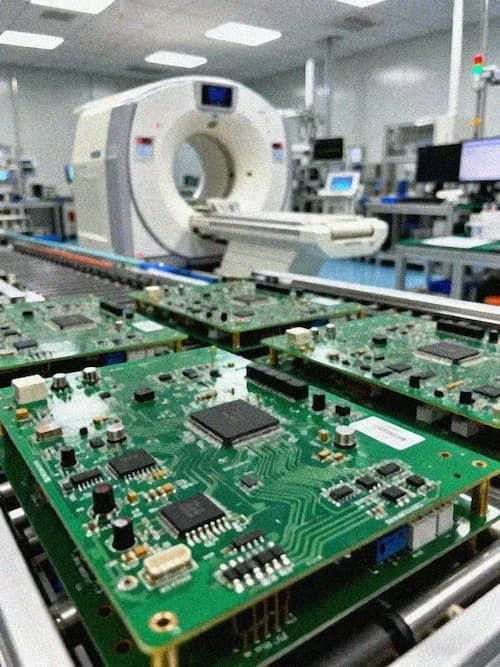
- Medical devices: Custom edge processing PCBs for diagnostic equipment, patient monitoring devices, and portable medical terminals, complying with high precision and regulatory compliance requirements
- Aerospace and defense: High-reliability edge processing PCBs for avionics systems, satellite communication devices, and defense equipment, meeting extreme environmental adaptability requirements
Key Advantages
- Significant Yield Improvement: Standardized edge clearance and process design reduces equipment collision, component offset, and edge damage during production, increasing assembly yield by up to 15% compared to non-standard edge designs.
- Overall Cost Reduction: Early DFM check for edge processing avoids design rework and mass production defects, shortening project lead times by 20% on average and reducing overall production costs.
- Flexible Process Adaptability: Supports all mainstream and custom edge processing technologies, enabling flexible design options to balance functional, mechanical, and cost requirements of different projects.
- Guaranteed Long-Term Reliability: Optimized edge processing design ensures stable mechanical and electrical performance of edge features, extending the service life of end products and reducing after-sales maintenance costs.
- Scalable Production Support: Compatible with both prototype low-volume production and large-scale mass production workflows, maintaining consistent processing accuracy and quality across different production batches.
Contact Information
If you have any edge processing PCB design requirements, or need technical support for DFM verification, special edge process feasibility evaluation, and custom design solution development, please contact our professional technical team. We will provide you with free technical consultation, targeted design guidance, and customized solution recommendations to support the smooth implementation of your PCB projects.