Overview
The rapid expansion of edge IoT deployments across industrial, commercial, and consumer sectors has introduced stringent requirements for underlying PCB hardware. Edge IoT devices operate close to data generation sources, requiring low-latency data processing, reliable long-range connectivity, compact form factors, and stable operation in unconditioned, often harsh environments. Common pain points for edge IoT PCB development include signal crosstalk between sensing and computing modules, insufficient heat dissipation for high-performance edge computing chips, size constraints for battery-powered embedded nodes, and poor adaptability to extreme temperature, vibration, and moisture conditions. Edge IoT PCB solutions address these core challenges by providing end-to-end design, manufacturing, and testing support tailored to edge IoT use cases, covering the entire product lifecycle from initial R&D prototyping to large-scale volume production. These solutions are optimized to balance performance, reliability, power efficiency, and production cost, enabling faster time-to-market for edge IoT hardware products.
Technical Capabilities
Edge IoT PCB solutions come with a comprehensive set of technical capabilities to support diverse edge IoT hardware requirements:
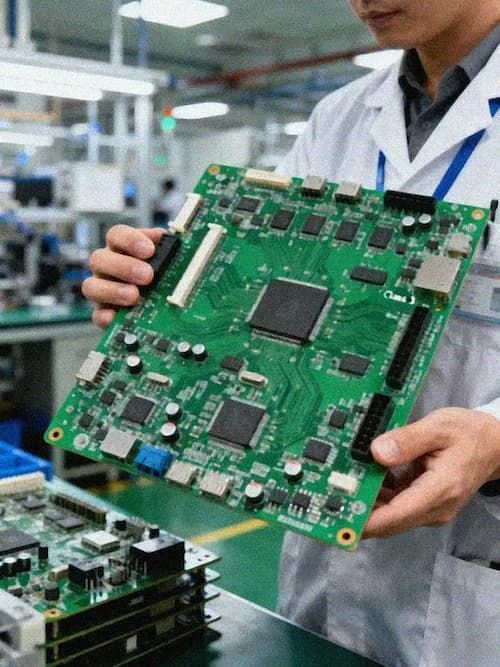
- Diverse PCB Type & Material Support: Covers all common PCB configurations required for edge IoT devices, including single and double-sided boards, multi-layer boards, HDI boards, rigid-flex boards, semi-flexible boards, high-frequency boards, high-frequency hybrid boards, heavy copper boards, metal core/metal substrate boards, ceramic boards, buried resistance/capacitance boards, buried component boards, high-speed backplanes, and IC substrate boards. Support for custom material selection to match specific use case requirements, from low-cost FR-4 for consumer edge devices to high-performance ceramic and high-frequency substrates for industrial and 5G-enabled edge nodes.
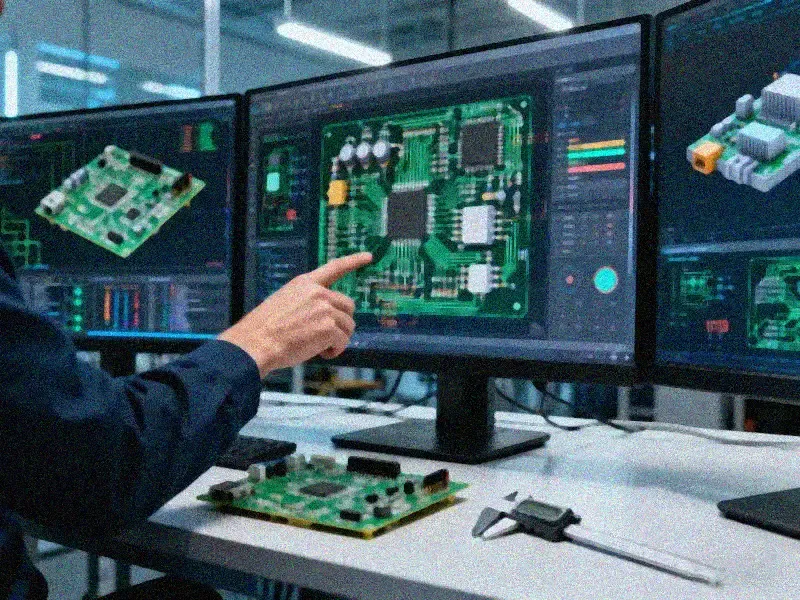
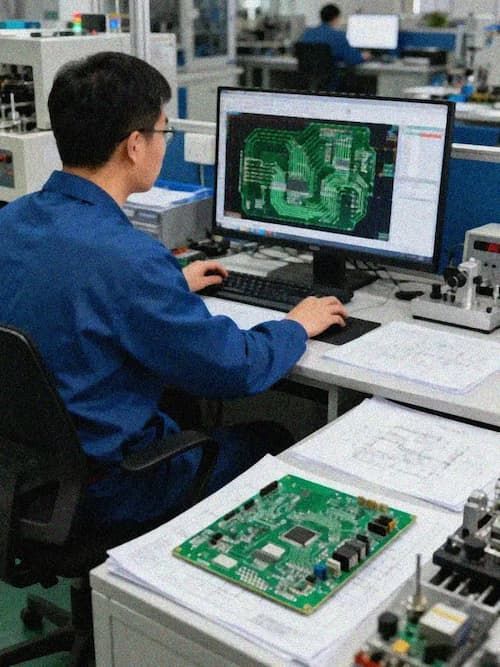
- Integrated Design & Development Support: Provides full-stack design services including IDH design, CAD schematic design, structural design, and electromechanical coordination. Support for common edge computing hardware platforms including ARM, DSP, FPGA, and GPU, covering all design stages from component selection, stack architecture planning, placement and routing optimization, to firmware burning and functional verification. Structural design services include mold opening optimization, reinforcement design, and protective design to ensure device durability in deployment environments.
- High-Speed Signal & Interface Compatibility: Optimized for common edge IoT interfaces including voice and data interfaces such as I2C, TDM, and PCM, as well as DC/AC power circuits. Delivers high-precision impedance control to minimize signal reflection, attenuation, and crosstalk, ensuring low-latency, high-fidelity data transmission between edge sensors, connectivity modules, and on-board computing units. Supports high-speed I/O transmission requirements for 5G, Wi-Fi 6, and BLE connectivity modules integrated into edge IoT devices.
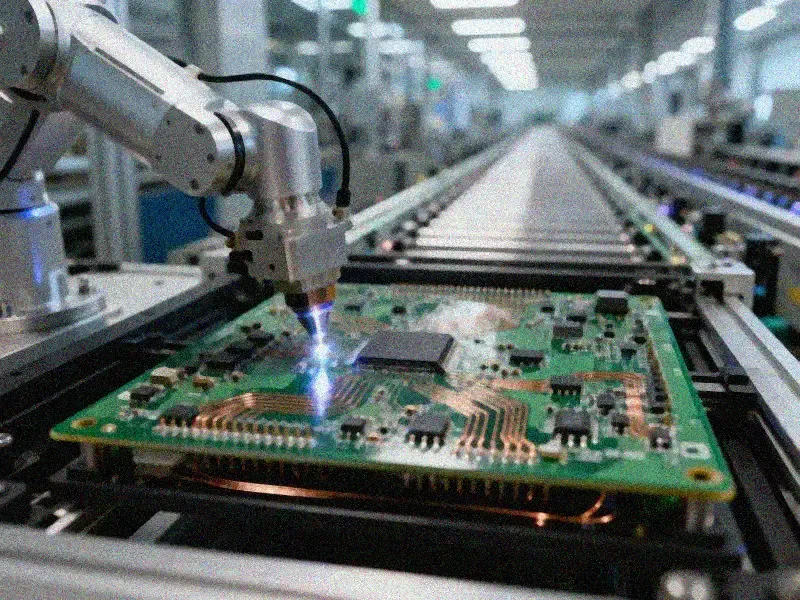
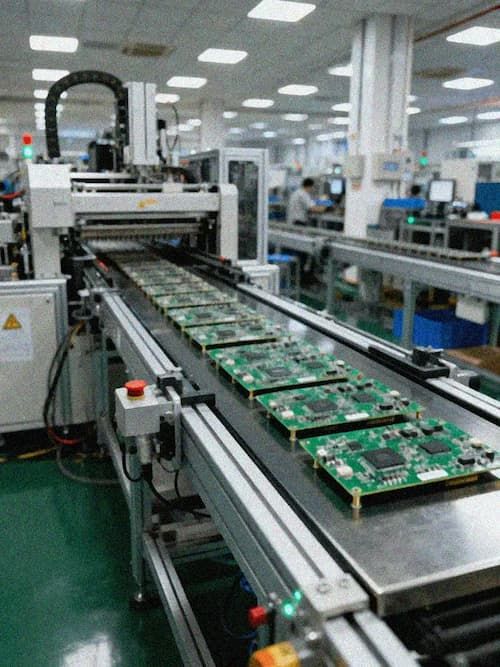
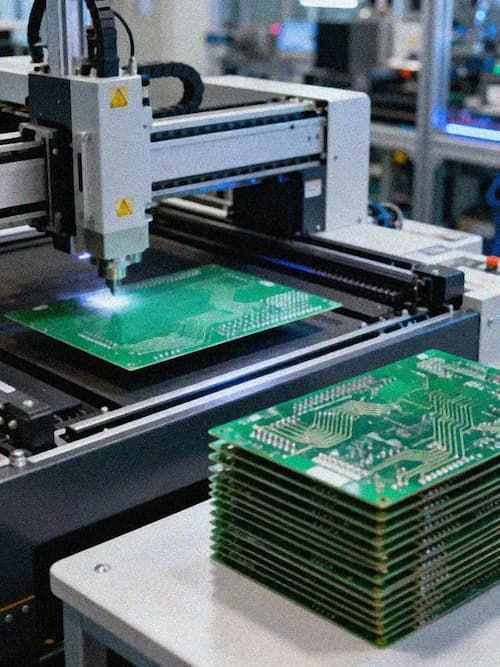
- Scalable Production Capacity: Supports quick-turn prototyping for R&D validation, with fast lead times for small-batch prototype runs to accelerate product testing and iteration. Seamlessly scales to high-volume production for commercial deployment, with consistent process control to ensure uniform quality across all batch sizes, from tens of units for field trials to hundreds of thousands of units for mass market rollout.
- Thermal & Environmental Optimization: Custom heat dissipation design support, including heavy copper and metal core PCB configurations for high-power edge AI computing modules, to prevent overheating and performance throttling during continuous operation. Protective design features to improve resistance to shock, vibration, dust, and moisture, suitable for deployment in outdoor, industrial, and remote unmaintained locations.
Quality Standards
All edge IoT PCB solutions adhere to global industry quality and compliance standards to meet the requirements of different deployment scenarios:
- Compliance with widely recognized quality management system standards, including ISO 9001 for general industrial products, IATF 16949 for automotive edge IoT applications, and ISO 13485 for medical edge diagnostic and monitoring devices. All products meet RoHS and REACH environmental compliance requirements for global market access.
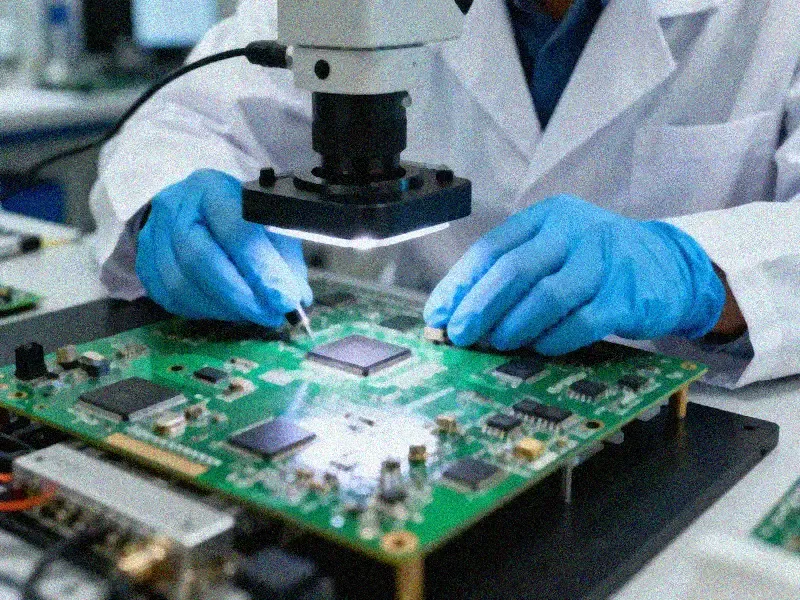
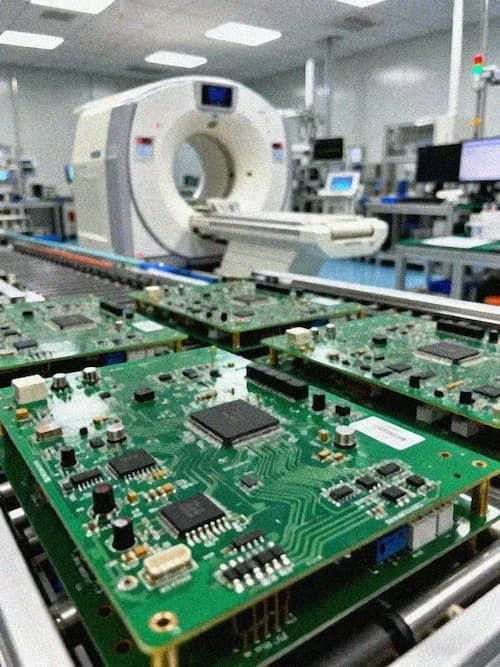
- Rigorous full-process testing and verification, including signal integrity testing, EMC testing, high and low temperature cycling testing, vibration and shock testing, humidity resistance testing, and X-Ray non-destructive testing to identify and eliminate manufacturing defects.
- Products are validated to operate stably across an industrial-grade temperature range of -40°C to +85°C, with a designed service life of 10+ years for static edge deployment scenarios, reducing long-term maintenance and replacement costs for IoT network operators.
Applications
Edge IoT PCB solutions are applicable across a wide range of edge IoT deployment scenarios:
- Industrial edge computing gateways, sensor nodes, and predictive maintenance terminals for manufacturing automation, smart factory, and industrial internet deployments
- Smart city edge monitoring terminals for traffic management, public safety, environmental air quality monitoring, and smart street light control
- Smart retail interactive terminals, inventory tracking edge sensors, self-service kiosks, and in-store customer behavior analysis devices
- Agricultural IoT edge data collection nodes, soil and weather monitoring sensors, and livestock tracking terminals for precision agriculture deployments
- Medical edge diagnostic devices, remote patient monitoring terminals, and wearable health monitoring devices for healthcare and telemedicine scenarios
- Smart home edge control hubs, connected appliance core control boards, and home security monitoring edge nodes
- Automotive edge perception nodes, in-vehicle IoT connectivity modules, and V2X communication control boards for connected and autonomous vehicle applications
- Energy sector edge monitoring devices for solar panel arrays, wind turbine condition monitoring, and power grid distribution node control
Key Advantages
Edge IoT PCB solutions offer distinct benefits for edge IoT hardware developers and product teams:
- Full-Process Technical Support: Covers the entire product development lifecycle from initial product ideation, component selection, schematic design, PCB fabrication, PCBA assembly, to final functional testing and verification. This end-to-end support eliminates cross-stage communication overhead, reduces design iteration cycles, and shortens time-to-market for new edge IoT products.
- Scenario-Specific Customization: Adapts PCB configuration, material selection, layer count, stack structure, and heat dissipation design to the specific requirements of each use case, whether it is ultra-low-power design for battery-operated edge sensors, high-density routing for high-performance edge AI computing units, or rugged design for industrial outdoor deployment.
- Harsh Environment Reliability: Optimized material selection and structural design ensure edge IoT PCBs can withstand extreme temperature fluctuations, high levels of vibration and shock, and exposure to dust and moisture, making them suitable for deployment in remote, unconditioned locations with limited on-site maintenance support.
- Cost-Effective Scalability: Balanced design and manufacturing processes eliminate unnecessary material and production costs without compromising performance or reliability. The production system supports seamless scaling from small-batch prototype runs for R&D and field trials to large-scale mass production for commercial rollout, with no degradation in quality or consistency across batch sizes.
Contact Information
If you have customized requirements for edge IoT PCB solutions, including pre-project design consultation, prototype fabrication, volume manufacturing, or reliability testing support, reach out to our technical team today. We will provide tailored solution recommendations and free pre-project technical evaluation services to meet your unique edge IoT hardware development needs.