Overview
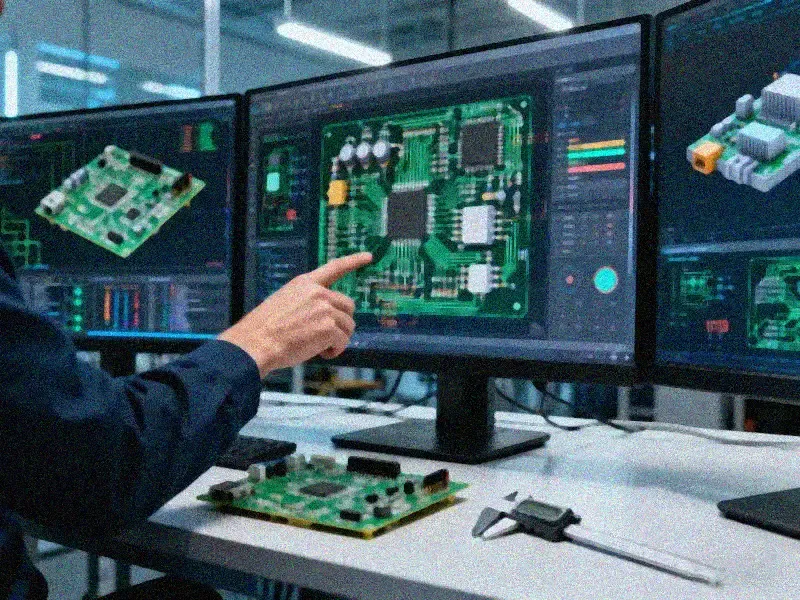
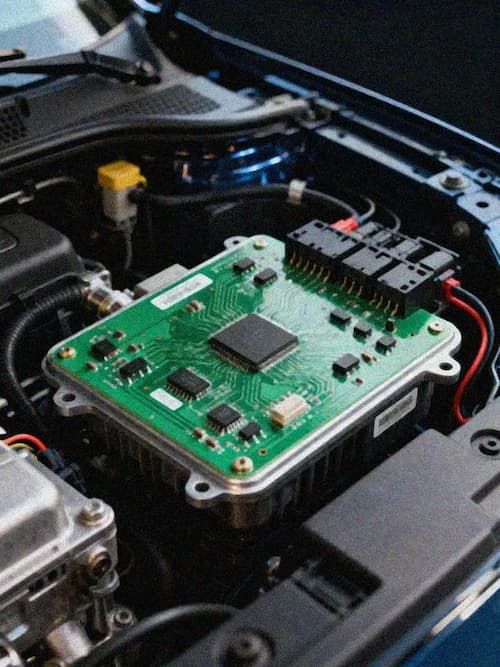
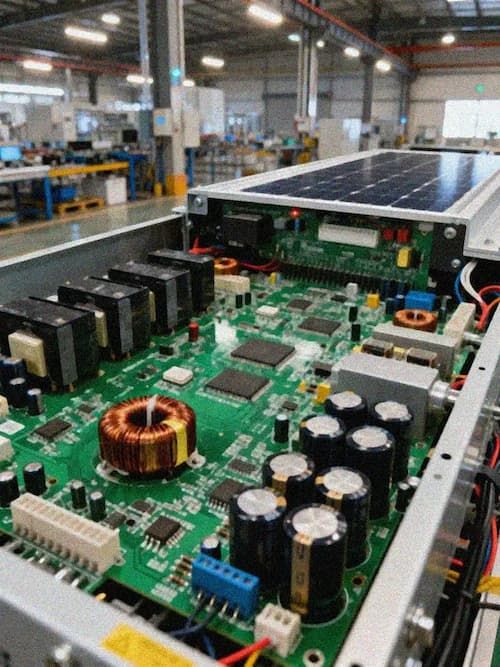
Edge computing hardware is deployed close to data generation sources, requiring ultra-low latency data processing, high heterogeneous computing power, and stable operation in variable, often harsh deployment environments, making PCB design a core factor determining overall hardware performance and reliability. The concentrated placement of high-power computing chips, high-bandwidth memory interfaces, 5G communication modules and multi-channel industrial control IOs creates common design challenges including signal attenuation, crosstalk, impedance misalignment, and thermal accumulation, which can directly reduce computing efficiency, lead to data transmission errors, or shorten hardware service life. Professional edge computing hardware PCB design services cover the entire process from schematic design, stack planning, component placement and routing optimization, to reliability testing and verification, adapting to the differentiated needs of various edge scenarios, balancing performance, reliability and manufacturing cost for end products.
Technical Capabilities
- Heterogeneous Platform Compatibility: Supports PCB design for mainstream edge computing core platforms including ARM, DSP, FPGA and GPU, adapting to high-performance edge chip architectures such as RK3588 and Jetson series, meeting computing power requirements from 8TOPS for low-power edge nodes to 32TOPS and above for high-performance industrial edge controllers. Design teams can adjust pin assignments, power supply networks and interface configurations based on specific chip specifications, ensuring full play of hardware computing performance.
- High-Speed Signal Optimization: Supports up to 750Gbps high-speed I/O transmission, as well as 40Gbps D-PHY 1.2 and 62Gbps C-PHY 1.1 interface standards, with targeted routing length matching, differential pair alignment, and interference shielding design to minimize signal reflection, crosstalk and attenuation, meeting the low-latency data transmission requirements of 5G-connected edge devices and multi-sensor access scenarios.
- Custom Stack and Impedance Control: Offers flexible stack design solutions from 4-layer to 16-layer PCBs, with configurable up to 4 independent ground planes to shield interference between high-speed signal layers, computing modules and industrial control interfaces, achieving 90Ω/100Ω impedance control with ±5% tolerance, perfectly adapting to transmission requirements of high-bandwidth memory, MIPI CSI, PCIe 4.0 and common industrial control interfaces.
- Thermal and Mechanical Ruggedization Design: Integrates thermal simulation analysis at the early design stage, optimizing high-power computing chip placement, copper pouring structure, and heat dissipation path design to reduce hot spot temperature by 15% to 20% compared to non-optimized designs, supporting stable operation in -40℃ to +85℃ industrial temperature ranges. Additional anti-vibration routing and component fixation design is available for edge devices deployed in high-vibration factory or outdoor scenarios, improving long-term operation reliability.
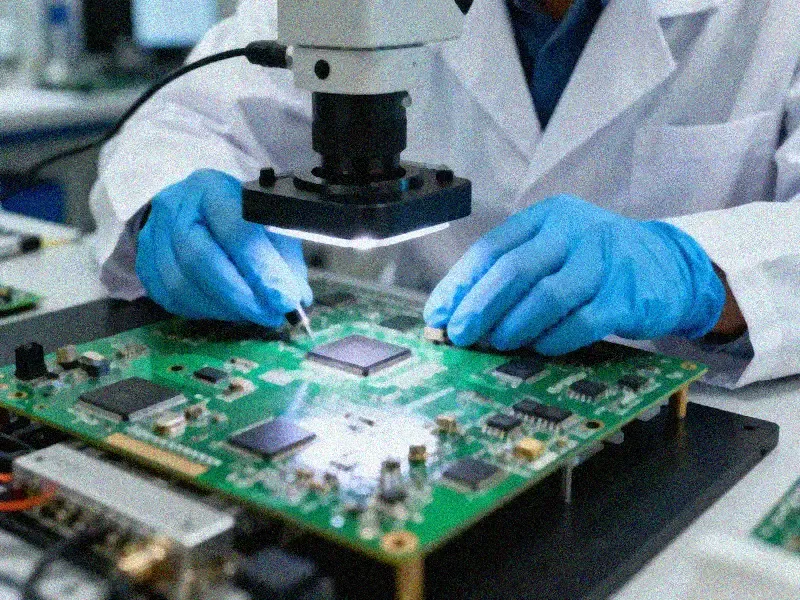
- Full-Process Verification Support: Provides end-to-end verification services covering signal integrity testing, power integrity testing, EMC testing, thermal cycling testing, vibration and impact testing, identifying potential design defects before prototyping, reducing iteration cycles and R&D costs for customers. All design outputs include complete schematic files, PCB layout files, BOM lists, and test reports to support subsequent manufacturing and industry certification applications.
Quality Standards
All edge computing hardware PCB design processes strictly comply with international industry specifications, including IPC-2221 generic printed board design standards, IPC-7351 land pattern design standards, and IPC Class 2/3 quality requirements for different application scenarios. Design processes follow RoHS and REACH environmental regulations, and high-speed interface design complies with IEEE 802.3, 5G NR, and PCIe 4.0 related specifications. Industrial-grade edge device design meets IEC 61010 electrical safety standards for industrial equipment, and all verification processes are aligned with ISO/IEC 17025 laboratory testing specifications, ensuring design outputs meet both functional performance requirements and mass production manufacturability requirements.
Applications
Edge computing hardware PCB design solutions are widely applicable to various edge deployment scenarios, including but not limited to:
- Edge computing industrial controllers for intelligent manufacturing, supporting 5G connectivity and multi-channel industrial control interfaces, for real-time factory equipment monitoring, low-latency control and production data analysis, improving overall production efficiency.
- AI edge inference nodes for smart cities, including traffic monitoring terminals, environmental sensing devices, and public security edge computing gateways, supporting real-time processing of multi-channel video and sensor data.
- Heterogeneous computing platform edge evaluation boards, supporting R&D and prototype verification for ARM, DSP, FPGA and GPU-based edge hardware, balancing performance and cost for early product iteration.
- Industrial edge gateways for factory automation, connecting OT and IT networks to enable real-time data acquisition, pre-processing and cloud transmission, supporting production digitization upgrades.
- Edge computing control units for robotics, including autonomous inspection robots, logistics AGVs, and collaborative robots, supporting low-latency processing of multi-sensor data and real-time motion control.
- Edge AI devices for smart agriculture, remote healthcare, and smart retail interactive terminals, adapting to variable deployment environments and low-power operation requirements.
Key Advantages
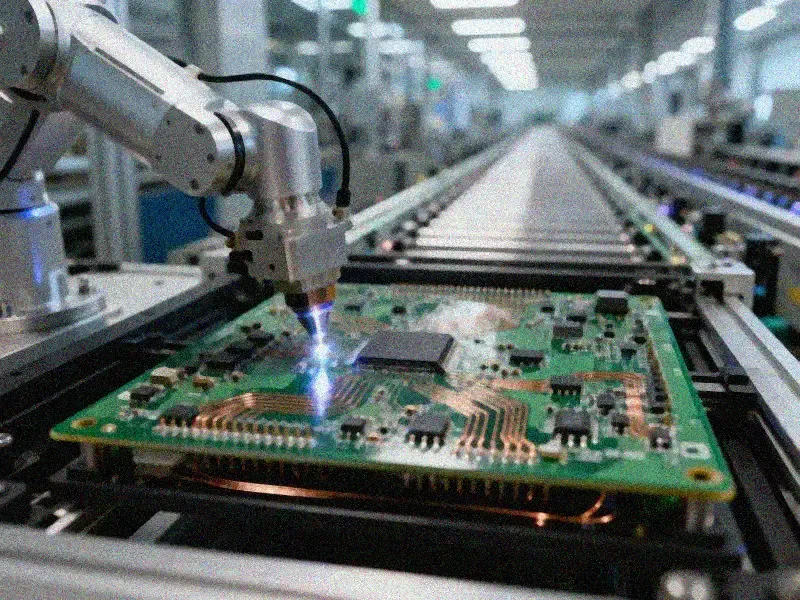
- End-to-End Service Coverage: Covers the entire product lifecycle from schematic design, stack planning, layout and routing, design verification, prototype manufacturing to mass production process support, reducing cross-stage communication costs, and ensuring design for manufacturability to avoid design adjustments in later production stages.
- Mature High-Speed Design Experience: Has accumulated rich design experience for high-performance edge computing hardware including AI evaluation boards and industrial edge controllers, effectively solving common pain points such as high-power chip heat dissipation, high-speed signal transmission interference, and heterogeneous platform interface compatibility.
- Scenario-Based Customization Support: Adjusts design solutions based on specific deployment scenario requirements, optimizing for size, power consumption, thermal performance, and cost, supporting both small-batch prototype verification (10-100 units) and large-scale mass production (10k+ units) demands.
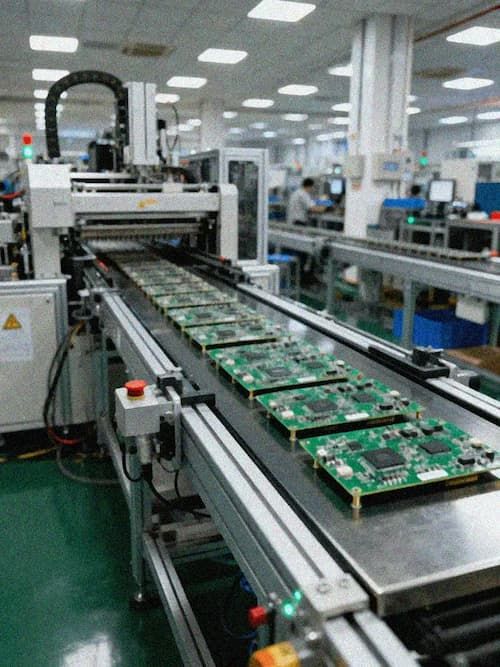
- DFM Integrated Design Process: Embeds design for manufacturability checks at every stage of the design process, aligning design parameters with mainstream mass production process capabilities, minimizing manufacturing defects, and improving production yield for high-density edge computing PCBs by 8% to 12% compared to conventional design processes.
Contact Information
If you have edge computing hardware PCB design requirements, including custom design for heterogeneous computing platforms, high-speed industrial edge controller design, edge evaluation board design, or industrial edge gateway PCB design support, you can reach out to our technical team to request a free pre-design evaluation and customized solution quotation. Our professional engineering team will provide 24/7 technical consulting and support throughout your project lifecycle, helping you shorten R&D cycles and reduce overall product costs.