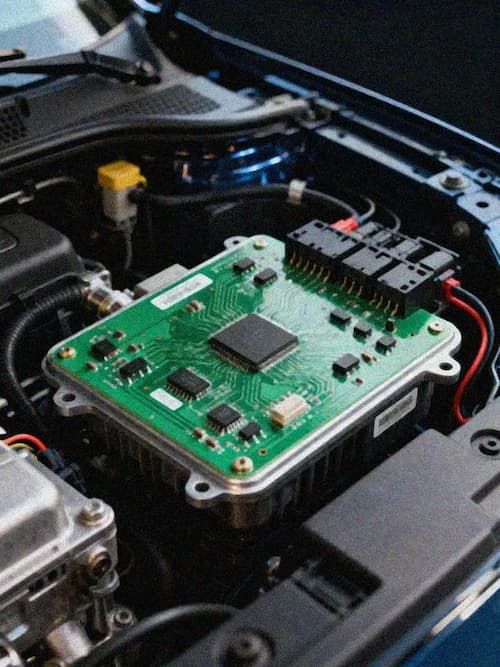
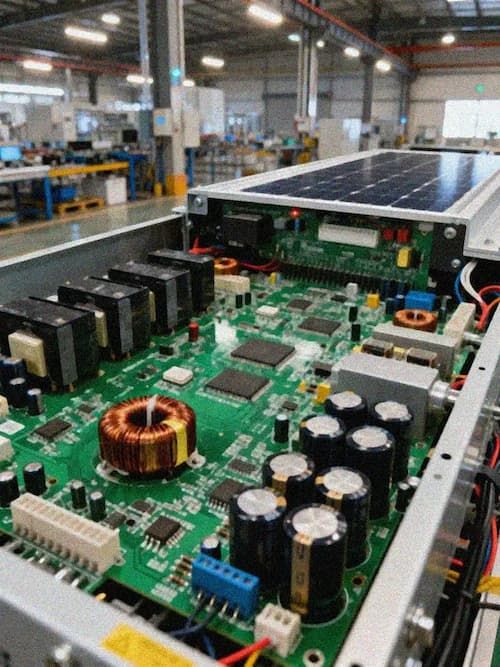
In today's booming development of new energy vehicles, energy storage systems, and smart electric devices, lithium battery packs have become a core power source. However, the "high energy, high risk" characteristics of lithium batteries dictate that they must be meticulously managed by a Battery Management System (BMS). The core carrier of the BMS is its PCB (Printed Circuit Board).
A poorly designed BMS PCB can lead to catastrophic consequences:
Overcharge/Over-discharge: Inaccurate voltage sampling can cause individual cells to overcharge and catch fire or over-discharge and become unusable.
Temperature runaway: High-current circuits generate severe heat, causing localized temperature spikes on the PCB, accelerating component aging and even burnout.
Signal interference: Disorganized layout of high-voltage (high voltage, high current) and low-voltage (sensor signals) circuits leads to distorted voltage and temperature sampling data, causing misjudgments by the BMS algorithm.
Shortened lifespan: Inappropriate material selection can cause solder joint cracking and copper foil detachment in high-temperature, high-humidity, or vibration environments, resulting in system failure.
Therefore, designing a high-reliability BMS PCB is not simply a matter of electronic circuit layout, but a systems engineering project integrating electrical safety, thermal management, signal integrity, and environmental tolerance. Its goal is to ensure the battery pack is "safe, balanced, and long-lasting".
Solution Comparison: Traditional Design vs. High-Reliability Design
| Design Dimensions | Traditional BMS PCB Design | High-Reliability BMS PCB Design | Advantages and Necessity |
|---|
| Copper Foil Thickness | 1 oz (35 µm) | 2 oz to 6 oz (70 µm - 210 µm) | Current density reduced by more than 60%, significantly reducing Joule heating and improving current carrying capacity. For example, if the motor controller needs to carry 200A of current, thick copper must be used. |
| Substrate Material | Standard FR-4 (Tg 130°C) | High Tg FR-4 (Tg ≥170°C), polyimide (PI), or ceramic substrate | Enhanced high-temperature resistance, adaptable to extreme operating environments from -40°C to 125°C, preventing PCB delamination or deformation at high temperatures. |
| Layer Structure | 2-4 layer standard board | 6 layers and above, using a four-layer design for signal/ground/power/shielding layers | Effectively isolates high and low voltage areas, reduces electromagnetic interference (EMI), and improves signal acquisition accuracy. Copper-based heat sinks can be embedded to reduce thermal resistance. |
| Power Loop Design | Standard traces | Thickened traces (≥3mm), large copper area, even using "copper blocks" for filling | Reduces loop impedance, reduces voltage drop and energy loss. For current paths ≥10A, a trace width of ≥3mm must be used. |
| Signal Integrity | Impedance matching not considered | Differential pair routing, impedance control, π-type filtering + common-mode inductor | Ensures noise-free acquisition of weak battery voltage/temperature signals (<1mV) for high-precision acquisition. |
| Heat Dissipation Design | Relies on natural heat dissipation | Adds heat dissipation holes, copper fill, thermal via array, external heat sink | Actively conducts heat through physical means to prevent overheating of power devices (such as MOSFETs) and improve system stability. |
| Surface Treatment | Standard tin plating | Immersion gold (ENIG), immersion tin (SnAgCu), or OSP | Improves soldering reliability, enhances corrosion resistance, and adapts to harsh industrial or automotive environments. |
| Manufacturing Process | Conventional PCB | HDI + Anylayer interconnect, thick copper HDI, rigid-flex board | Achieves high-density routing in limited space, integrates more functions (such as AI prediction algorithm chips), and improves mechanical strength. |
Conclusion: The design of a high-reliability BMS PCB involves higher material costs and design complexity in exchange for several times the safety, stability, and lifespan of traditional solutions. These investments are absolutely necessary for battery safety.
Detailed Explanation: Six Core Elements of High-Reliability BMS PCB Design
Power Circuit: Thick Copper is the Lifeline Battery charging and discharging currents can reach hundreds of amperes. Traditional 1 oz copper foil has high resistance and high temperature rise under high current. Thick copper of 2 oz or more (3-6 oz recommended) must be used, along with ≥3mm trace width or large-area copper plating. For extremely high current paths (such as the main circuit), embedded copper blocks or multi-layer copper foil stacking techniques can be used to control the circuit impedance below 1mΩ.
Thermal Management: From Passive Heat Dissipation to Active Heat Conduction Heat is the number one enemy of BMS. The design must include:
Proper Layout: Concentrate power devices (MOSFETs, DC-DC chips) away from sensitive analog circuits.
Dense Through-hole Array: Dense vias are drilled beneath heat-generating components to conduct heat to the underlying copper foil heat dissipation area.
Copper Fill: Large areas of copper are filled in the inner or outer layers of the PCB as a heat diffusion layer.
Thermal Vias: Thermal vias are drilled around the pads of power devices, connecting to the underlying copper heat dissipation layer.
Material Selection: High thermal conductivity substrates (e.g., aluminum substrates, DBC ceramic substrates) with a thermal conductivity > 1 W/mK are preferred.
Signal Integrity: Accurate acquisition is the cornerstone of the brain. The BMS's "sensing" capability depends on the voltage and temperature sampling circuitry. To ensure accuracy:
Separate Ground Planes: Analog ground (AGND) and digital ground (DGND) are separated and connected at a single point to prevent digital noise from intruding into the analog signal.
Differential Routing: Differential pairs are used to transmit the BMS's voltage acquisition signal, effectively suppressing common-mode interference.
Filtering Design: Add a π-type RC filter or common-mode inductor before each sampling channel to filter out high-frequency noise.
Shielding Layer: Place a ground plane or shielding layer near the signal layer to form a Faraday cage.
EMC/EMI Protection: Make the system "immune" in complex environments. New energy systems operate in environments with complex electromagnetic noise. The BMS PCB must pass EMC Class 4 testing:
Four-Layer Design: Signal layer - Ground layer - Power layer - Shielding layer, providing optimal shielding.
Proper Routing: Avoid long parallel traces to reduce crosstalk.
Power Supply Filtering: Use multi-stage LC filters at the power input.
Metal Housing: The PCB is mounted in a metal housing, forming a complete shielding system.
Materials and Processes: Born for Extreme Environments
Substrate: Utilizing high Tg FR-4 (Tg≥170°C) or polyimide (PI), ensuring no softening at 125°C.
Surface Treatment: Employing immersion gold (ENIG), offering significantly superior oxidation resistance, flatness, and solderability compared to tin plating.
Conformal Coating: Finished PCBAs are coated with conformal coating (moisture-proof, salt spray-proof, mildew-proof), suitable for outdoor or high-humidity environments.
Certification Standards: Compliant with IPC-6012DA (Automotive Application Certification) and IATF 16949 (Automotive-grade Quality Management System).
Redundancy and Diagnostics: Building a Multi-Layer Safety Net
Hardware Redundancy: Critical signals (such as voltage detection) employ dual-channel redundant acquisition, allowing the other channel to take over if one fails.
Self-Diagnostic Pins: Integrated self-diagnostic functionality monitors PCB faults in real-time (e.g., sensor disconnection).
AI-Assisted: Combining software algorithms with AI models, this system predicts anomalies such as sudden changes in battery internal resistance and capacity degradation, enabling early warnings.
Summary and Troubleshooting: Top Ten Tips for Designing BMS PCBs
| Troubleshooting Points | Common Mistakes | Correct Practices | Reasons |
|---|
| Copper Foil Thickness | Use 1 oz copper to save costs | Must be ≥2 oz, use 3-6 oz for high current paths | 1 oz copper can reach a temperature rise of over 50°C at 10A current, making it extremely prone to failure |
| Material Selection | Use ordinary FR-4 | Select high Tg FR-4 (Tg≥170°C) or PI | Ordinary FR-4 performance degrades sharply above 85°C |
| Ground Plane | Mixed digital/analog grounds | Must be physically separated, single-point connection | Digital noise will drown out weak battery signals |
| Trace Width | Trace too thin (<1mm) | Power/loop traces ≥3mm | Insufficient trace width leads to increased resistance and severe heat generation. |
| Thermal Design | Relying solely on air cooling | Requires heat dissipation holes + copper filler + thermal vias | Thermal management is crucial for BMS lifespan. |
| Signal Filtering | No filtering circuitry | π-type RC filter added to each voltage sampling | Noise can cause SOC estimation errors exceeding 10%. |
| Shielding | No shielding layer | Uses a four-layer board + shielding layer design | Cannot pass EMC automotive-grade certification. |
| Process | No conformal coating | Critical applications require conformal coating | Prevents moisture and salt spray corrosion of solder joints. |
| Certification | Ignoring automotive-grade certification | Must comply with IPC-6012DA and IATF16949 | Without certification, entry into the automotive supply chain is impossible. |
| Testing | Only functional testing | Must perform high and low temperature cycling, vibration, and aging tests | 500-hour high-temperature aging test is the gold standard for reliability verification. |
Conclusion: Designing a Highly Reliable BMS PCB design is not a one-off task, but a closed-loop process encompassing selection, design, simulation, prototyping, testing, and mass production. It requires engineers to possess systems thinking, integrating electrical safety, thermodynamics, materials science, and manufacturing processes. In today's world, where battery safety is increasingly a societal focus, every meticulously designed solder joint and every inch of thickened copper foil represents respect for life. Choosing a high-reliability solution is like building an insurmountable safety barrier for your products.