Overview
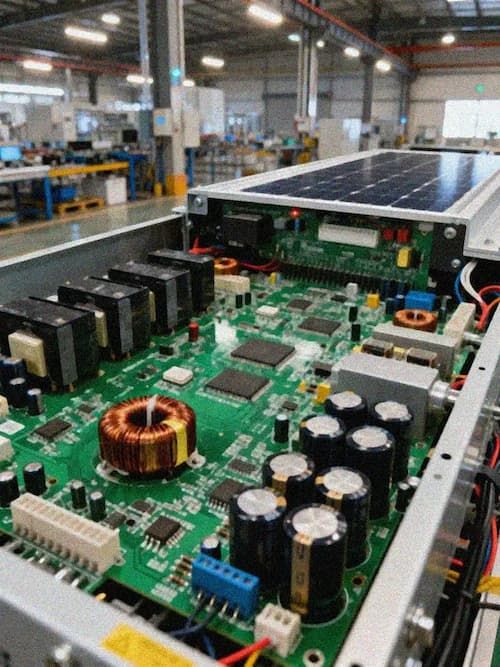
Multilayer PTFE PCB is a specialized high-frequency circuit board that leverages the unique dielectric properties of polytetrafluoroethylene (PTFE) substrates to deliver exceptional signal integrity for high-frequency, high-speed electronic systems. Unlike standard FR4 circuit boards, which suffer from significant signal loss and dielectric constant drift at frequencies above 5GHz, multilayer PTFE PCBs maintain stable performance across wide frequency and temperature ranges, addressing core industry pain points including insertion loss, impedance mismatch, and thermal warpage in high-performance RF and data transmission applications. The multilayer design enables dense integration of signal paths, power distribution networks, and dedicated shielding ground planes in a compact form factor, making it the ideal substrate solution for modern high-frequency electronic devices ranging from 5G telecommunications infrastructure to automotive autonomous driving radar systems.
Technical Capabilities
- Layer Count Support: Supports pure PTFE multilayer boards up to 24 layers for prototyping and 16 layers for mass production, alongside high-frequency hybrid PTFE-FR4 boards up to 28 layers to balance high-frequency performance and overall manufacturing cost for mid-range application scenarios. Stack designs can be customized with dedicated ground planes, power planes, and impedance-controlled signal layers to meet specific design requirements.
- High-Speed Transmission Compatibility: Supports signal transmission rates up to 112Gbps for prototyping and 25Gbps for mass production, minimizing insertion loss and return loss for high-bandwidth data and RF signal transmission. The low dissipation factor of PTFE substrates ensures minimal signal attenuation even at mmWave frequencies up to 100GHz, making it suitable for next-generation high-speed communication systems.
- Precision Manufacturing Tolerances: Delivers trace width/space control as tight as 2.0/2.0mil, micro-via drilling down to 0.06mm, and impedance control accuracy within ±5% to meet strict high-frequency design requirements. Blind and buried via structures are also supported to maximize routing density without compromising signal integrity.
- Diverse Board Format Support: Accommodates rigid PTFE PCB sizes up to 550mm1000mm for prototyping and 550mm620mm for mass production, with maximum board thickness up to 12mm to suit different form factor and structural rigidity needs. Specialized formats including flexible PTFE and rigid-flex PTFE boards are also available for wearable and compact device applications.
- Hybrid Lamination Capabilities: Supports mixed-pressure lamination of PTFE with FR4, ceramic, and metal core substrates, enabling optimized stack designs that combine low-loss signal paths with high thermal conductivity and structural rigidity for high-power high-frequency applications such as RF power amplifiers.
Quality Standards
Multilayer PTFE PCB manufacturing adheres to strict international industry quality standards to ensure consistent performance across production runs and compliance with industry-specific regulatory requirements. Key quality control measures implemented throughout the production process include:
- Material Qualification: All PTFE substrates are sourced from reputable high-frequency material suppliers, with full traceability of dielectric constant (Dk), dissipation factor (Df), and thermal stability specifications to avoid batch-to-batch performance variations. Incoming material testing is conducted for every batch of substrates to validate conformance to published material specifications.
- In-Process Testing: Each production stage undergoes rigorous testing, including X-ray inspection for lamination alignment and via registration, time-domain reflectometry (TDR) impedance testing for signal path compliance, and thermal stress testing to validate resistance to delamination and warpage under high temperature reflow assembly conditions.
- Environmental Reliability Testing: Finished boards pass a full suite of reliability tests, including thermal cycling (-40℃ to +125℃ for 1000 cycles), humidity resistance testing (85℃/85% RH for 1000 hours), and salt spray testing to ensure stable operation in harsh industrial, aerospace, and outdoor deployment environments.
- Certification Compliance: Manufacturing processes comply with ISO9001 quality management, IATF16949 automotive quality, AS9100 aerospace quality, and RoHS, REACH environmental standards, meeting the access requirements for automotive, aerospace, medical, and telecommunications industry applications.
Applications
Multilayer PTFE PCBs are widely deployed across high-frequency, high-speed electronic system segments where signal integrity and reliability are critical, including:
- 5G Telecommunications Infrastructure: Used in 5G base station antennas, RF couplers, power amplifiers, filter units, and remote radio units (RRUs) to support high-frequency sub-6GHz and mmWave signal transmission with minimal insertion loss and cross-channel interference.
- Millimeter-Wave Radar Systems: Deployed in automotive ADAS 77GHz/79GHz radar, traffic monitoring radar, weather radar, and aerospace surveillance radar systems, delivering stable RF performance across wide temperature ranges and high vibration operating conditions.
- High-Speed Optical Modules: Used in 100G/400G/800G optical transceivers for data centers and telecommunications core networks, supporting high-speed data transmission with low signal attenuation and crosstalk between high-speed differential signal pairs.
- Aerospace and Defense Electronics: Applied in satellite communication transceivers, electronic warfare equipment, drone navigation and communication systems, and missile guidance systems, combining low weight, high heat resistance, and reliable high-frequency performance in extreme operating environments.
- High-Frequency Test and Measurement Equipment: Used in network analyzers, signal generators, RF test fixtures, and spectrum analyzers, ensuring accurate signal measurement with minimal internal interference and signal loss.
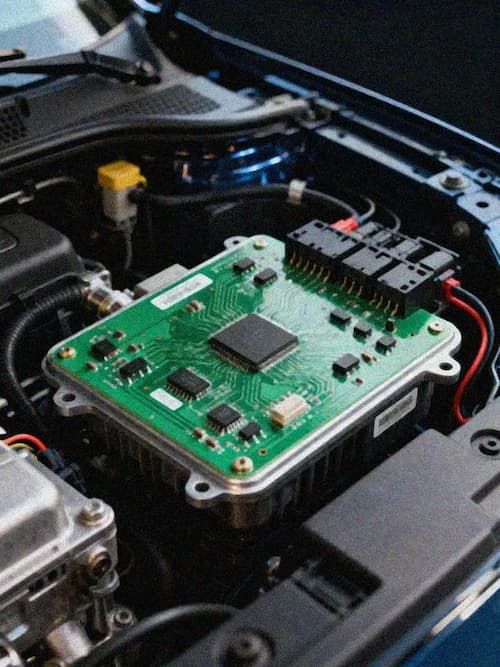
- Automotive Connected Systems: Deployed in smart cockpit high-speed connectivity units, V2X communication modules, and in-vehicle high-speed data backbones, supporting low-latency, high-fidelity signal transmission for connected and autonomous vehicle applications.
Key Advantages
Compared to standard FR4 and other high-frequency substrate options, multilayer PTFE PCBs offer a range of unique performance benefits for high-frequency applications:
- Superior High-Frequency Performance: PTFE substrates feature a stable dielectric constant (Dk) across a wide frequency range up to 100GHz and ultra-low dissipation factor (Df < 0.002 at 10GHz), reducing signal insertion loss by up to 70% compared to standard FR4 boards for frequencies above 5GHz, enabling longer transmission distances and higher signal fidelity.
- High Thermal Stability: PTFE materials have a high glass transition temperature (Tg > 280℃) and low coefficient of thermal expansion (CTE) matched to copper foil, minimizing warpage during SMT assembly and ensuring consistent impedance performance across operating temperatures ranging from -55℃ to +260℃, ideal for high-temperature industrial and aerospace applications.
- High Routing Density: Multilayer stack designs enable dense routing of high-frequency signal paths, ground planes, and power distribution networks in a compact form factor, reducing overall device size and weight while minimizing signal crosstalk through dedicated ground plane shielding between signal layers.
- Customizable Stack Configurations: Supports fully customized stack designs, including mixed lamination with FR4, metal core, and ceramic substrates, to balance performance, cost, and structural requirements for specific application scenarios, allowing design teams to optimize their solution for both technical and commercial targets.
- Long-Term Operational Reliability: PTFE materials are inherently resistant to moisture, chemical corrosion, and UV degradation, delivering a service life up to 3x longer than standard FR4 boards in harsh outdoor and industrial operating environments, reducing maintenance and replacement costs for end products.
Contact Information
If you have custom multilayer PTFE PCB requirements for high-frequency, high-speed applications, you can reach out to our technical support team for assistance. We offer free technical feasibility evaluations, material selection consulting, and customized stack design services to meet your specific project needs, whether you require small-batch prototyping for R&D verification or large-scale mass production for commercial deployment. Our team will respond to your inquiry within 24 working hours and provide a tailored solution aligned with your performance, timeline, and budget requirements.