Overview
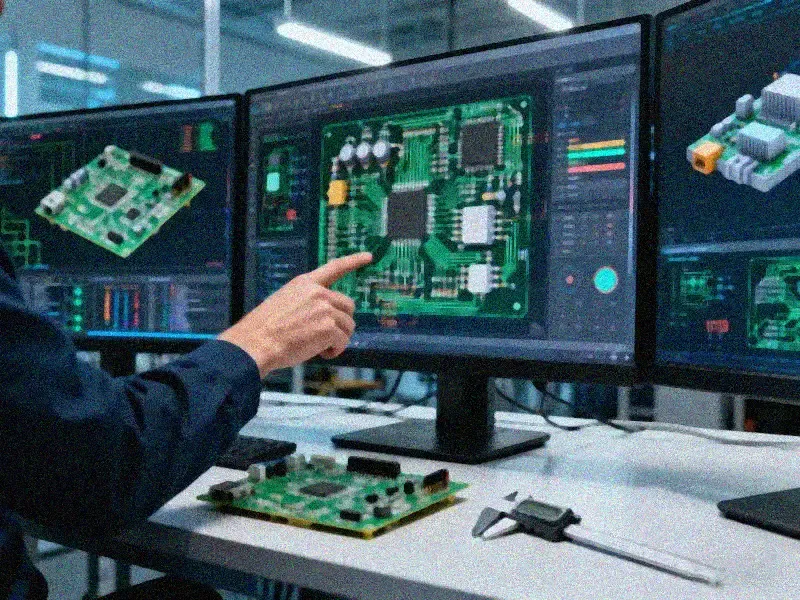
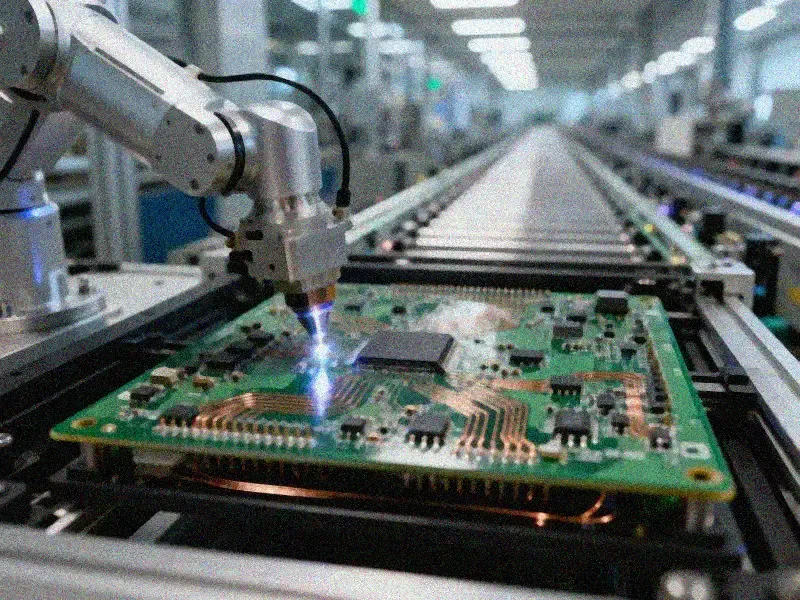
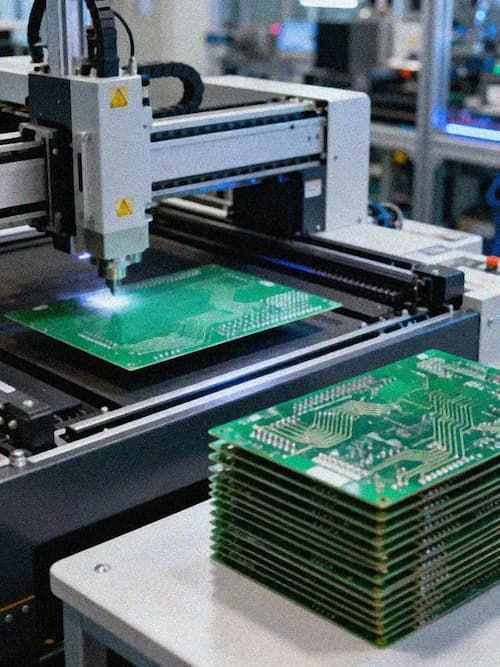
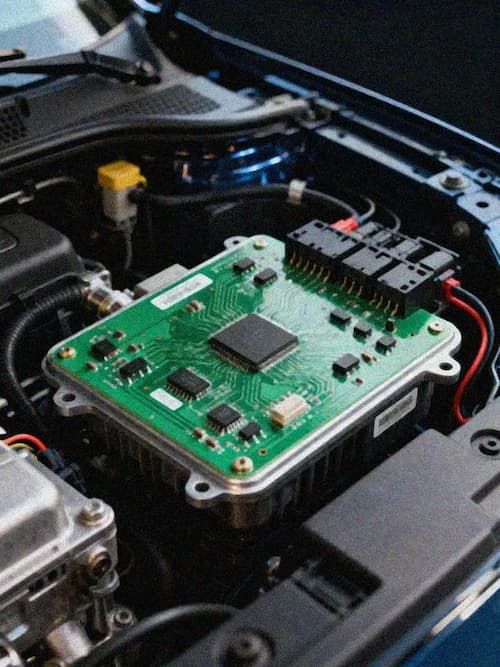
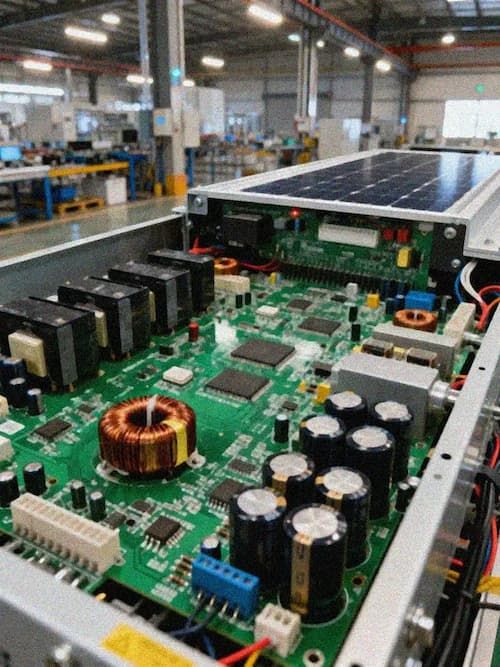
Edge computing deployments rely on distributed, wireless-connected hardware nodes that operate close to data generation sources, placing extremely high demands on PCB performance, durability, and integration density. Unlike centralized cloud hardware, edge computing wireless devices are often deployed in unregulated field environments, facing wide temperature fluctuations, vibration, electromagnetic interference, and strict size constraints. Core challenges for supporting hardware include maintaining stable high-speed wireless signal transmission, dissipating heat generated by high-load edge computing chips, fitting compact device form factors, and ensuring long-term reliable operation without regular maintenance. Edge computing wireless PCB solutions cover the full process from design optimization, material selection, manufacturing, to performance verification, addressing all core pain points of edge wireless hardware development, supporting faster time-to-market for high-performance edge devices.
Technical Capabilities
- High-Frequency & High-Speed Signal Support: Supports transmission requirements for up to 800G high-speed optical modules and 6G antenna frequency bands, with high-precision impedance control of 100Ω and 90Ω, with error margins controlled far below industry average levels. The optimized stack design with multiple independent ground planes effectively shields cross-signal interference, reduces signal attenuation and reflection loss, and ensures low-latency, high-fidelity transmission of wireless data and computing signals between edge chips, memory modules, and wireless communication modules.
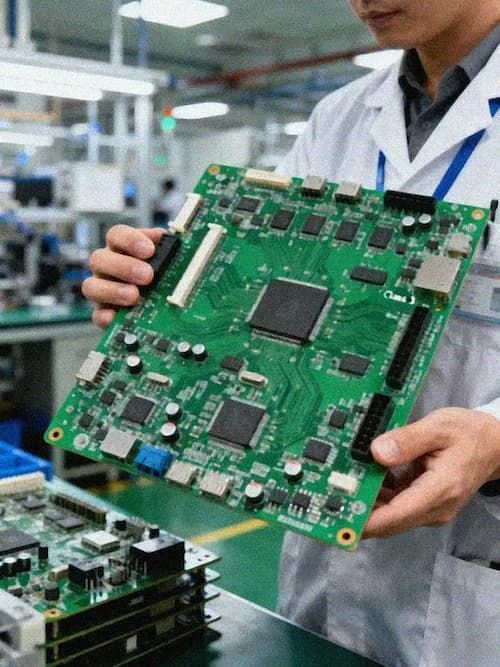
- Miniaturized High-Density Interconnection (HDI) Process: Supports micro-vias down to 0.06mm, line width/space as low as 2.0/2.0mil, and embedded component technology including embedded resistors, embedded copper, and embedded ceramic. Combined with mature 3D assembly solutions, the process significantly reduces board size while retaining full functional performance, fitting the strict form factor constraints of portable and compact edge wireless devices.
- High Thermal Dissipation Design & Manufacturing: Offers multiple high thermal dissipation board options including high thermal conductivity copper-based boards, thermoelectrically separate copper-based boards, and buried copper/ceramic substrates, with customized thermal routing design available according to chip load and heat distribution. The thermal performance meets the long-time high-load operation requirements of edge computing chips, avoiding performance throttling or hardware failure caused by excessive heat buildup.
- Multi-Board Type Customization: Covers a full range of board types to adapt to different structural and performance requirements, including single/double layer boards, multilayer boards, HDI boards, rigid-flex boards, semi-flexible boards, high-frequency hybrid boards, DBC ceramic boards, and packaging substrates. The flexible board type selection supports varied structural design needs from fixed edge base stations to portable edge terminals and foldable wireless devices.
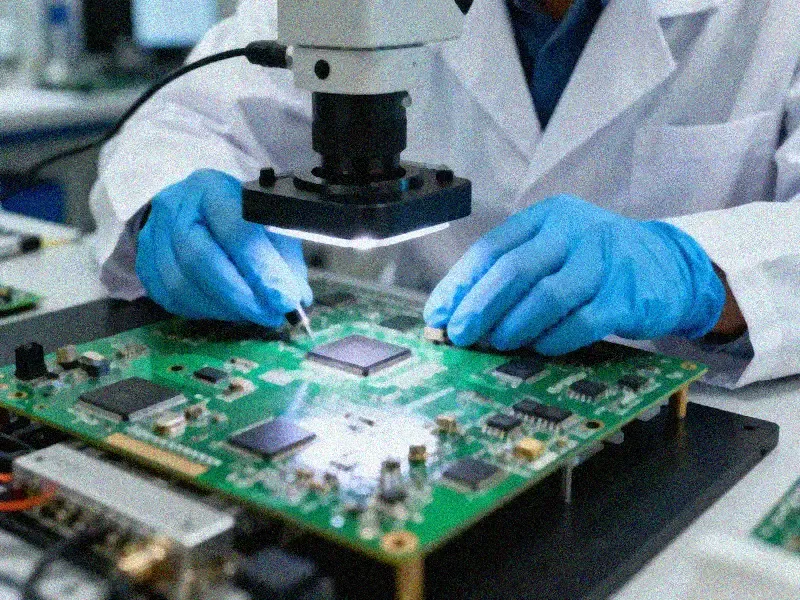
- Full-Process Verification Support: Provides a full set of performance and reliability verification services, including signal integrity testing, EMC testing, high/low temperature cycle testing, vibration testing, and salt spray corrosion testing. All test items are configurable according to application scenario requirements, ensuring finished boards can operate stably in harsh field environments for extended periods.
Quality Standards
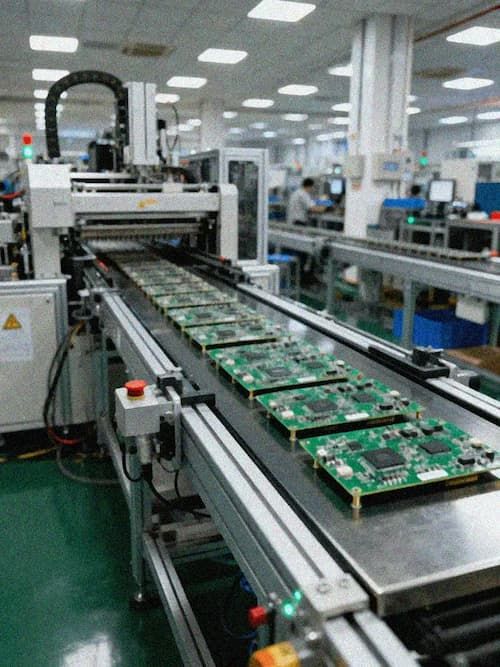
All edge computing wireless PCB products follow strict international industry quality standards throughout the design and manufacturing process. The production process complies with ISO 9001 quality management system requirements, with optional IATF 16949 automotive grade, ISO 13485 medical grade, and military industry standard compliance available for specific application scenarios. All finished boards undergo multi-stage performance and reliability testing in ISO/IEC 17025 accredited testing laboratories, with full traceability of raw materials and production processes, ensuring consistent product quality across batch production runs. Strict yield control mechanisms are implemented at every production stage, reducing post-manufacturing defect rates and long-term operation failure risks.
Applications
Edge computing wireless PCB solutions are widely applicable to various edge hardware scenarios across vertical industries, including:
- Industrial Edge Nodes: Suitable for industrial IoT gateways, on-site edge computing controllers, wireless sensor aggregation devices, and industrial AR/VR edge processing units for smart manufacturing scenarios, supporting stable operation in workshop environments with high dust, vibration, and electromagnetic interference.
- Intelligent Transportation Edge Hardware: Applied to vehicle-road coordination edge units, rail transit wireless communication modules, autonomous driving roadside perception terminals, and in-vehicle edge computing platforms, meeting automotive grade reliability and wide temperature operation requirements.
- **Smart City Edge Devices: Used for public safety wireless monitoring terminals, urban IoT edge gateways, 5G/6G small base stations for edge coverage, and smart community edge service terminals, supporting long-term unattended operation.
- Specialized Edge Equipment: Adapted for UAV wireless communication and control modules, military edge communication terminals, power grid edge monitoring devices, and offshore engineering edge detection units, meeting high environmental adaptability requirements.
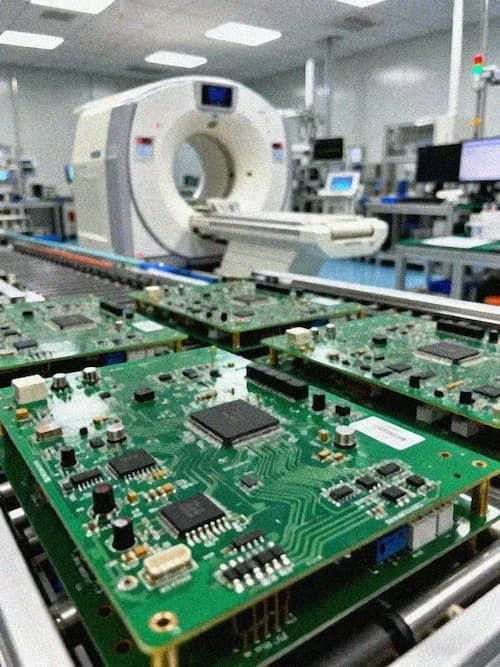
- Medical Edge IoT Devices: Suitable for portable medical diagnostic wireless transmission terminals, remote patient monitoring edge computing units, and wearable medical edge processing devices, meeting medical grade safety and biocompatibility requirements.
- Commercial Edge Hardware: Applied to smart retail edge terminals, agricultural IoT edge monitoring nodes, and logistics sorting edge control units, balancing performance and cost for large-scale deployment.
Key Advantages
- Scenario-Tailored Customization: Adjusts PCB stack design, material selection, and process route according to specific scenario requirements such as low temperature resistance, anti-vibration, waterproofing, and anti-corrosion, meeting the differentiated performance and compliance needs of different vertical industries, from consumer grade to industrial, automotive, medical and special application grades.
- Mature Process Control: Mature high-frequency, HDI, embedded component, and 3D assembly manufacturing processes, with stable production yield, reducing R&D iteration cycles for customers, and supporting fast transition from prototype verification to large-scale mass production.
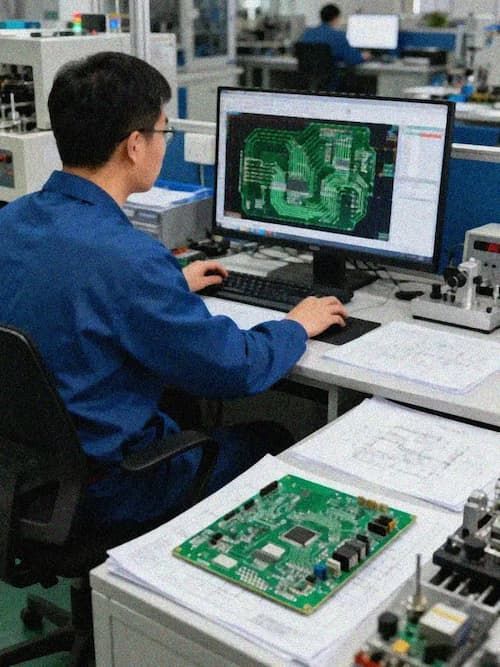
- Full-Lifecycle Service Coverage: Covers schematic design optimization, prototyping, small-batch trial production, large-scale mass production, and PCBA assembly support, reducing cross-stage communication costs for customers, and ensuring the feasibility of design solutions in actual production.
- Cost-Effective Performance Balance: Optimizes material selection and process design according to product performance indicators and cost budget requirements, avoiding unnecessary over-specification design, achieving the optimal balance between technical performance and production costs, especially suitable for large-scale deployment of edge hardware.
Contact Information
If you have any demand for edge computing wireless PCB solutions, including custom design, prototype fabrication, small-batch trial production, large-scale mass production, or PCBA assembly support, please reach out to our professional technical team. We provide free pre-sales technical evaluation, targeted customized solution drafting, and full-process technical support to help you solve core technical challenges in edge wireless hardware development, shorten R&D cycles, and reduce overall product costs.