Overview
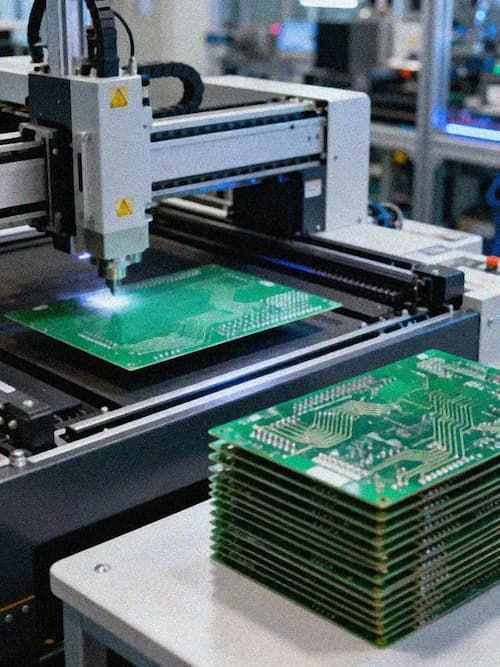
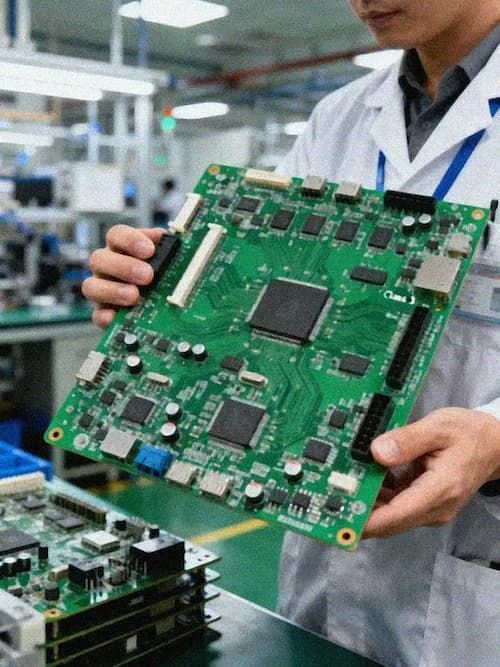
Digikey PCB Assembly refers to the end-to-end electronic assembly process that leverages authentic, traceable Digikey-sourced electronic components to mount, solder, and validate printed circuit boards, eliminating component counterfeiting risks and ensuring functional consistency for electronic hardware development. It addresses core pain points for R&D teams and manufacturing teams, including assembly precision mismatches, low prototyping yields, and supply chain disruptions, supporting projects from early proof of concept to large-scale mass production. The service covers SMT mounting, DIP wave soldering, BGA rework, and post-assembly functional testing, adapting to diverse technical requirements across consumer, industrial, medical, and automotive sectors. Rigorous process control across every stage of assembly ensures compliance with international electronic manufacturing standards, delivering high-reliability assembled boards that meet the performance requirements of even the most complex hardware designs.
Technical Capabilities
Digikey PCB Assembly services are built on mature, high-precision manufacturing processes that support a wide range of design specifications:
- High-Precision SMT Mounting Capability: Supports minimum component packages as small as 01005 (0.3mm0.2mm) and standard 0201 packages, with mounting accuracy optimized for ultra-small components suitable for high-density IoT and wearable device PCBs. Handles SMD sizes ranging from under 200mm125mm to larger form factors, adapting to diverse board layout requirements.
- Complex Polypod and BGA Assembly Support: Compatible with QFP, SOP, SOJ and other polypod components with minimum pin spacing as low as 0.3mm, and CSP/BGA components with minimum ball spacing of 0.3mm, delivering reliable soldering for high-performance computing and communication core chips.
- Flexible DIP Wave Soldering Support: Accommodates PCB sizes for through-hole assembly from a minimum of 50mm50mm to a maximum of 500mm400mm, with specialized process support for boards smaller than 50mm*50mm, provided that bottom surface elements are under 5mm thick and the distance between plug-in component pins and SMT parts on the bottom surface exceeds the SMT part thickness by at least 2.0mm.
- Wide PCB Size and Component Thickness Adaptation: Supports conventional PCB sizes up to 600mm450mm, and unconventional PCB sizes up to 450mm400mm for semi-automatic printing processes. Allows component thickness ranging from under 0.5mm to over 3mm, with double-sided process device height up to 25mm, adapting to special component requirements including high-power inductors and industrial connectors.
- Process Edge and Marking Point Compliance: Follows standard design rules requiring a minimum 3mm clearance between top surface components, mark points and the board edge, ensuring consistent printing, mounting and soldering quality across high-volume production runs.
Quality Standards
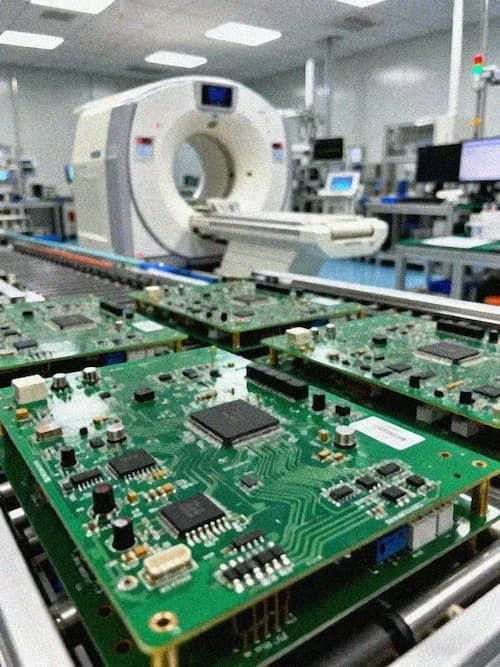
All Digikey PCB Assembly processes adhere to IPC-A-610 Class 2 and Class 3 standards, with multi-stage quality verification implemented across the entire assembly flow. Pre-assembly checks include component authenticity verification, incoming PCB quality inspection, and solder paste performance testing to ensure raw material compliance. In-process inspection covers solder paste printing accuracy verification, SMT mounting position sampling, and post-reflow soldering quality inspection using AOI (Automated Optical Inspection) and X-Ray non-destructive testing for BGA and hidden solder joint detection, catching soldering defects before they impact final product performance. Post-assembly testing includes functional testing, in-circuit testing (ICT), and environmental reliability testing as required, ensuring assembly yield rates of over 99% for standard designs and full traceability of all components sourced from Digikey. All processes are aligned with international electronic manufacturing quality management system requirements, ensuring consistent performance across low-volume prototyping, medium-batch trial production, and high-volume mass production.
Applications
Digikey PCB Assembly solutions are applicable to a wide range of electronic product scenarios, including:
- Industrial Electronics: Industrial control mainboards, sensor interface boards, programmable logic controller (PLC) core boards, and industrial edge computing terminal PCBs, which require high reliability and wide temperature operation adaptability.
- Consumer Electronics: Smart wearable device mainboards, IoT sensor nodes, smart home control boards, and consumer communication device PCBs, which demand high-density component mounting and miniaturization support.
- Medical Electronics: Portable diagnostic device PCBs, patient monitoring equipment mainboards, and medical wearable sensor boards, which require strict component traceability and assembly consistency to meet regulatory requirements.
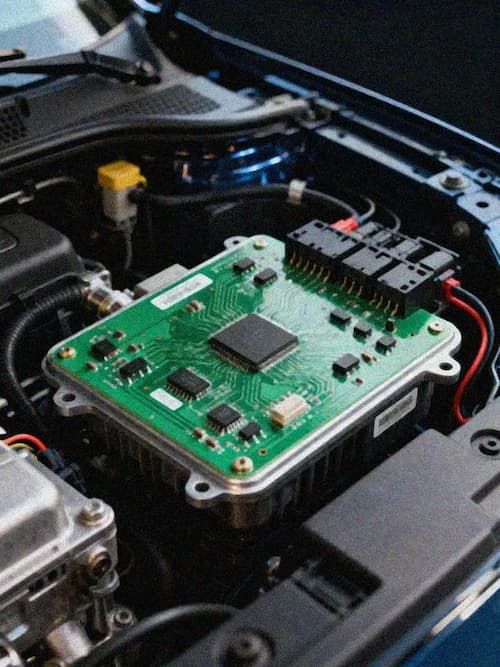
- Automotive Electronics: In-vehicle infotainment system PCBs, ADAS perception sensor interface boards, and body control module PCBs, which comply with automotive electronic manufacturing quality standards and long-term operational reliability requirements.
- R&D Prototyping: University research project PCBs, startup product proof-of-concept boards, and new technology evaluation boards, which require fast turnaround times and high assembly accuracy for functional verification.
Key Advantages
Digikey PCB Assembly delivers unique value for electronic hardware development and manufacturing teams:
- Full Component Traceability: All electronic components are sourced directly from Digikey's authorized supply chain, eliminating counterfeit component risks and providing complete batch and origin traceability for all assembled parts, meeting regulatory requirements for high-sensitivity sectors such as medical and automotive electronics.
- Wide Process Compatibility: Adapts to diverse PCB material types including FR-4, high-frequency boards, aluminum substrates, and flexible PCBs, supporting assembly requirements for both standard and special design PCBs without additional process adjustment costs.
- Flexible Order Scale Support: Accommodates order volumes from 1-unit prototyping to 100,000+ unit mass production, with consistent process control and quality standards across all order sizes, adapting to the full lifecycle needs of product development from R&D to commercial mass production.
- Fast Turnaround Options: Provides standard 3-5 day assembly turnaround for prototyping orders, and expedited 24-48 hour turnaround options for urgent R&D projects, reducing product development cycles and accelerating time-to-market for new electronic products.
- Customizable Testing Services: Offers customizable post-assembly testing solutions including functional testing, burn-in testing, temperature cycle testing, and EMC pre-compliance testing, eliminating the need for customers to arrange additional testing resources and reducing overall project costs.
Contact Information
For inquiries related to Digikey PCB Assembly technical requirements, order customization, or free technical evaluation, you can reach out to the professional technical support team via official communication channels. The team will provide targeted process suggestions, cost estimates, and delivery timeline planning based on your specific project requirements, ensuring your assembly needs are met efficiently and reliably. Technical support is available for design for manufacturing (DFM) optimization, component selection guidance, and testing solution customization to help you reduce project risks and lower overall manufacturing costs.