Overview
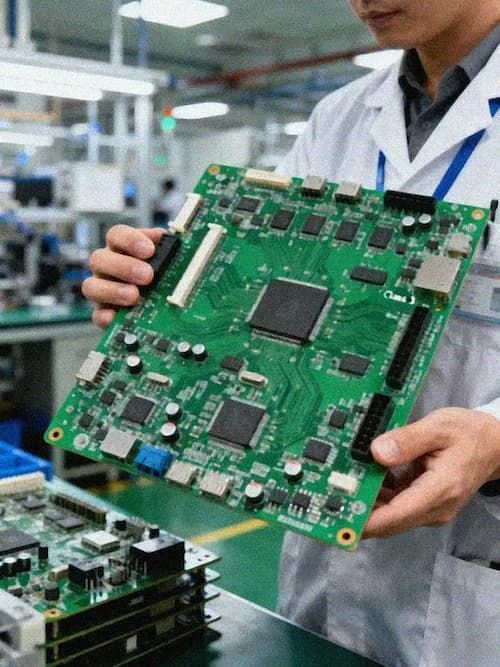
5G Antenna PCB is a core component enabling stable, high-speed signal transmission for 5G communication systems, supporting the high-bandwidth, low-latency, and high-reliability requirements of next-generation communication infrastructure. The deployment of millimeter-wave frequency bands, large-scale MIMO antenna arrays, and 112Gbps high-speed transmission interfaces creates strict requirements for PCB low dielectric loss, impedance consistency, heat dissipation performance, and environmental adaptability. Common challenges for 5G antenna PCB design and manufacturing include signal attenuation at high frequencies, impedance misalignment, crosstalk between high-density routing, and stable operation in harsh outdoor deployment environments. Professional 5G antenna PCB solutions cover the entire process from material selection, stack design, manufacturing, to testing verification, adapting to diverse 5G application scenarios from macro base stations to small cell terminals, ensuring reliable signal transmission performance.
Technical Capabilities
- Multi-Process Layer Support: Covers a wide range of process configurations to meet diverse 5G antenna design needs, including FR4 rigid boards up to 68 layers, high-frequency mixed pressure boards up to 28 layers, pure PTFE high-frequency boards up to 24 layers, HDI boards up to 28 layers with any via step configuration, and rigid-flex boards with up to 30 total layers / 2 flex layers or 20 total layers / 12 flex layers, adapting to both high-density compact terminal antennas and large-scale base station antenna arrays.
- High-Speed Transmission Compatibility: Supports up to 112Gbps high-speed signal transmission, with backward compatibility for 25Gbps transmission requirements, meeting the bandwidth needs of 5G high-band, sub-6GHz, and millimeter-wave communication systems, minimizing signal loss and latency across transmission paths.
- Flexible Form Factor Support: Accommodates diverse board size and thickness requirements, with rigid boards up to 550mm1000mm for large base station antenna arrays, 2-layer flex boards up to 2000200mm for conformal antenna deployments, and maximum board thickness up to 12mm for heavy copper and high-power antenna applications.
- High-Frequency Material Adaptability: Compatible with a wide range of UL-certified high-frequency and high-speed substrate materials, including pure PTFE laminates, high-frequency hybrid materials, halogen-free and lead-free FR4 variants, and metal core substrates, optimized for 24G/77G radar antenna and 5G coupler applications with stable dielectric constant and low dielectric loss performance.
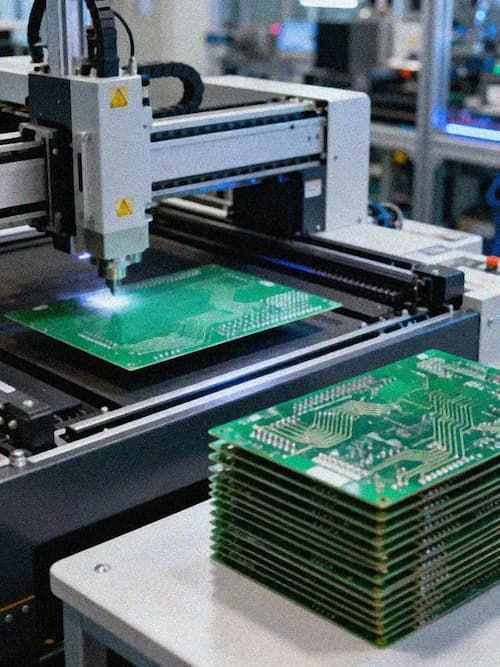
- Precision Manufacturing Processes: Supports advanced manufacturing features including mechanical blind and buried vias, heavy copper routing for enhanced current carrying capacity, metal sandwich substrates for improved heat dissipation, and high-precision trace width/space control for high-density routing, meeting the miniaturization and high-integration needs of 5G terminal antennas.
Quality Standards
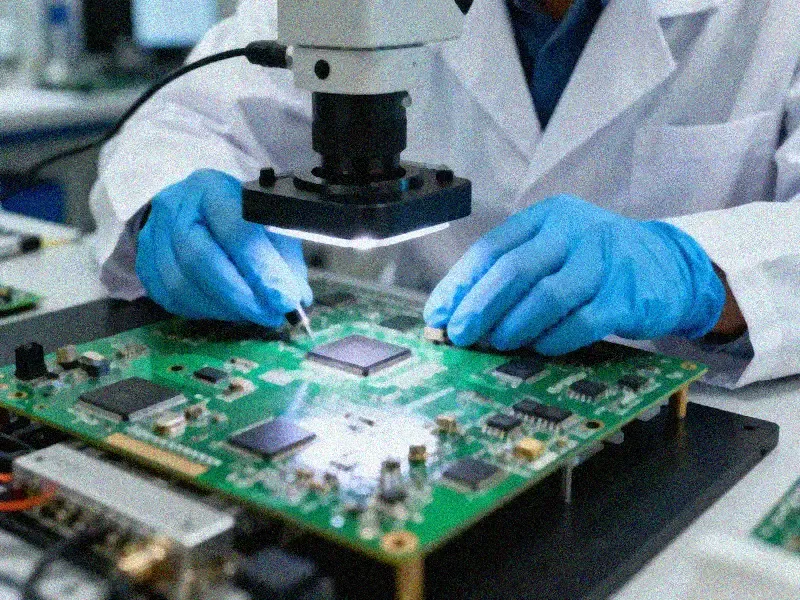
All 5G Antenna PCB products adhere to strict international industry quality and performance standards, ensuring consistent reliability across application scenarios. All substrate materials meet UL safety certification requirements, with full support for lead-free and halogen-free production processes to comply with global environmental regulations. Production processes are subject to rigorous in-line quality control, with strict monitoring of impedance tolerance, lamination alignment, via metallization quality, and surface finish consistency to ensure minimal signal deviation. Finished products undergo comprehensive performance testing, including signal integrity testing, insertion loss testing, impedance verification, and environmental reliability testing covering high/low temperature cycling, humidity resistance, vibration, and shock testing, ensuring stable operation across industrial temperature ranges from -40℃ to +85℃, and meeting the strict durability requirements for outdoor 5G infrastructure deployments. All products align with telecommunications industry performance benchmarks for 5G communication equipment.
Applications
5G Antenna PCB solutions are widely applicable across the full 5G industry ecosystem, covering the following core scenarios:
- 5G macro base station and distributed small cell antenna systems
- Millimeter-wave 5G communication terminals and CPE equipment
- 24G/77G automotive radar antenna systems for autonomous driving perception
- 5G coupler and 100G/400G high-speed optical module components
- Industrial IoT 5G communication nodes for smart manufacturing
- Smart city 5G edge infrastructure and public network access points
- Aerospace and defense 5G communication and radar devices
- Consumer electronics 5G terminal antenna modules
Key Advantages
- Optimized High-Frequency Performance: Pure PTFE and high-frequency hybrid laminate manufacturing processes deliver tight control of dielectric constant and low dielectric loss, minimizing signal attenuation at millimeter-wave frequencies, adapting to 112Gbps high-speed signal transmission requirements, and ensuring consistent signal strength for long-distance 5G communication.
- High-Precision Impedance Control: Industry-leading impedance tolerance control ensures consistent impedance across high-speed differential signal paths, reducing signal reflection, crosstalk, and transmission distortion, improving the signal-to-noise ratio for high-density MIMO antenna arrays, and enhancing overall 5G communication reliability.
- Diverse Process Customization: Support for rigid, flex, rigid-flex, HDI, heavy copper, and metal core process configurations caters to diverse 5G antenna form factors, from ultra-compact wearable device antenna modules to large high-power base station antenna arrays, adapting to specialized requirements for heat dissipation, conformal installation, and miniaturization.
- Extreme Environmental Durability: Strict environmental reliability testing ensures products can withstand long-term operation in harsh outdoor conditions, including wide temperature fluctuations, high humidity, heavy vibration, and corrosion, reducing failure rates for field-deployed 5G infrastructure and lowering long-term maintenance costs.
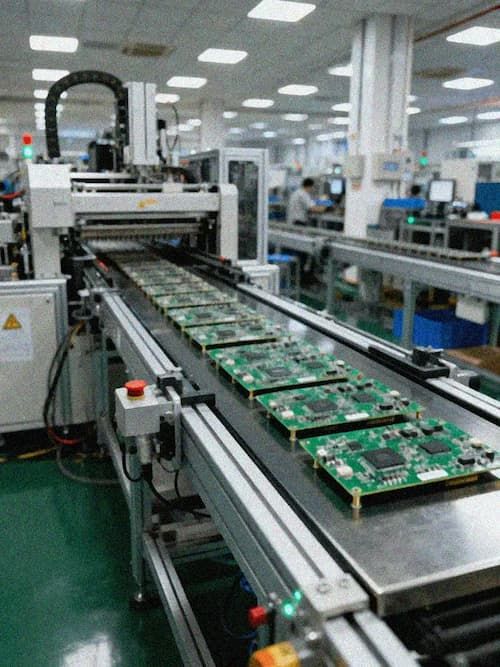
- Scalable Production Capacity: Process control systems support consistent performance across prototyping, small-batch trial production, and large-scale mass production runs, reducing lead times for 5G deployment projects, and balancing performance and manufacturing cost for both customized R&D projects and high-volume commercial deployments.
Contact Information
If you have customized requirements for 5G Antenna PCB design, manufacturing, or testing, please reach out to our technical support team. We offer free project evaluation, targeted technical consulting, and tailored solutions aligned with your specific application scenario, supporting your 5G product development, verification, and mass production needs.